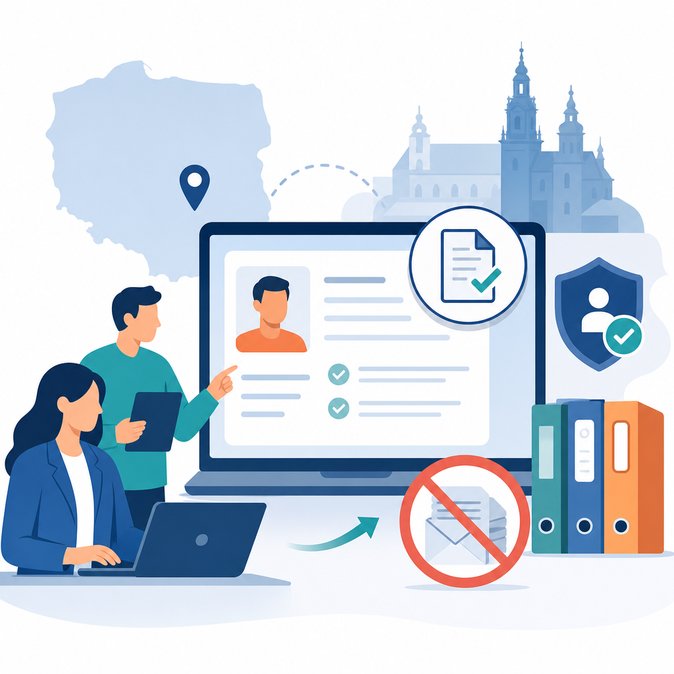
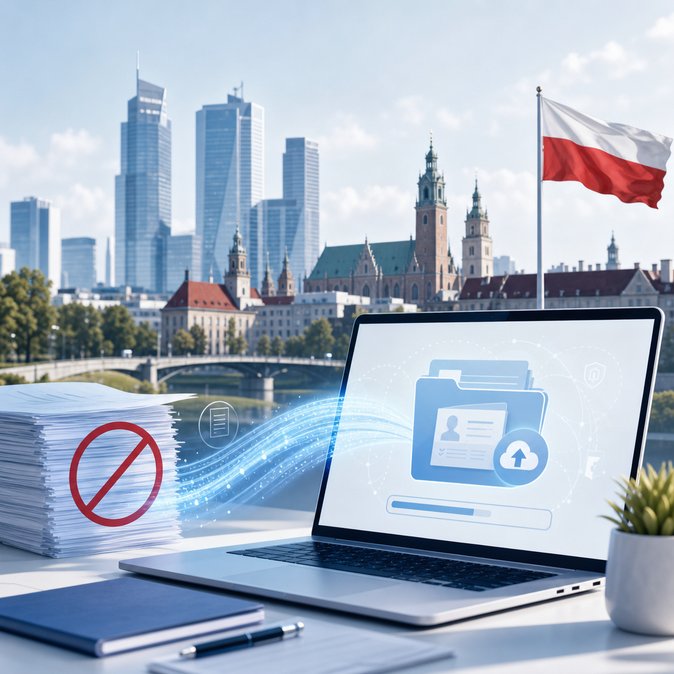
The Lublin Voivodeship Office has issued a nationwide alert reminding employers that, as of 1 June 2026, all notifications concerning key changes to foreign workers’ type-A work permits must be filed exclusively through the government portal praca.gov.pl. The guidance, published on 3 June, references Article 19 of the Act on the Conditions for Employing Foreigners, which obliges any company holding a work permit to inform the issuing authority if a foreign employee (1) does not start work within two months of the permit’s validity date; (2) interrupts work for more than two consecutive months; or (3) ends employment at least two months before the permit expires. Until now many employers—particularly SMEs and staffing agencies—submitted these ‘Article 19 notices’ by post or e-mail. The new rule is part of Poland’s broader shift toward end-to-end e-government in immigration processing, dovetailing with the MOS 2.0 residence-permit platform launched in April and the nationwide Trusted Profile (Profil Zaufany) digital-identity requirement.
![Electronic notifications now mandatory for Polish work-permit changes]()
Amid these procedural changes, employers and foreign workers looking for clear, up-to-date guidance can rely on VisaHQ’s dedicated Poland portal (https://www.visahq.com/poland/). The service consolidates the latest compliance requirements, offers step-by-step support for using praca.gov.pl, and provides expert assistance with Trusted Profile set-up and other Polish visa or permit needs—streamlining the entire process for HR teams and assignees alike.
For corporate mobility and HR teams the change is operationally significant. Failure to file a timely electronic notice can trigger fines of up to PLN 2,000 and complicate future permit renewals, while accurate filings allow authorities to re-allocate unused work-permit quotas more quickly. Multinational employers that outsource payroll to local providers should verify that service contracts now explicitly cover online Article 19 compliance. Practically, the praca.gov.pl interface lets employers log on using a company e-PUAP account or a designated representative’s Trusted Profile. Once logged in, users select ‘Dalsza korespondencja do urzędu’ (Further correspondence) and upload the completed e-form; a secure reference number is returned instantly. Immigration advisers recommend exporting the confirmation PDF to the employee’s personnel file in case of audits. Looking forward, the Labour Ministry has hinted that by 2027 similar digital-only rules will apply to seasonal-work statements and to the ‘declaration of entrusting work to a foreigner’ process, further reinforcing Poland’s trajectory toward unified, paperless immigration administration.
Amid these procedural changes, employers and foreign workers looking for clear, up-to-date guidance can rely on VisaHQ’s dedicated Poland portal (https://www.visahq.com/poland/). The service consolidates the latest compliance requirements, offers step-by-step support for using praca.gov.pl, and provides expert assistance with Trusted Profile set-up and other Polish visa or permit needs—streamlining the entire process for HR teams and assignees alike.
For corporate mobility and HR teams the change is operationally significant. Failure to file a timely electronic notice can trigger fines of up to PLN 2,000 and complicate future permit renewals, while accurate filings allow authorities to re-allocate unused work-permit quotas more quickly. Multinational employers that outsource payroll to local providers should verify that service contracts now explicitly cover online Article 19 compliance. Practically, the praca.gov.pl interface lets employers log on using a company e-PUAP account or a designated representative’s Trusted Profile. Once logged in, users select ‘Dalsza korespondencja do urzędu’ (Further correspondence) and upload the completed e-form; a secure reference number is returned instantly. Immigration advisers recommend exporting the confirmation PDF to the employee’s personnel file in case of audits. Looking forward, the Labour Ministry has hinted that by 2027 similar digital-only rules will apply to seasonal-work statements and to the ‘declaration of entrusting work to a foreigner’ process, further reinforcing Poland’s trajectory toward unified, paperless immigration administration.