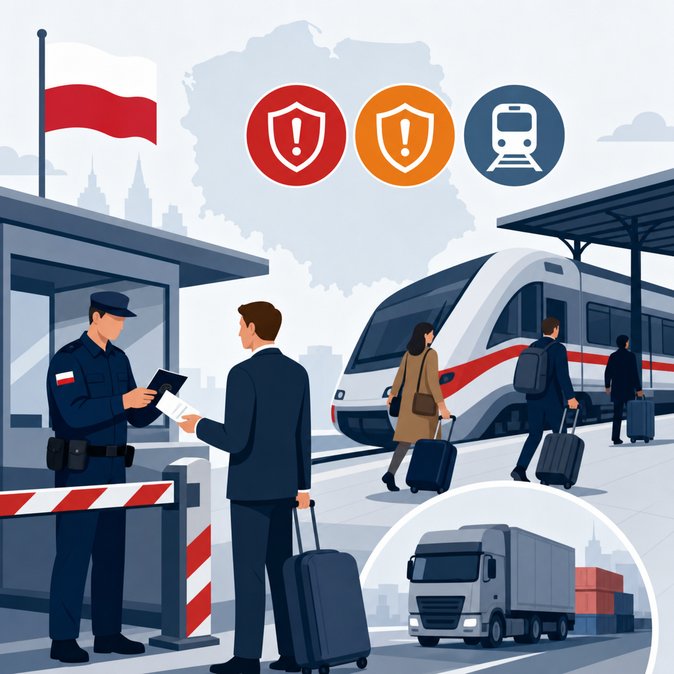
Poland entered the summer holiday season on 1 June 2026 with a markedly tighter security posture. Four new executive orders—numbers 31, 32, 33 and 34—signed by Prime Minister Donald Tusk simultaneously prolonged the nationwide BRAVO and BRAVO-CRP alerts, maintained BRAVO status for Polish energy assets located abroad, and, for the first time, introduced the third-level CHARLIE alert on the country’s rail corridors operated by PKP PLK and PKP LHS. Municipalities, agencies and state-owned companies began publishing the orders early Monday morning to inform staff, travellers and local residents of the new requirements. Under Poland’s four-tier system, BRAVO is the second-highest conventional alert and is triggered when the government believes the probability of a terrorist incident has risen but there is no specific target. BRAVO-CRP mirrors those measures in the cyber-domain, obliging ministries and critical-infrastructure operators to step up 24/7 monitoring, run penetration tests and keep key IT personnel on standby. The freshly introduced CHARLIE level on rail lines signals a confirmed and credible threat to that sector and authorises boarding checks, baggage screening and random identity verification on trains and at stations along strategic routes.
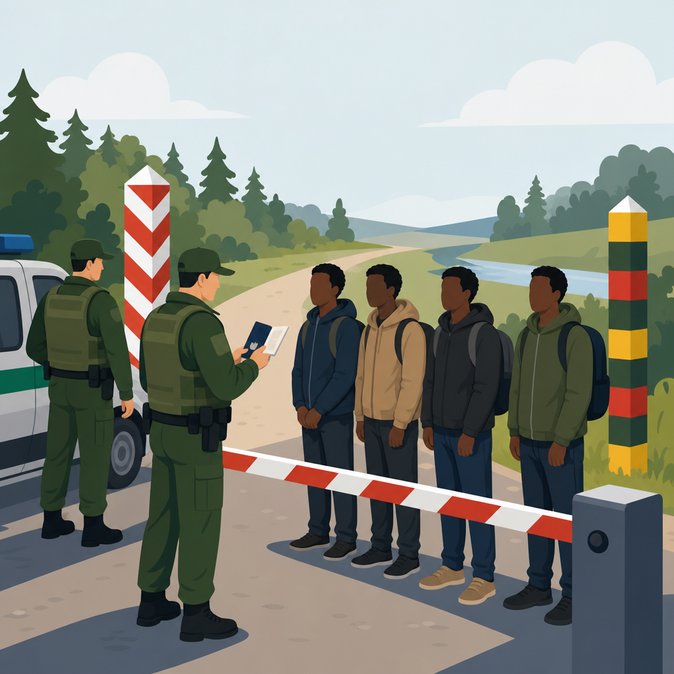
For cross-border mobility, the elevated alerts translate into denser spot checks on long-distance trains arriving from Germany, the Czech Republic and Lithuania, as well as more rigorous document inspection at provincial road crossings. Logistics companies moving high-value or dual-use cargo by rail have already been advised to build in additional buffer time, while corporate travel managers are warning employees to carry company invitation letters and proof of accommodation in case of on-the-spot verification.
![Poland Activates Higher Security Alert Levels Across the Country, Extending to 31 August 2026]()
Travellers who want extra assurance that they have the correct paperwork can turn to VisaHQ’s Poland portal (https://www.visahq.com/poland/), which consolidates the latest visa, passport and entry-requirement updates in one place. The service offers live support, digital document checking and courier options, helping tourists, expatriates and business travellers avoid delays amid the new security environment.
The timing is significant: Poland’s western and north-eastern frontiers have seen temporary Schengen controls since July 2025, and implementation of the EU Entry/Exit System in April 2026 means every third-country passport is now biometrically recorded. The upgraded alert levels dovetail with both initiatives, giving border guards and police broader legal grounds to question travellers and detain those without proper status. Practically, multinational firms should update their Poland travel policies to reflect longer processing times at rail hubs and land borders, brief staff on the visible security presence, and ensure that any third-country contractors carry copies of their work permits or A1 certificates. Because the current orders run until 31 August 2026, the heightened posture will cover the entire peak tourist season and the start of the autumn business-travel cycle.
For cross-border mobility, the elevated alerts translate into denser spot checks on long-distance trains arriving from Germany, the Czech Republic and Lithuania, as well as more rigorous document inspection at provincial road crossings. Logistics companies moving high-value or dual-use cargo by rail have already been advised to build in additional buffer time, while corporate travel managers are warning employees to carry company invitation letters and proof of accommodation in case of on-the-spot verification.

Travellers who want extra assurance that they have the correct paperwork can turn to VisaHQ’s Poland portal (https://www.visahq.com/poland/), which consolidates the latest visa, passport and entry-requirement updates in one place. The service offers live support, digital document checking and courier options, helping tourists, expatriates and business travellers avoid delays amid the new security environment.
The timing is significant: Poland’s western and north-eastern frontiers have seen temporary Schengen controls since July 2025, and implementation of the EU Entry/Exit System in April 2026 means every third-country passport is now biometrically recorded. The upgraded alert levels dovetail with both initiatives, giving border guards and police broader legal grounds to question travellers and detain those without proper status. Practically, multinational firms should update their Poland travel policies to reflect longer processing times at rail hubs and land borders, brief staff on the visible security presence, and ensure that any third-country contractors carry copies of their work permits or A1 certificates. Because the current orders run until 31 August 2026, the heightened posture will cover the entire peak tourist season and the start of the autumn business-travel cycle.