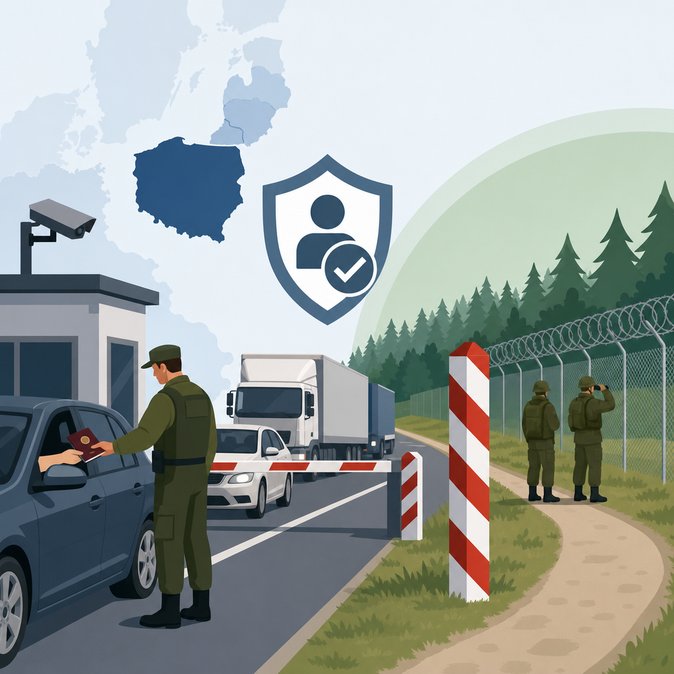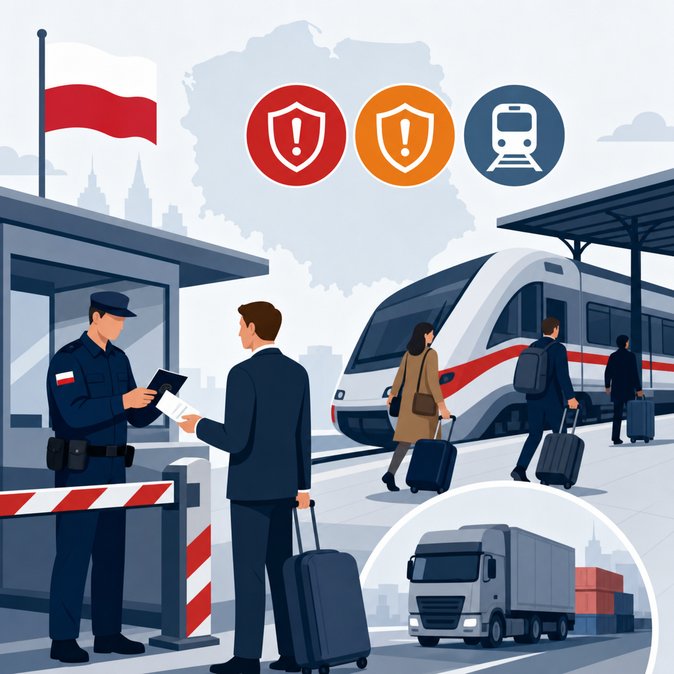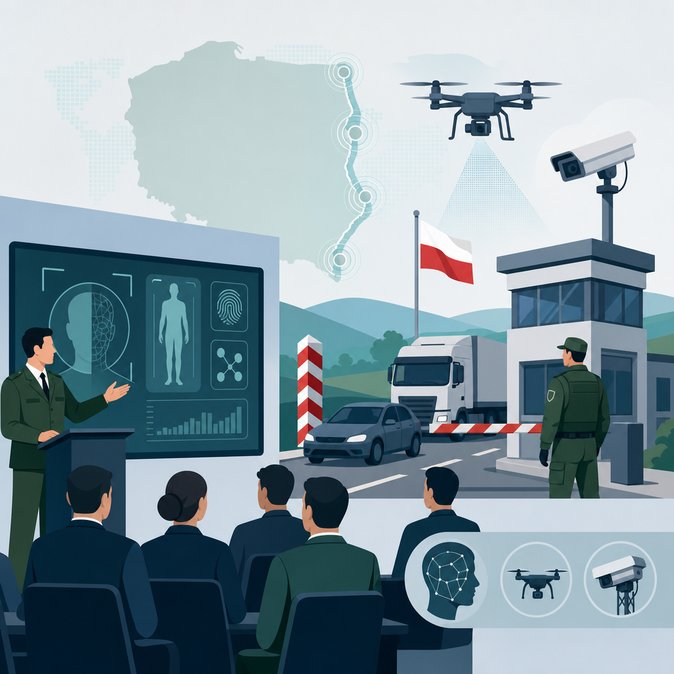
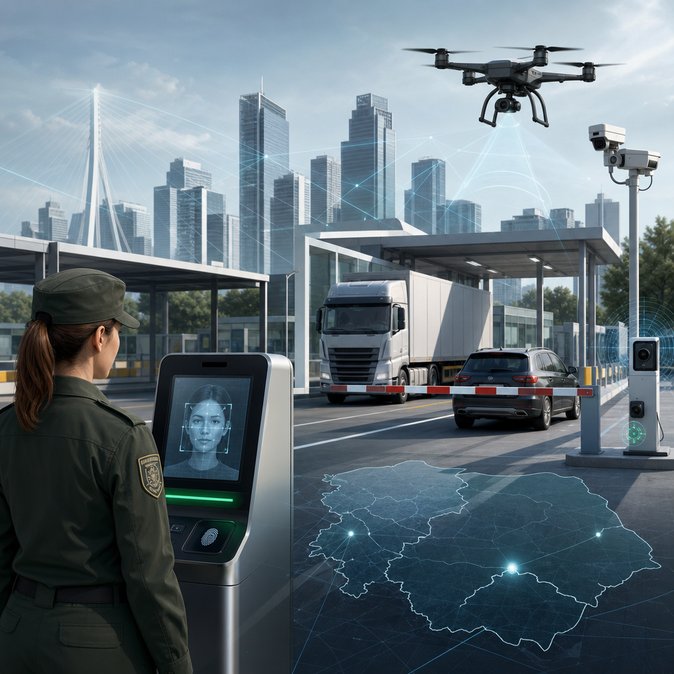
On 2 June 2026 the Higher School of the Border Guard (Wyższa Szkoła Straży Granicznej) announced ‘BorderSec. Zarządzanie Granicą – Nowe Technologie’, a two-day conference that will take place in Przemyśl on 24–25 June. Co-organised with the Polish Platform for Homeland Security (PPBW), the event will gather border-security officials, IT vendors and research institutions to examine cutting-edge solutions ranging from AI-assisted biometrics, autonomous surveillance drones and mobile document scanners to advanced risk-analysis software. The agenda, to be published next week, is expected to include live demonstrations of smart-camera towers now being piloted along the Belarus frontier, as well as workshops on integrating Poland’s national border IT with the EU Entry/Exit System. Start-ups specialising in anti-tamper cargo seals and sensor-equipped e-gates have been invited to pitch under a ‘Border Innovation Challenge’.
![Polish Border Guard unveils ‘BorderSec’ conference to showcase next-generation control tech]()
For corporate mobility managers the conference signals where Polish control policy is heading: toward technology that can speed up legitimate travel while tightening against irregular migration. As companies prepare for these changes, VisaHQ can help simplify travel-document compliance by managing visa and passport applications for personnel bound for Poland or transiting its borders; details on the service can be found at https://www.visahq.com/poland/
Airlines and logistics providers operating through the Korczowa and Medyka crossings have been asked to provide use-case feedback, suggesting that industry concerns over throughput times are being taken seriously. The Border Guard notes that insights from BorderSec will feed into its 2027–2030 procurement roadmap, potentially worth more than PLN 1 billion. Vendors already certified under NATO or EU security standards are likely to have an advantage, but the inclusion of universities points to an openness to experimental prototypes. Registration is free for public-sector participants and PLN 950 for private firms. Sessions will be streamed, allowing HR and risk-management teams that move staff across Poland’s eastern flank to monitor developments without travelling to Podkarpackie. Early adoption of the showcased technologies could ultimately reduce wait times for company drivers and business travellers once deployed.
For corporate mobility managers the conference signals where Polish control policy is heading: toward technology that can speed up legitimate travel while tightening against irregular migration. As companies prepare for these changes, VisaHQ can help simplify travel-document compliance by managing visa and passport applications for personnel bound for Poland or transiting its borders; details on the service can be found at https://www.visahq.com/poland/
Airlines and logistics providers operating through the Korczowa and Medyka crossings have been asked to provide use-case feedback, suggesting that industry concerns over throughput times are being taken seriously. The Border Guard notes that insights from BorderSec will feed into its 2027–2030 procurement roadmap, potentially worth more than PLN 1 billion. Vendors already certified under NATO or EU security standards are likely to have an advantage, but the inclusion of universities points to an openness to experimental prototypes. Registration is free for public-sector participants and PLN 950 for private firms. Sessions will be streamed, allowing HR and risk-management teams that move staff across Poland’s eastern flank to monitor developments without travelling to Podkarpackie. Early adoption of the showcased technologies could ultimately reduce wait times for company drivers and business travellers once deployed.