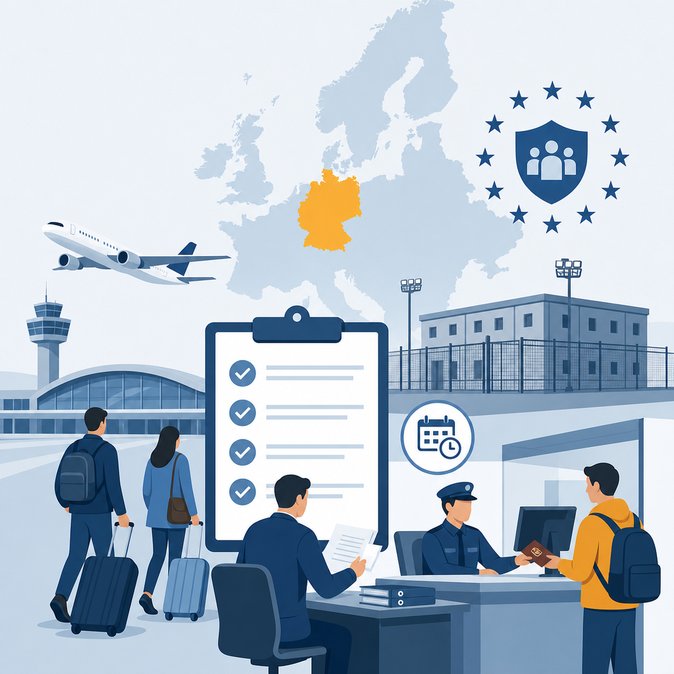
A consolidated version of the German Residence Act (AufenthG) published on 1 June 2026 shows the entry into force of amendments passed in December 2025 that streamline deportation and labour-migration procedures. The centre-piece is a new provision allowing the federal government to classify ‘safe countries of origin’ via statutory order without prior parliamentary approval, replacing the previous full legislative process. The change is designed to accelerate asylum decision-making and returns for applicants from countries with low recognition rates. Critics warn that bypassing Bundestag and Bundesrat scrutiny could politicise the designation process and undermine legal certainty for businesses planning assignments from newly listed states.
![Residence Act amended: Government gains faster power to list safe countries of origin]()
For companies and travellers navigating these evolving German immigration requirements, VisaHQ offers up-to-date guidance and application support, including tailored checklists for the revised Residence Act provisions. Their Germany portal (https://www.visahq.com/germany/) lets users pre-screen visa needs, track documentation, and receive alerts as soon as policy changes—such as the forthcoming ‘safe country’ designations—take effect.
Other sections revised today include updated rules on visa issuance (§6), the newly codified Chancenkarte (§§20a–20b) and an expanded framework for EU Blue Card holders’ mobility. Section 39 on labour-authority consent was re-worded to align with the Employment Ordinance, clarifying when the Federal Employment Agency may refuse approval on labour-market grounds. Global-mobility managers should note that the statutory text now in force is the authoritative reference for applications filed on or after 1 June 2026; checklists and templates must be updated immediately. Companies recruiting from jurisdictions that might be declared ‘safe’ should be ready for shorter appeal deadlines and potential detention during removal procedures. Legal-observers expect the Interior Ministry to table the first batch of designations in the coming weeks. If enacted, the new mechanism could also affect visa-free business-travel privileges, as nationals of ‘safe’ states are more likely to face intensified entry interviews.

For companies and travellers navigating these evolving German immigration requirements, VisaHQ offers up-to-date guidance and application support, including tailored checklists for the revised Residence Act provisions. Their Germany portal (https://www.visahq.com/germany/) lets users pre-screen visa needs, track documentation, and receive alerts as soon as policy changes—such as the forthcoming ‘safe country’ designations—take effect.
Other sections revised today include updated rules on visa issuance (§6), the newly codified Chancenkarte (§§20a–20b) and an expanded framework for EU Blue Card holders’ mobility. Section 39 on labour-authority consent was re-worded to align with the Employment Ordinance, clarifying when the Federal Employment Agency may refuse approval on labour-market grounds. Global-mobility managers should note that the statutory text now in force is the authoritative reference for applications filed on or after 1 June 2026; checklists and templates must be updated immediately. Companies recruiting from jurisdictions that might be declared ‘safe’ should be ready for shorter appeal deadlines and potential detention during removal procedures. Legal-observers expect the Interior Ministry to table the first batch of designations in the coming weeks. If enacted, the new mechanism could also affect visa-free business-travel privileges, as nationals of ‘safe’ states are more likely to face intensified entry interviews.