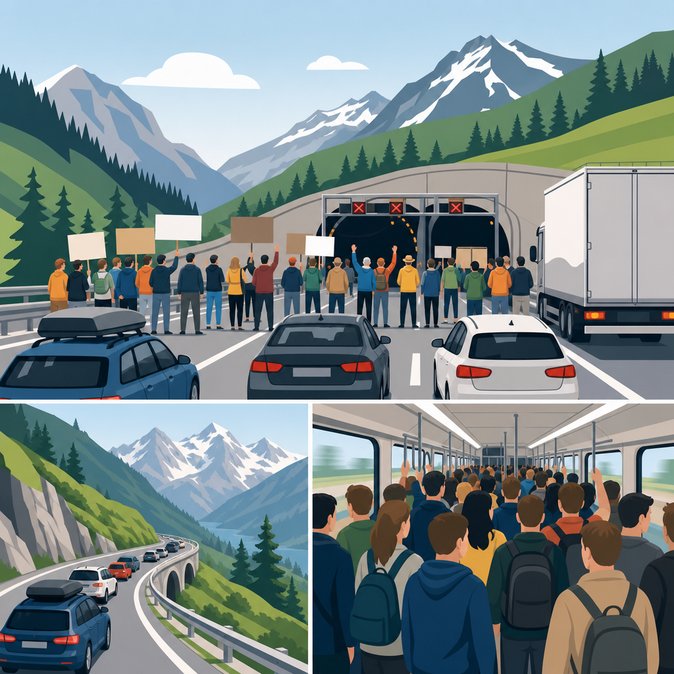
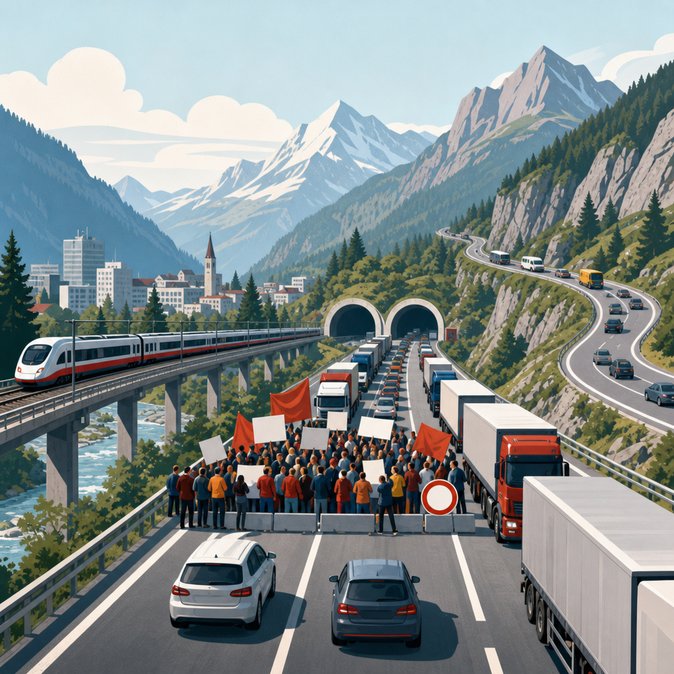
Cross-border road travel between Germany and Italy came to an unexpected stand-still on Saturday, 30 May, when some 3,000 Austrian residents blocked the Brenner motorway (A13) and parallel provincial roads for an eight-hour protest against heavy transit traffic. Police sealed the corridor from 11:00 to 19:00 and turned vehicles back at both ends, effectively cutting the only all-weather Alpine route used by thousands of German holiday-makers, exporters and long-haul truckers each day. Although authorities and motoring clubs had issued advance warnings, the closure still forced transport managers to re-route time-critical loads via the Gotthard, San Bernardino and Reschen passes—detours that add at least 120 km and several hours to a Munich–Milan run. Rail operators reported packed EuroCity and Nightjet services on the parallel Munich-Verona line, while air carriers saw a last-minute spike in bookings from Munich and Stuttgart to northern Italy.
![Protest shuts Brenner motorway between Germany and Italy for eight hours]()
For those travelers and logistics planners caught off-guard, VisaHQ’s online platform (https://www.visahq.com/germany/) can streamline the paperwork side of any rerouting, making it easy to check visa requirements for alternative itineraries that may pass through Switzerland or other Schengen jurisdictions. The service offers real-time advisory and expedited processing, a useful backstop when sudden border actions force companies to redeploy drivers or flying technicians on short notice.
The demonstration was led by the mayor of Gries am Brenner, Karl Mühlsteiger, who accuses both Berlin and Rome of “exporting their congestion problems” to Tyrol. Tensions over Alpine transit have simmered for years, with Austria imposing weekend truck bans and Germany threatening legal action at the EU Court of Justice. Saturday’s action highlights how quickly local politics can spill over into supply-chain risk for multinational companies relying on just-in-time deliveries between German plants and suppliers in northern Italy. For business travellers, the episode is a reminder to build contingency time into itineraries that cross the Alps, especially on spring and summer weekends when protests or anti-pollution driving bans are most likely. Corporate mobility managers should also note that Italian rail infrastructure near Verona was damaged overnight by suspected arson, compounding the risk of onward delays. The Tyrolean authorities have not ruled out further demonstrations during the Whitsun and summer holiday peaks if no progress is made at the trilateral Austria-Germany-Italy working group on transit. Companies moving staff or freight between Bavaria and Lombardy this week should monitor real-time updates from the Austrian motorway operator ASFINAG and consider routing via Switzerland until traffic flows normalise.
For those travelers and logistics planners caught off-guard, VisaHQ’s online platform (https://www.visahq.com/germany/) can streamline the paperwork side of any rerouting, making it easy to check visa requirements for alternative itineraries that may pass through Switzerland or other Schengen jurisdictions. The service offers real-time advisory and expedited processing, a useful backstop when sudden border actions force companies to redeploy drivers or flying technicians on short notice.
The demonstration was led by the mayor of Gries am Brenner, Karl Mühlsteiger, who accuses both Berlin and Rome of “exporting their congestion problems” to Tyrol. Tensions over Alpine transit have simmered for years, with Austria imposing weekend truck bans and Germany threatening legal action at the EU Court of Justice. Saturday’s action highlights how quickly local politics can spill over into supply-chain risk for multinational companies relying on just-in-time deliveries between German plants and suppliers in northern Italy. For business travellers, the episode is a reminder to build contingency time into itineraries that cross the Alps, especially on spring and summer weekends when protests or anti-pollution driving bans are most likely. Corporate mobility managers should also note that Italian rail infrastructure near Verona was damaged overnight by suspected arson, compounding the risk of onward delays. The Tyrolean authorities have not ruled out further demonstrations during the Whitsun and summer holiday peaks if no progress is made at the trilateral Austria-Germany-Italy working group on transit. Companies moving staff or freight between Bavaria and Lombardy this week should monitor real-time updates from the Austrian motorway operator ASFINAG and consider routing via Switzerland until traffic flows normalise.