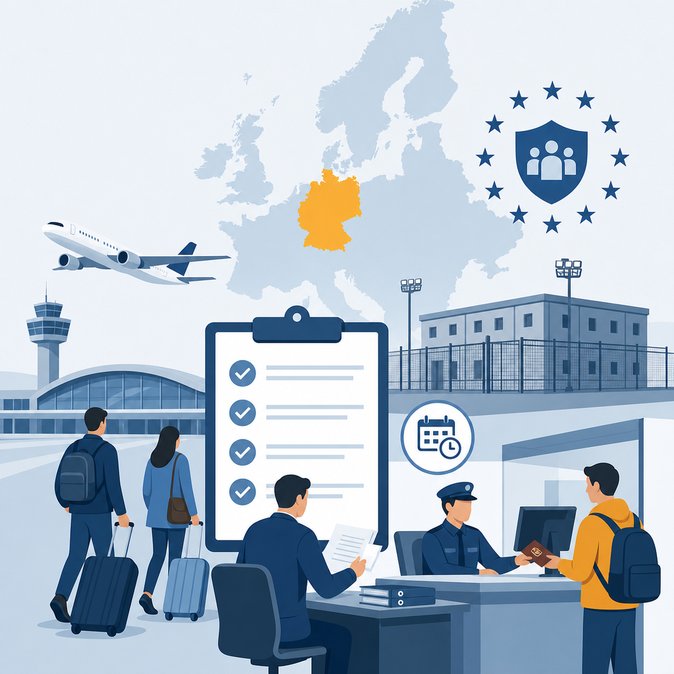
On 1 June 2026 Germany’s two GEAS-Adaptation Acts—approved by the Bundestag in February and published in the Federal Law Gazette on 28 April—took legal effect. The legislation aligns the German Asylum Act (AsylG) and Residence Act (AufenthG) with the European Union’s re-engineered Common European Asylum System (GEAS), which will be binding in every member state from 12 June 2026. The bills go beyond minimum EU requirements in several controversial areas.
![Germany transposes EU asylum overhaul: new GEAS laws enter into force]()
For organisations or individuals confused by these evolving rules, VisaHQ’s Germany portal (https://www.visahq.com/germany/) offers a convenient way to verify current entry conditions, obtain the correct documentation, and track regulatory changes. Their end-to-end support can streamline travel planning and help ensure compliance amid the new GEAS framework.
Länder (federal states) may now create compulsory “secondary-migration centres” where people who travelled onward within the EU can be held for up to 24 months while their transfer or removal is organised. Movement can be restricted at night even for families with children, and day-time exit bans are permitted once an asylum request has been rejected. Legal-aid organisations warn that the rules amount to a form of de-facto detention and could breach fundamental-rights guarantees. At the same time the Acts tighten Dublin transfer procedures, expand grounds for detention when a “risk of absconding” is presumed, and allow broader use of airport procedures. From 12 June German authorities must also apply new EU-wide border screening and accelerated asylum tracks at all external frontiers and airports, although Germany itself has no external Schengen land border. For companies that relocate staff or depend on intra-EU mobility, the biggest practical impact is expected at airports: extended screening periods could lengthen connection times for non-EU nationals transiting via Germany. Employers should review travel policies and ensure transferees carry complete documentation proving legal residence in another member state to avoid being channelled into the accelerated procedure. Civil-society groups, led by PRO ASYL, have announced legal challenges and will monitor implementation once the EU regulations apply on 12 June. Multinationals should therefore anticipate possible further changes or court-ordered injunctions and keep close contact with their immigration providers.

For organisations or individuals confused by these evolving rules, VisaHQ’s Germany portal (https://www.visahq.com/germany/) offers a convenient way to verify current entry conditions, obtain the correct documentation, and track regulatory changes. Their end-to-end support can streamline travel planning and help ensure compliance amid the new GEAS framework.
Länder (federal states) may now create compulsory “secondary-migration centres” where people who travelled onward within the EU can be held for up to 24 months while their transfer or removal is organised. Movement can be restricted at night even for families with children, and day-time exit bans are permitted once an asylum request has been rejected. Legal-aid organisations warn that the rules amount to a form of de-facto detention and could breach fundamental-rights guarantees. At the same time the Acts tighten Dublin transfer procedures, expand grounds for detention when a “risk of absconding” is presumed, and allow broader use of airport procedures. From 12 June German authorities must also apply new EU-wide border screening and accelerated asylum tracks at all external frontiers and airports, although Germany itself has no external Schengen land border. For companies that relocate staff or depend on intra-EU mobility, the biggest practical impact is expected at airports: extended screening periods could lengthen connection times for non-EU nationals transiting via Germany. Employers should review travel policies and ensure transferees carry complete documentation proving legal residence in another member state to avoid being channelled into the accelerated procedure. Civil-society groups, led by PRO ASYL, have announced legal challenges and will monitor implementation once the EU regulations apply on 12 June. Multinationals should therefore anticipate possible further changes or court-ordered injunctions and keep close contact with their immigration providers.