In a sweeping policy shift issued late on 22 May 2026, U.S. Citizenship and Immigration Services (USCIS) announced that the Adjustment-of-Status (AOS) process—long the standard path for hundreds of thousands of foreign nationals who live legally in the United States—will now be treated as “extraordinary relief” granted only in rare circumstances. Except where a USCIS officer finds a compelling national-interest or humanitarian reason, applicants will be required to leave the United States and complete immigrant-visa processing at a U.S. consulate in their home country. The move effectively shuts the door on in-country green-card processing for most categories, including employment-based professionals, spouses of U.S. citizens, students transitioning from F-1 or J-1 status, refugees and asylees, and holders of temporary work visas such as H-1B, L-1 or O-1. USCIS framed the change as a “return to the original intent” of the Immigration and Nationality Act, arguing that temporary visas were never meant to serve as a stepping-stone to permanent residence. Immigration attorneys counter that Congress explicitly created AOS in 1952 to prevent consular backlogs and family separation. Practical implications for employers and foreign talent are immediate. Consular interview backlogs already exceed one year in many high-volume posts; some U.S. embassies—Afghanistan, Iran, Syria—are closed altogether. Multinational companies now face costly overseas rotations or project delays when key staff leave for consular processing.
![USCIS upends decades-old practice, tells most green-card applicants to apply from abroad]()
For individuals and employers scrambling to navigate the new consular maze, VisaHQ’s online portal (https://www.visahq.com/united-states/) can streamline appointment booking, document preparation, and country-specific guidance—helping travelers cut wait times and avoid procedural missteps at a moment when overseas interviews have become unavoidable.
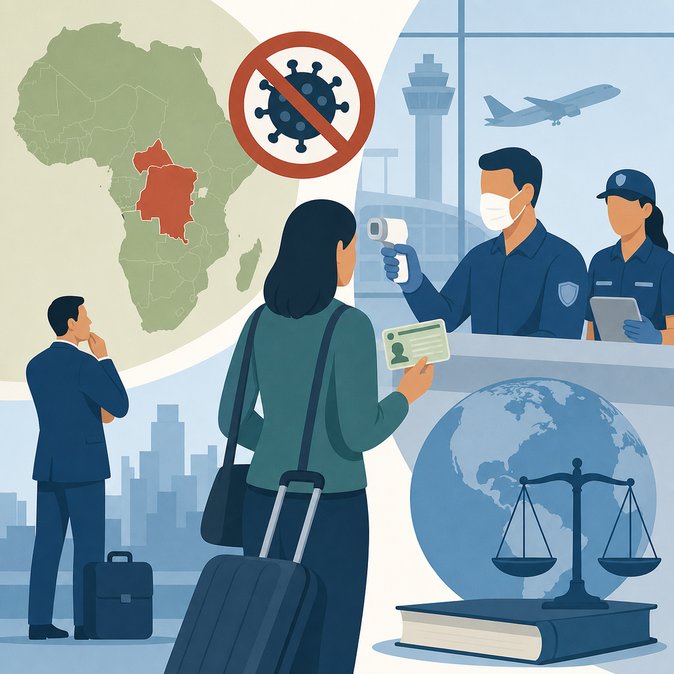
Workers from countries subject to separate travel bans risk being barred from re-entry once they depart. Families with mixed immigration status could be split for months, and humanitarian parolees may be forced back into unsafe environments to pursue residency. Analysts expect litigation to follow. The American Immigration Lawyers Association said the policy “creates an impossible Catch-22” and violates the Administrative Procedure Act. Business groups are weighing economic-impact suits, noting that roughly 600,000 AOS cases are filed each year and that the technology and healthcare sectors rely heavily on seamless AOS to retain talent. For now, employers are advising foreign employees with pending I-485 applications not to travel and to prepare contingency plans for overseas processing if the rule survives. Corporate mobility teams should: 1) map affected employees and dependents; 2) budget for extended assignment gaps; 3) secure country-specific visa appointments early; and 4) reassess immigration timelines for upcoming U.S. transfers. Companies with operations in travel-ban countries need bespoke strategies, such as third-country processing or exploring non-immigrant alternatives until legal challenges play out.

For individuals and employers scrambling to navigate the new consular maze, VisaHQ’s online portal (https://www.visahq.com/united-states/) can streamline appointment booking, document preparation, and country-specific guidance—helping travelers cut wait times and avoid procedural missteps at a moment when overseas interviews have become unavoidable.
Workers from countries subject to separate travel bans risk being barred from re-entry once they depart. Families with mixed immigration status could be split for months, and humanitarian parolees may be forced back into unsafe environments to pursue residency. Analysts expect litigation to follow. The American Immigration Lawyers Association said the policy “creates an impossible Catch-22” and violates the Administrative Procedure Act. Business groups are weighing economic-impact suits, noting that roughly 600,000 AOS cases are filed each year and that the technology and healthcare sectors rely heavily on seamless AOS to retain talent. For now, employers are advising foreign employees with pending I-485 applications not to travel and to prepare contingency plans for overseas processing if the rule survives. Corporate mobility teams should: 1) map affected employees and dependents; 2) budget for extended assignment gaps; 3) secure country-specific visa appointments early; and 4) reassess immigration timelines for upcoming U.S. transfers. Companies with operations in travel-ban countries need bespoke strategies, such as third-country processing or exploring non-immigrant alternatives until legal challenges play out.