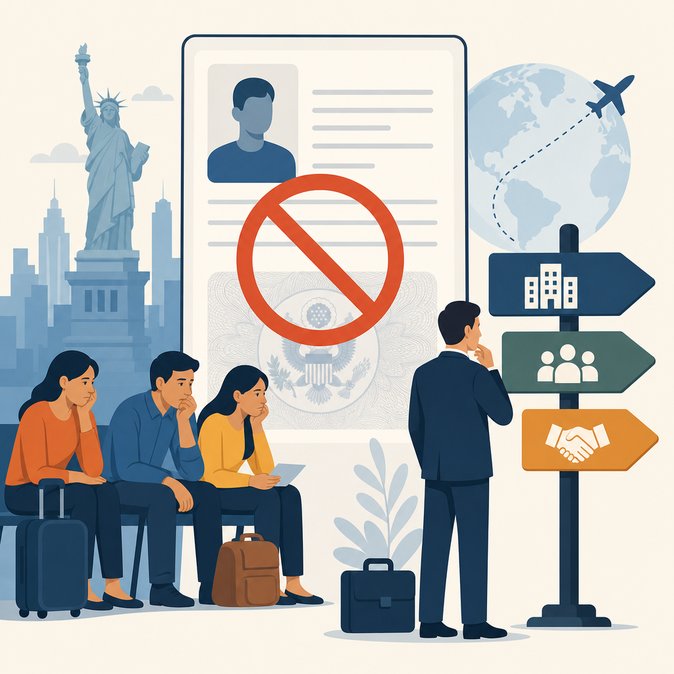
In a notice posted on 22 May 2026, the U.S. Department of State confirmed that all employment-based second-preference (EB-2) immigrant visas allocated to applicants chargeable to India have been issued for fiscal year 2026. Consular posts worldwide must therefore refuse—or, where possible, hold in abeyance—any further EB-2 cases for Indian nationals until the new fiscal year opens on 1 October 2026. The Immigration and Nationality Act limits each country to no more than seven percent of the combined family- and employment-based visa total in a given fiscal year. Heavy demand from Indian professionals—particularly in IT, engineering and healthcare—once again pushed the category to its numerical ceiling just eight months into the year.
![State Department announces FY-2026 EB-2 visa cap for India exhausted]()
At this juncture, organizations might also consider leveraging VisaHQ’s online platform to navigate interim options. Through its U.S. resource center (https://www.visahq.com/united-states/), VisaHQ provides up-to-date visa bulletin monitoring, document checklists and end-to-end filing support, guiding both employers and individual professionals toward alternatives such as EB-1, NIW or non-immigrant categories while the EB-2 queue is closed.
According to State Department figures, more than 80,000 Indian applicants are waiting in the EB-2 queue, many with approved I-140 petitions dating back a decade or more. Practical effects vary by case posture. Applicants awaiting immigrant-visa interviews abroad will see appointments canceled; those already scheduled may receive a section 221(g) refusal pending visa availability. Adjustment-of-Status applicants inside the United States are not directly barred, but the final-action dates in the monthly Visa Bulletin are expected to retrogress sharply, delaying green-card issuance for years. Employers sponsoring EB-2 talent must weigh alternative paths such as EB-1, National-Interest Waiver, or short-term non-immigrant extensions to bridge the gap. The early exhaustion underscores systemic pressure on U.S. employment-based immigration and may fuel bipartisan calls to eliminate country caps. For corporate mobility teams, the priority is to audit affected Indian nationals, update workforce planning assumptions for U.S. assignments, and prepare communication explaining the pause and possible downstream retrogression in FY-2027.

At this juncture, organizations might also consider leveraging VisaHQ’s online platform to navigate interim options. Through its U.S. resource center (https://www.visahq.com/united-states/), VisaHQ provides up-to-date visa bulletin monitoring, document checklists and end-to-end filing support, guiding both employers and individual professionals toward alternatives such as EB-1, NIW or non-immigrant categories while the EB-2 queue is closed.
According to State Department figures, more than 80,000 Indian applicants are waiting in the EB-2 queue, many with approved I-140 petitions dating back a decade or more. Practical effects vary by case posture. Applicants awaiting immigrant-visa interviews abroad will see appointments canceled; those already scheduled may receive a section 221(g) refusal pending visa availability. Adjustment-of-Status applicants inside the United States are not directly barred, but the final-action dates in the monthly Visa Bulletin are expected to retrogress sharply, delaying green-card issuance for years. Employers sponsoring EB-2 talent must weigh alternative paths such as EB-1, National-Interest Waiver, or short-term non-immigrant extensions to bridge the gap. The early exhaustion underscores systemic pressure on U.S. employment-based immigration and may fuel bipartisan calls to eliminate country caps. For corporate mobility teams, the priority is to audit affected Indian nationals, update workforce planning assumptions for U.S. assignments, and prepare communication explaining the pause and possible downstream retrogression in FY-2027.
More From United States of America
View all
USCIS upends decades-old practice, tells most green-card applicants to apply from abroad

Ebola precautions expanded: U.S. bars green-card holders who recently visited DRC, Uganda or South Sudan