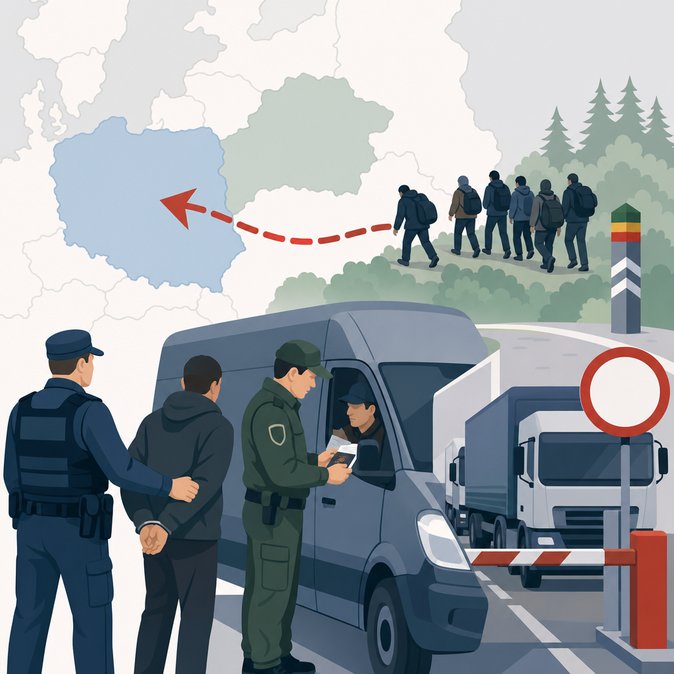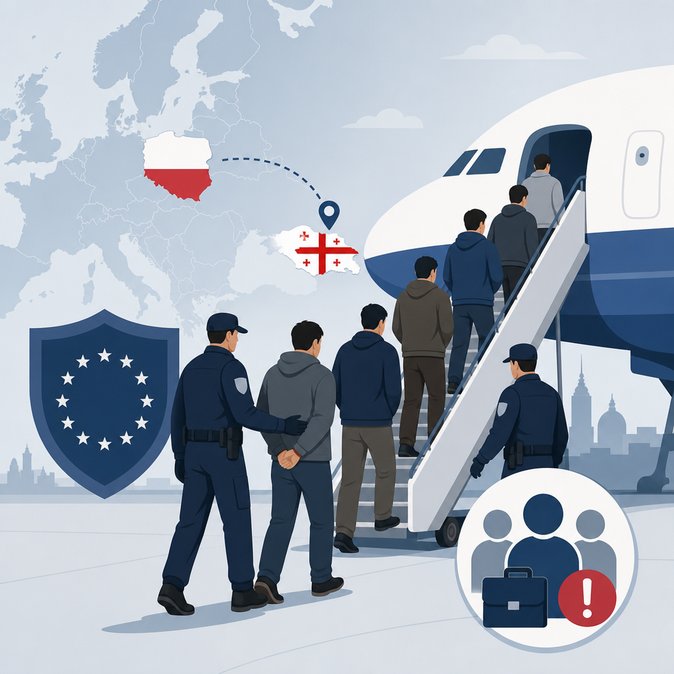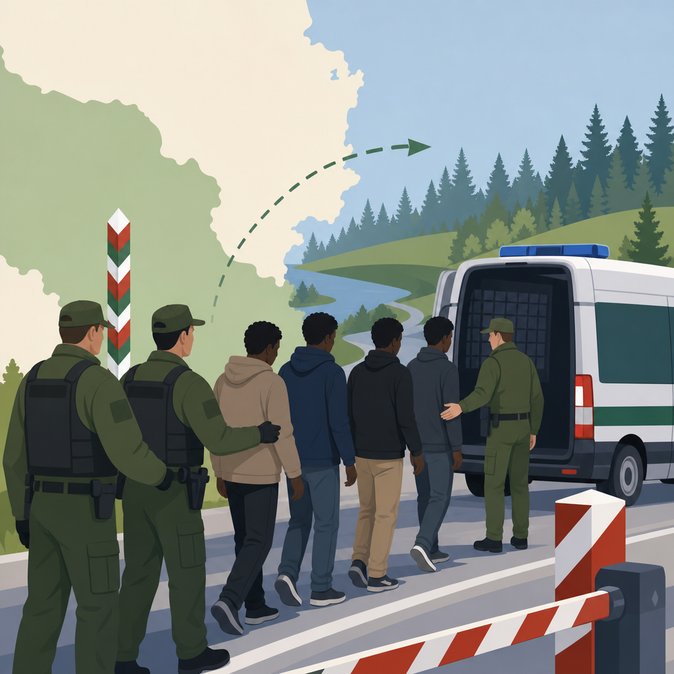
Border Guard officers from the Rutka-Tartak station apprehended four Somali men on 29 May after the group walked across forest terrain separating Lithuania from Poland’s Podlaskie province. The migrants, who carried no travel documents, were discovered near the village of Wiżajny during a routine patrol supported by thermal-imaging drones. Under fast-track readmission rules between Warsaw and Vilnius, the men will be transferred back to Lithuanian authorities once identification and medical checks are complete.
![Border Guard detains four Somali migrants after clandestine crossing from Lithuania]()
If your organisation needs help keeping mobile staff compliant amid these evolving border controls, VisaHQ offers end-to-end support for Schengen visas, Polish work permits and real-time 90/180-day tracking. Visit https://www.visahq.com/poland/ to see how our platform can streamline documentation, provide reminder alerts and reduce the risk of delays when transiting sensitive areas like the Suwałki Gap.
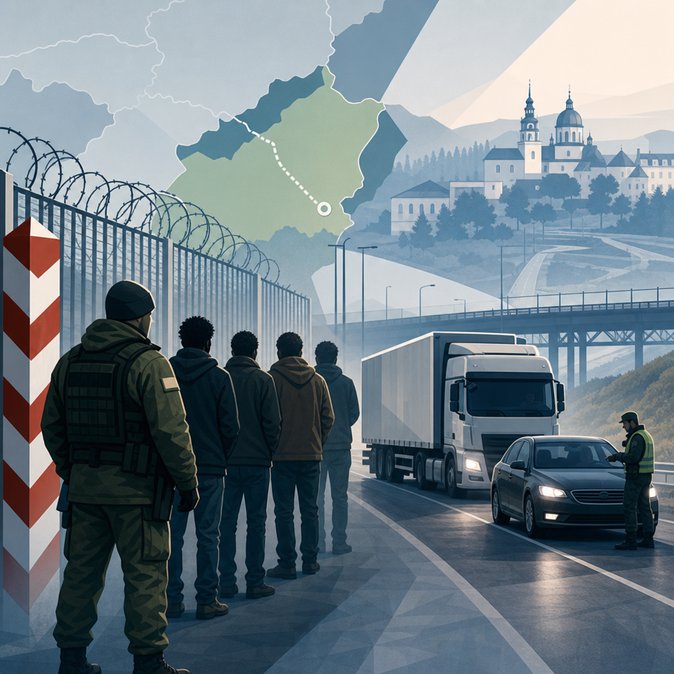
This is the latest in a chain of small but persistent crossings that Polish officials attribute to people-smuggler networks adjusting to reinforced surveillance on the Belarus axis. Since January, more than 400 individuals caught on the Lithuanian line have already been readmitted—nearly double the figure for all of 2025. For employers posting staff to the Suwałki Gap region the uptick means more road checkpoints and occasional closures of local secondary routes as pursuit operations unfold. Companies should brief drivers on how to respond if stopped by mixed patrols of police, military gendarmerie and Border Guard. The incident also underlines the operational start-up of the EU Entry/Exit System, which now flags overstays automatically the moment a non-EU traveller re-enters Schengen, making it harder for rejected asylum seekers to attempt secondary movements. Mobility teams must therefore monitor staff travel history closely and ensure no one exceeds the 90/180-day limit. Lithuania has welcomed the rapid readmissions, noting that friction-free cooperation with Poland is essential ahead of the autumn deployment of NATO forces for the “Steadfast Defender 26” exercises, which will bring thousands of allied troops and contractors through the corridor.
If your organisation needs help keeping mobile staff compliant amid these evolving border controls, VisaHQ offers end-to-end support for Schengen visas, Polish work permits and real-time 90/180-day tracking. Visit https://www.visahq.com/poland/ to see how our platform can streamline documentation, provide reminder alerts and reduce the risk of delays when transiting sensitive areas like the Suwałki Gap.
This is the latest in a chain of small but persistent crossings that Polish officials attribute to people-smuggler networks adjusting to reinforced surveillance on the Belarus axis. Since January, more than 400 individuals caught on the Lithuanian line have already been readmitted—nearly double the figure for all of 2025. For employers posting staff to the Suwałki Gap region the uptick means more road checkpoints and occasional closures of local secondary routes as pursuit operations unfold. Companies should brief drivers on how to respond if stopped by mixed patrols of police, military gendarmerie and Border Guard. The incident also underlines the operational start-up of the EU Entry/Exit System, which now flags overstays automatically the moment a non-EU traveller re-enters Schengen, making it harder for rejected asylum seekers to attempt secondary movements. Mobility teams must therefore monitor staff travel history closely and ensure no one exceeds the 90/180-day limit. Lithuania has welcomed the rapid readmissions, noting that friction-free cooperation with Poland is essential ahead of the autumn deployment of NATO forces for the “Steadfast Defender 26” exercises, which will bring thousands of allied troops and contractors through the corridor.