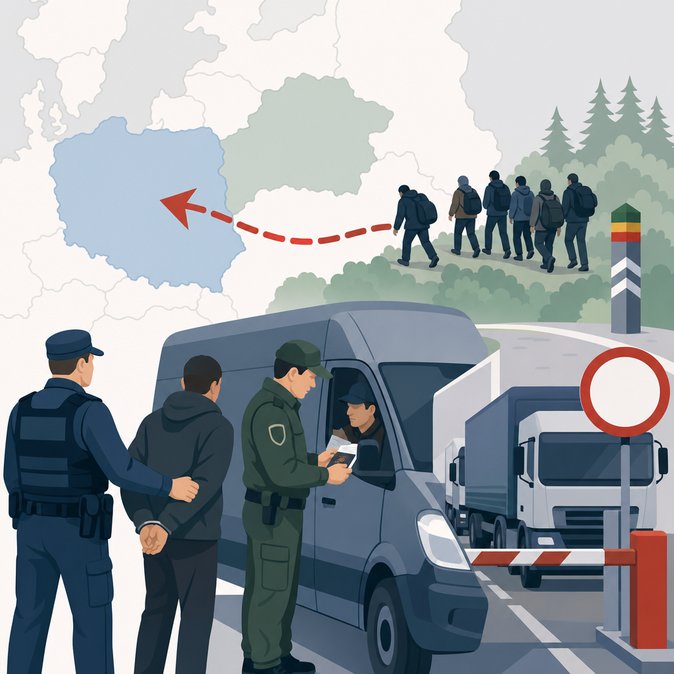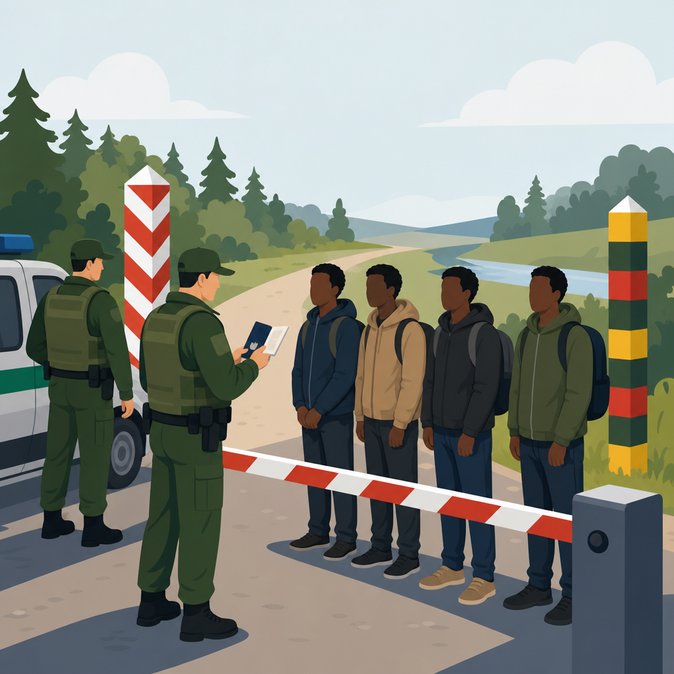
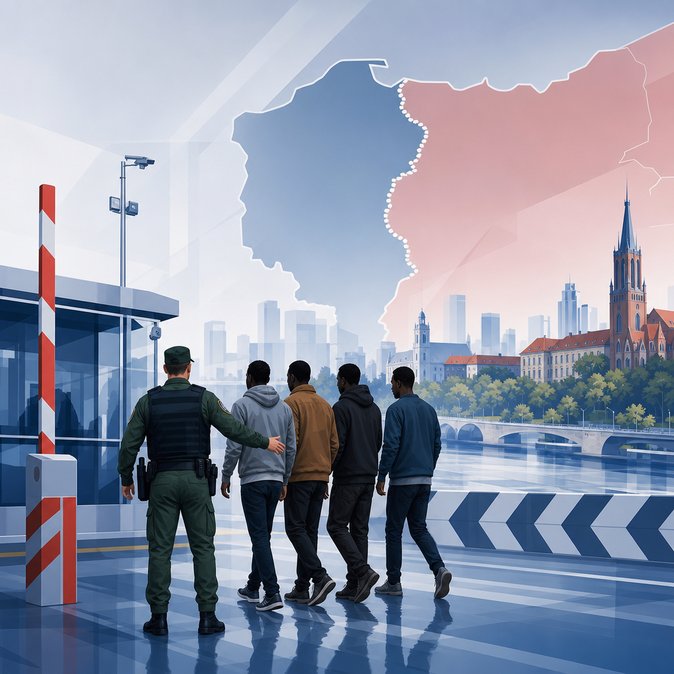
Poland’s Podlaskie Border Guard confirmed on Sunday, 31 May 2026, that patrols near the village of Wiżajny detained four Somali men who had crossed the internal Schengen frontier from Lithuania without documents. The group was spotted by a thermal-imaging camera that the Border Guard has deployed along the sparsely populated Suwałki Gap—NATO’s narrow land corridor linking Poland and the Baltic states. Officials say the Somalis were carrying only mobile phones and small backpacks. Under the EU’s Schengen Borders Code, there are no fixed passport checks between Poland and Lithuania, but travellers must still hold valid travel documents and legal stay rights.
![Polish border guards intercept four Somali nationals in illegal Lithuania crossing]()
To avoid such complications, companies and individual travellers can turn to VisaHQ, an online visa and passport processing platform that clarifies entry rules, assists with Schengen visa applications, and provides real-time updates on changing border formalities. Its Poland portal (https://www.visahq.com/poland/) lets users review document checklists, order courier services, and receive expert support, reducing the risk of being caught unprepared at an internal Schengen inspection.
The detainees were transferred to a local Border Guard post for identification and fingerprinting; Polish authorities intend to hand them back to Lithuania under the bilateral readmission agreement that governs irregular movements within the Schengen Area. Although the number of attempted crossings on the Polish-Lithuanian frontier is far lower than on Poland’s eastern border with Belarus, officials note a steady uptick since Warsaw re-introduced temporary internal controls with Lithuania last October. Most apprehensions involve migrants who first enter the EU through Belarus or Russia and travel north in hopes of reaching Germany or Scandinavia. The Border Guard credits the new Entry/Exit System (EES) and additional mobile patrols for quicker detection. For companies that send staff or drivers through the so-called Baltic route, the incident is a reminder that ad-hoc checks remain possible even inside Schengen. Polish immigration advisers recommend that business travellers keep passports on hand and ensure that third-country employees carry residence cards or EU visas that prove their right to circulate. Logistics operators should also build extra time into schedules in case of spot inspections along national roads 651 and 655, common choke points for joint patrols with Lithuanian officers.
To avoid such complications, companies and individual travellers can turn to VisaHQ, an online visa and passport processing platform that clarifies entry rules, assists with Schengen visa applications, and provides real-time updates on changing border formalities. Its Poland portal (https://www.visahq.com/poland/) lets users review document checklists, order courier services, and receive expert support, reducing the risk of being caught unprepared at an internal Schengen inspection.
The detainees were transferred to a local Border Guard post for identification and fingerprinting; Polish authorities intend to hand them back to Lithuania under the bilateral readmission agreement that governs irregular movements within the Schengen Area. Although the number of attempted crossings on the Polish-Lithuanian frontier is far lower than on Poland’s eastern border with Belarus, officials note a steady uptick since Warsaw re-introduced temporary internal controls with Lithuania last October. Most apprehensions involve migrants who first enter the EU through Belarus or Russia and travel north in hopes of reaching Germany or Scandinavia. The Border Guard credits the new Entry/Exit System (EES) and additional mobile patrols for quicker detection. For companies that send staff or drivers through the so-called Baltic route, the incident is a reminder that ad-hoc checks remain possible even inside Schengen. Polish immigration advisers recommend that business travellers keep passports on hand and ensure that third-country employees carry residence cards or EU visas that prove their right to circulate. Logistics operators should also build extra time into schedules in case of spot inspections along national roads 651 and 655, common choke points for joint patrols with Lithuanian officers.