
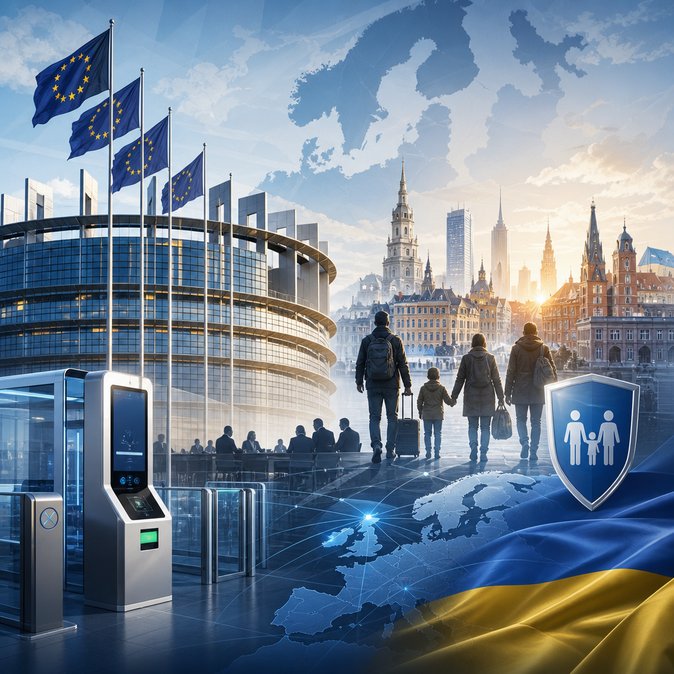
The Council of the European Union has released its ‘Forward Look’ for 1–14 June, confirming that interior ministers will hold a dedicated session on the health of the Schengen area on 4 June. On the table: the first operational review of the biometric Entry/Exit System (EES), the final pre-launch audit of the ETIAS travel authorisation platform, and a stock-take of the newly adopted Migration & Asylum Pact.
![Schengen Overhaul Tops Agenda of 4 June EU Home Affairs Council]()
For companies and travellers trying to navigate these fast-evolving border controls, VisaHQ’s Poland portal (https://www.visahq.com/poland/) provides real-time briefings on ETIAS, EES and related visa procedures, and can streamline document collection or courier support for staff who need to cross Schengen borders at short notice.
Poland, represented by Interior Minister Tomasz Siemoniak, is expected to press for more funding to help external-border states fine-tune EES infrastructure before the peak tourist season. Polish carriers and airports have complained that EES has lengthened processing times by up to 300 % for third-country nationals. Warsaw argues that additional EU money is needed to hire and train border guards and to install more e-Gates at regional airports such as Gdańsk and Katowice. The Commission has signalled it is ready to reallocate unused Internal Security Fund (ISF) envelopes provided member states can demonstrate ‘quick-impact’ deployment. Ministers will also debate the legal status of the 1.3 million Ukrainian citizens who have enjoyed temporary protection in the EU since March 2022. Poland, which hosts the largest share, wants a clear, multi-year residency pathway that would spare employers repeated paperwork and give displaced professionals greater labour-market mobility across the bloc. For multinationals with Polish operations, the meeting matters on three fronts. First, any adjustment in EES or ETIAS timelines will dictate HR travel-policy updates. Second, a firmer residency horizon for Ukrainians would stabilise Poland’s tight labour market, especially in IT and manufacturing. Third, progress on the Schengen governance cycle could determine whether Poland lifts its own internal border checks with Germany and Lithuania later this year.
For companies and travellers trying to navigate these fast-evolving border controls, VisaHQ’s Poland portal (https://www.visahq.com/poland/) provides real-time briefings on ETIAS, EES and related visa procedures, and can streamline document collection or courier support for staff who need to cross Schengen borders at short notice.
Poland, represented by Interior Minister Tomasz Siemoniak, is expected to press for more funding to help external-border states fine-tune EES infrastructure before the peak tourist season. Polish carriers and airports have complained that EES has lengthened processing times by up to 300 % for third-country nationals. Warsaw argues that additional EU money is needed to hire and train border guards and to install more e-Gates at regional airports such as Gdańsk and Katowice. The Commission has signalled it is ready to reallocate unused Internal Security Fund (ISF) envelopes provided member states can demonstrate ‘quick-impact’ deployment. Ministers will also debate the legal status of the 1.3 million Ukrainian citizens who have enjoyed temporary protection in the EU since March 2022. Poland, which hosts the largest share, wants a clear, multi-year residency pathway that would spare employers repeated paperwork and give displaced professionals greater labour-market mobility across the bloc. For multinationals with Polish operations, the meeting matters on three fronts. First, any adjustment in EES or ETIAS timelines will dictate HR travel-policy updates. Second, a firmer residency horizon for Ukrainians would stabilise Poland’s tight labour market, especially in IT and manufacturing. Third, progress on the Schengen governance cycle could determine whether Poland lifts its own internal border checks with Germany and Lithuania later this year.