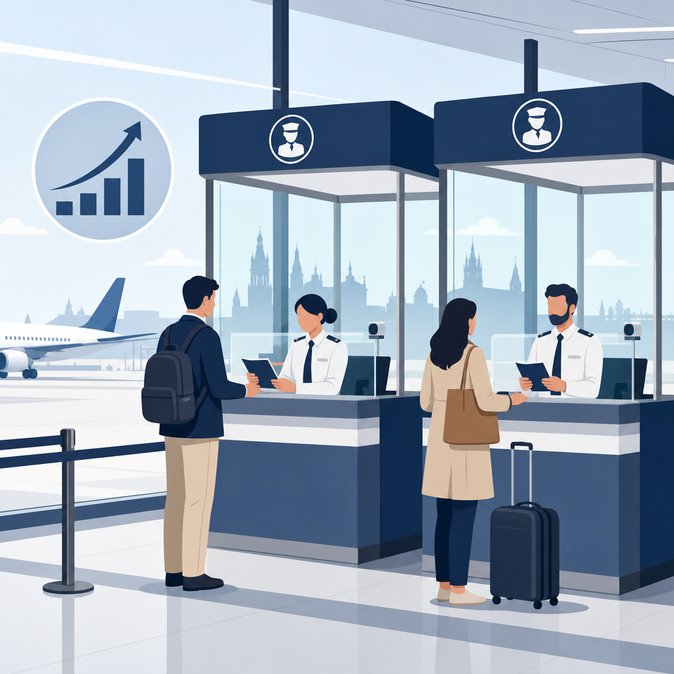
Kraków–Balice John Paul II International Airport has begun installing two additional manual passport-control booths in its restricted departure zone. The upgrade comes just seven weeks after the EU’s new Entry/Exit System (EES) became fully mandatory, requiring border guards to collect fingerprints and facial images from all third-country travellers.
![Krakow Airport to Double Passport Booths for Non-Schengen Departures]()
For travellers who want to make sure their paperwork is perfectly in order before they even reach the airport, VisaHQ can help. Its online portal (https://www.visahq.com/poland/) lets passengers check entry requirements, obtain necessary visas and transit permits, and arrange document pick-up or courier return, all in a few clicks—reducing the risk of surprises that could add precious minutes to the new EES process.
According to airport spokesman Łukasz Marciniak, the average wait for a manual check during the morning and late-evening ‘UK wave’ now exceeds 45 minutes, compared with under 15 minutes before EES went live. The airport handled a record 1.21 million passengers in April and expects summer traffic to break pre-pandemic peaks. While EU and EEA nationals can clear the automated e-Gates in under 30 seconds, travellers to London, Dublin and long-haul hubs in the Gulf still need a staffed counter. The two new booths will raise the total number of conventional departure desks from four to six, effectively adding 300–350 passengers per hour of throughput. Border Guard commanders told the aviation portal Rynek Lotniczy that the investment is being financed jointly by the airport and the Interior Ministry, which has redeployed 26 officers from quieter land crossings to Poland’s busiest regional airports. Krakow is also fast-tracking a pilot of biometric ‘face-in-the-gate’ technology supplied by a domestic start-up; if the tender is signed before September, a small bank of automated gates for third-country nationals could be operational before Christmas. For airlines and corporate travel managers, the short-term benefit is reduced risk of missed connections and departure delays—both of which carry hefty cost penalties under EU261 rules. Longer term, industry groups say the project underlines Poland’s determination to remain attractive for long-haul services and for the corporate itineraries that depend on them. Business passengers heading to the US, the Middle East and Asia had complained that post-EES congestion was eroding the airport’s competitive edge versus Warsaw and Vienna. The additional booths are scheduled to open in mid-June, in time for the first summer holiday peak.
For travellers who want to make sure their paperwork is perfectly in order before they even reach the airport, VisaHQ can help. Its online portal (https://www.visahq.com/poland/) lets passengers check entry requirements, obtain necessary visas and transit permits, and arrange document pick-up or courier return, all in a few clicks—reducing the risk of surprises that could add precious minutes to the new EES process.
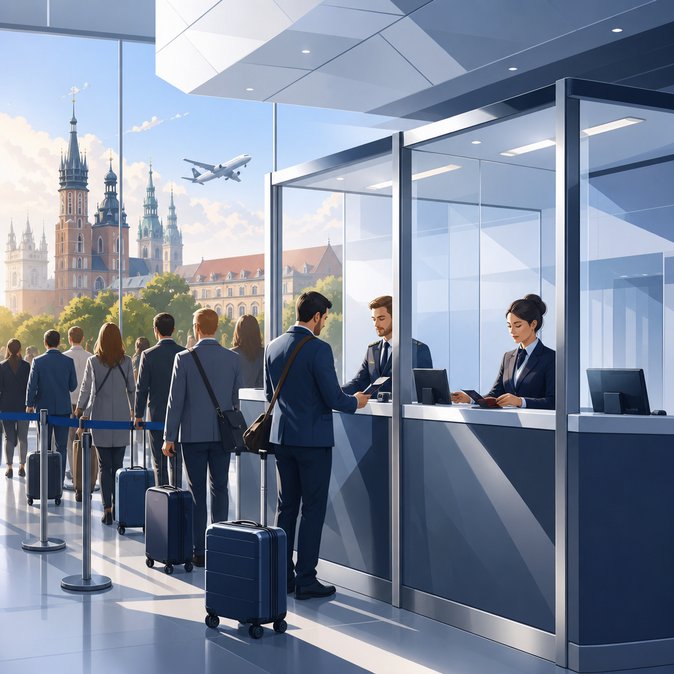
According to airport spokesman Łukasz Marciniak, the average wait for a manual check during the morning and late-evening ‘UK wave’ now exceeds 45 minutes, compared with under 15 minutes before EES went live. The airport handled a record 1.21 million passengers in April and expects summer traffic to break pre-pandemic peaks. While EU and EEA nationals can clear the automated e-Gates in under 30 seconds, travellers to London, Dublin and long-haul hubs in the Gulf still need a staffed counter. The two new booths will raise the total number of conventional departure desks from four to six, effectively adding 300–350 passengers per hour of throughput. Border Guard commanders told the aviation portal Rynek Lotniczy that the investment is being financed jointly by the airport and the Interior Ministry, which has redeployed 26 officers from quieter land crossings to Poland’s busiest regional airports. Krakow is also fast-tracking a pilot of biometric ‘face-in-the-gate’ technology supplied by a domestic start-up; if the tender is signed before September, a small bank of automated gates for third-country nationals could be operational before Christmas. For airlines and corporate travel managers, the short-term benefit is reduced risk of missed connections and departure delays—both of which carry hefty cost penalties under EU261 rules. Longer term, industry groups say the project underlines Poland’s determination to remain attractive for long-haul services and for the corporate itineraries that depend on them. Business passengers heading to the US, the Middle East and Asia had complained that post-EES congestion was eroding the airport’s competitive edge versus Warsaw and Vienna. The additional booths are scheduled to open in mid-June, in time for the first summer holiday peak.