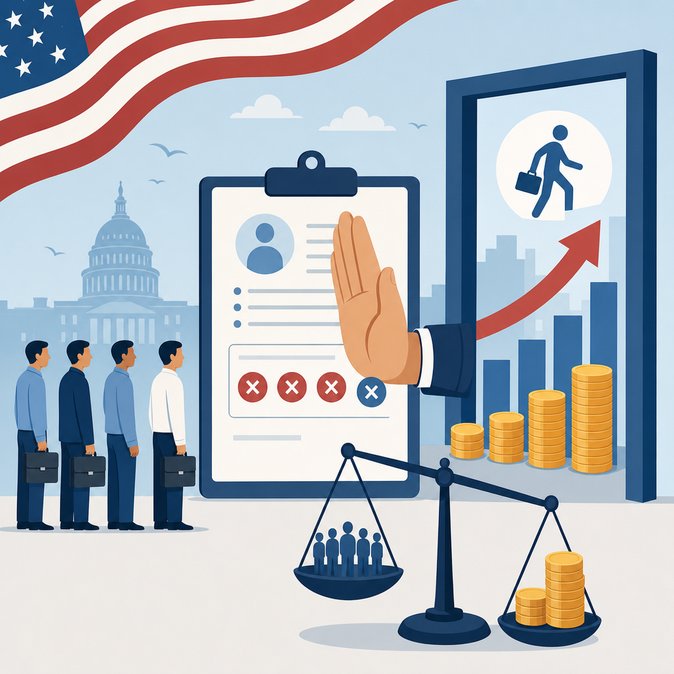
The public-comment window closed on May 28 for a US Department of Labor proposal that would sharply increase the prevailing-wage floors used in H-1B, H-1B1, E-3 and PERM cases. The draft rule moves Level-1 wages from the 17th to the 34th percentile of the Occupational Employment and Wage Statistics survey—about a 33 per cent jump to US$97,746 a year. Coupled with the new wage-weighted H-1B lottery and a US$100,000 petition fee now under congressional consideration, the measure signals a policy pivot away from mass low-wage sponsorship. Preliminary FY2027 lottery data already show Level-1 selections plunging to 17.7 per cent and master’s-degree holders comprising 71.5 per cent of picks.
![US Wage-Hike Plan Would Lift Entry-Level H-1B Salaries by 33 Per Cent]()
For employers and employees navigating these shifting U.S. immigration requirements, VisaHQ can streamline the paperwork and keep you current on prevailing-wage changes. Their India portal (https://www.visahq.com/india/) offers step-by-step support for H-1B and other U.S. work visas, ensuring compliant filings and timely document procurement.
Indian IT services companies—historically heavy users of entry-level H-1Bs—would bear the brunt of the cost escalation. Higher wage floors could accelerate the on-going offshoring of junior roles back to India and force firms to prioritise senior, client-facing positions for US assignments. Global mobility teams should model the budget impact of the new wage tables, revisit onshore/offshore staffing ratios and consider L-1 intracompany transfers or near-shore hubs as alternatives.

For employers and employees navigating these shifting U.S. immigration requirements, VisaHQ can streamline the paperwork and keep you current on prevailing-wage changes. Their India portal (https://www.visahq.com/india/) offers step-by-step support for H-1B and other U.S. work visas, ensuring compliant filings and timely document procurement.
Indian IT services companies—historically heavy users of entry-level H-1Bs—would bear the brunt of the cost escalation. Higher wage floors could accelerate the on-going offshoring of junior roles back to India and force firms to prioritise senior, client-facing positions for US assignments. Global mobility teams should model the budget impact of the new wage tables, revisit onshore/offshore staffing ratios and consider L-1 intracompany transfers or near-shore hubs as alternatives.