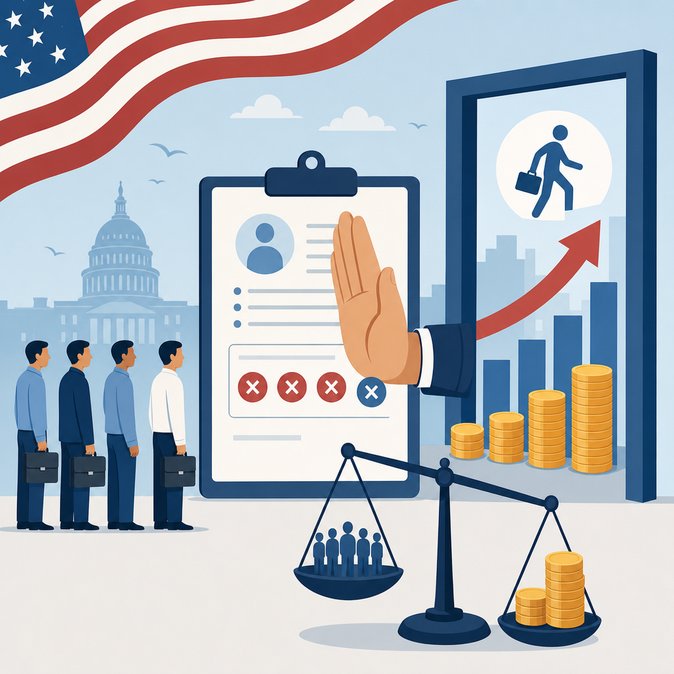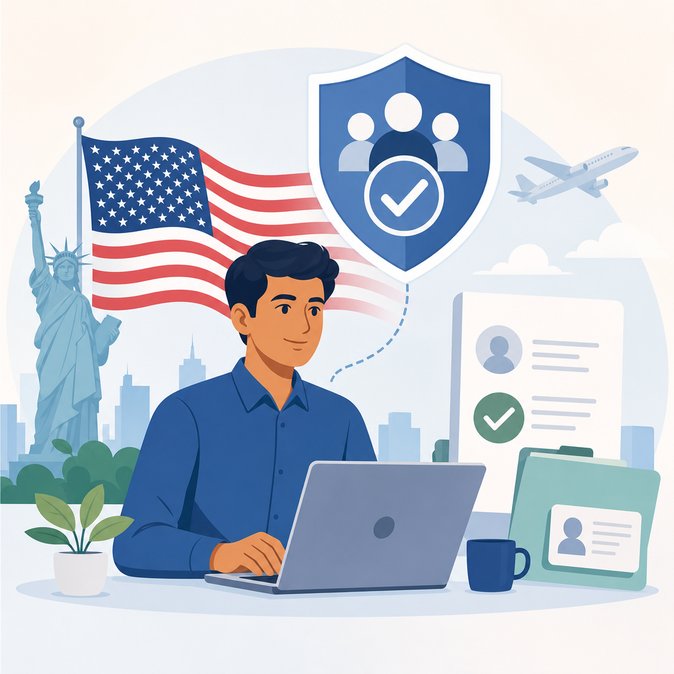
The United States Citizenship and Immigration Services (USCIS) has walked back fears that H-1B professionals would be forced to leave the country during the green-card process. In comments published on May 28, a USCIS spokesperson said foreign workers who provide “economic benefit or serve the national interest” will “likely” be allowed to adjust status inside the US. The reassurance follows a policy memorandum that re-framed adjustment of status as an “extraordinary discretionary benefit,” sparking panic among thousands of Indian IT workers caught in multi-year green-card queues. Immigration lawyers warned that a blanket return-home rule would disrupt projects, family life and children’s schooling—and expose workers to massive U-S consular backlogs in India.
![US Clarifies Indians on H-1B Can Remain While Pursuing Green Cards]()
At this juncture, many Indian professionals and their employers are turning to VisaHQ for practical help in navigating shifting U.S. immigration requirements. Via its dedicated India portal (https://www.visahq.com/india/), the company offers streamlined document checklists, appointment scheduling tools and real-time application tracking, reducing stress if a trip to a U.S. consulate becomes unavoidable during status adjustments or visa renewals.
Under the clarification, H-1B’s dual-intent nature remains intact, but officers retain broad discretion: applicants must document how their work supports the US economy or national priorities. Holders of single-intent visas may still face tougher hurdles. Indian corporates with US subsidiaries should immediately review sponsorship pipelines, maintain strong documentation of employees’ US business impact and continue to budget for longer adjudication timelines as USCIS refines operational guidance in the coming weeks.

At this juncture, many Indian professionals and their employers are turning to VisaHQ for practical help in navigating shifting U.S. immigration requirements. Via its dedicated India portal (https://www.visahq.com/india/), the company offers streamlined document checklists, appointment scheduling tools and real-time application tracking, reducing stress if a trip to a U.S. consulate becomes unavoidable during status adjustments or visa renewals.
Under the clarification, H-1B’s dual-intent nature remains intact, but officers retain broad discretion: applicants must document how their work supports the US economy or national priorities. Holders of single-intent visas may still face tougher hurdles. Indian corporates with US subsidiaries should immediately review sponsorship pipelines, maintain strong documentation of employees’ US business impact and continue to budget for longer adjudication timelines as USCIS refines operational guidance in the coming weeks.