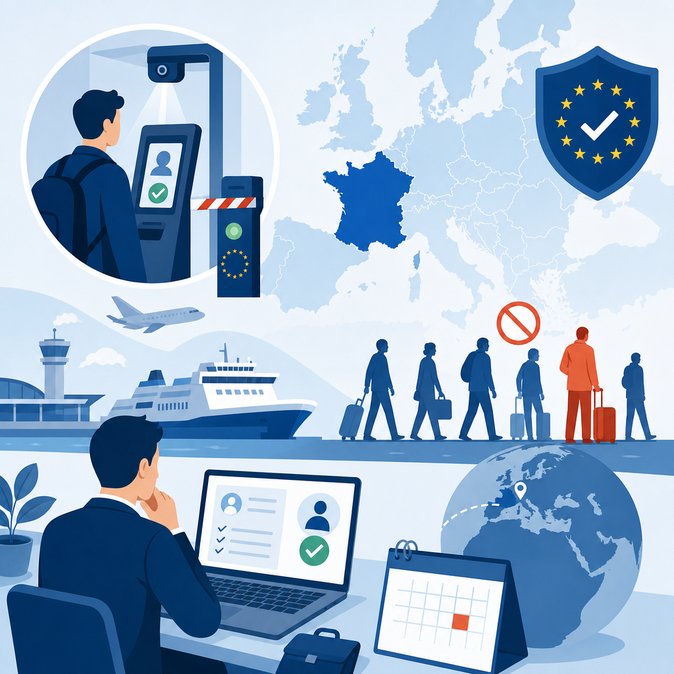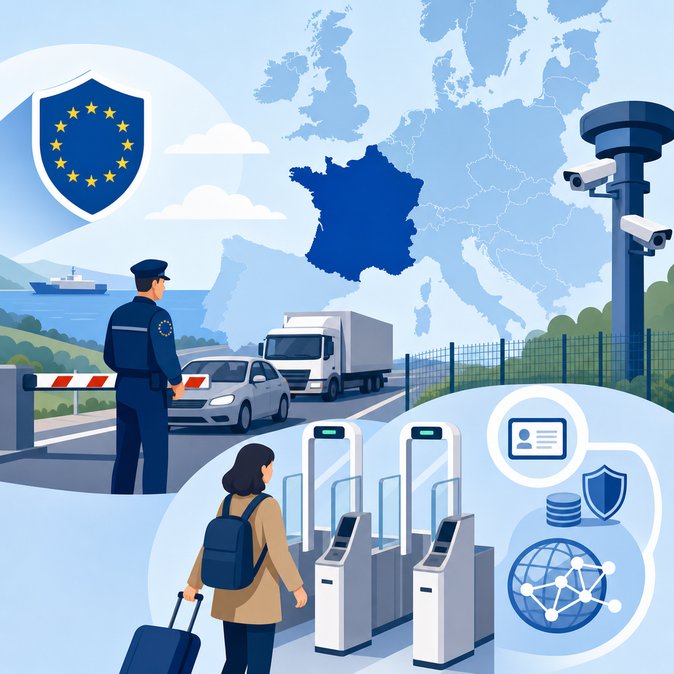
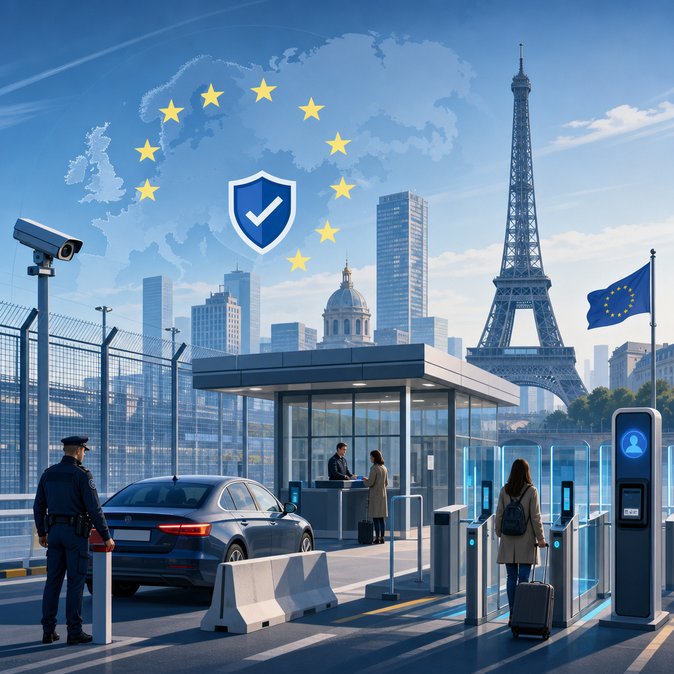
On May 18 the European Commission published its fifth annual State of the Schengen Report, a 26-page document that takes stock of border-free travel and charts priorities for 2026-2027. The headline message is positive: illegal crossings at the EU’s external borders fell 26 % in 2025 and the return rate for irregular migrants reached a ten-year high of 28 %. A major milestone was April’s full rollout of the Entry/Exit System (EES), which the report credits with catching 32 000 inadmissible travellers in its first six weeks. Yet the report also casts a critical eye on Member States—France among them—that continue to apply internal border checks on a quasi-permanent basis. Paris renewed controls on the land frontier with Spain, Italy and Belgium until 31 October 2026, citing persistent jihadist threats and migrant-smuggling networks in the Channel area. Brussels warns that such long-running measures should remain “strictly temporary, targeted and proportionate,” and says the Council will revisit the issue at the Justice and Home Affairs meeting in June. For cross-border commuters in the Lille–Tournai and Nice–Ventimiglia corridors, spot checks have added an average of 12 minutes to daily journeys, according to data the Commission collected from regional chambers of commerce. Logistics providers shipping just-in-time components to French plants report similar slow-downs.
![European Commission’s 2026 ‘State of Schengen’ report sets new priorities—and flags France’s prolonged internal checks]()
In this evolving landscape, organisations and individual travellers can streamline compliance by turning to VisaHQ, whose digital platform offers real-time guidance on Schengen entry rules, ETIAS pre-authorisations and French national permits. Mobility managers can upload traveller data, track applications and receive status alerts through a single dashboard at https://www.visahq.com/france/ easing administrative burdens as border policies fluctuate.
The Commission therefore urges France to explore alternatives such as mobile patrols and real-time intelligence sharing rather than static checkpoints. The report’s forward-looking agenda has several items of direct interest to corporate mobility teams: completion of the ETIAS travel-authorisation system by Q4 2026; new funding for smart-border infrastructure at Eurotunnel and Basque freight crossings; and a legislative proposal to harmonise airport e-gates across the bloc. The Commission is also drafting guidance on the use of AI-driven risk scoring at external borders—a development that could speed up VIP lanes but raise fresh data-privacy concerns. For global-mobility practitioners, the takeaway is twofold: expect smoother processing at France’s external borders thanks to EES and, eventually, ETIAS; but plan for continued spot checks on certain internal frontiers through at least late 2026. Companies with regular cross-border traffic should map alternative routes and factor soft delays into delivery SLAs until the Schengen Council clarifies the sunset timetable for internal controls.
In this evolving landscape, organisations and individual travellers can streamline compliance by turning to VisaHQ, whose digital platform offers real-time guidance on Schengen entry rules, ETIAS pre-authorisations and French national permits. Mobility managers can upload traveller data, track applications and receive status alerts through a single dashboard at https://www.visahq.com/france/ easing administrative burdens as border policies fluctuate.
The Commission therefore urges France to explore alternatives such as mobile patrols and real-time intelligence sharing rather than static checkpoints. The report’s forward-looking agenda has several items of direct interest to corporate mobility teams: completion of the ETIAS travel-authorisation system by Q4 2026; new funding for smart-border infrastructure at Eurotunnel and Basque freight crossings; and a legislative proposal to harmonise airport e-gates across the bloc. The Commission is also drafting guidance on the use of AI-driven risk scoring at external borders—a development that could speed up VIP lanes but raise fresh data-privacy concerns. For global-mobility practitioners, the takeaway is twofold: expect smoother processing at France’s external borders thanks to EES and, eventually, ETIAS; but plan for continued spot checks on certain internal frontiers through at least late 2026. Companies with regular cross-border traffic should map alternative routes and factor soft delays into delivery SLAs until the Schengen Council clarifies the sunset timetable for internal controls.