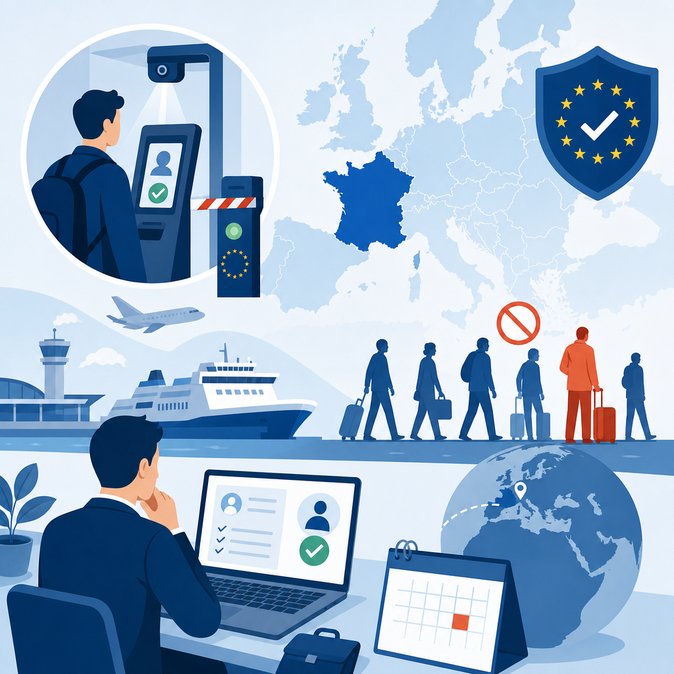
New Eurostat data published on May 19 reveal that France denied entry to 200 British citizens in 2025—more than any other EU Member State—largely for breaches of the Schengen 90/180-day stay limit and missing paperwork. The statistics sparked a flurry of UK media coverage and underline how Brexit has reshaped mobility patterns at French borders. Although the absolute numbers are small compared with land-border refusals involving Ukrainians, Albanians or Colombians, the figure is significant because British visitors enjoy visa-free access for short stays and often assume controls are lax. French border guards, now armed with the EES biometric database, can instantly spot previous overstays and issue an entry refusal that is valid for the entire Schengen Area.
![France tops EU table for refusing entry to UK nationals in latest Eurostat release]()
For travellers who want extra peace of mind, VisaHQ offers an easy online service that audits your itinerary against the 90/180-day rule, provides real-time Schengen day counters and supplies any supporting documents you might need for France—from proof-of-accommodation letters to travel insurance certificates. Their France portal (https://www.visahq.com/france/) also lists upcoming ETIAS requirements and can alert you when applications open, helping you avoid the kinds of paperwork surprises now catching many Britons out.
Penalties range from on-the-spot fines to multi-year re-entry bans. Travel-industry bodies in Paris say second-home owners and remote workers who shuttle between the UK and France are the most exposed. “People mis-calculate weekends and side-trips; the system doesn’t,” warns Guillaume Harel, president of the French Business Travel Association (AFTM). Employers sending UK-based staff to French subsidiaries for training must also keep tighter records; an unplanned extension can trigger compliance issues that complicate future assignments. Border experts note that refusal numbers are likely to rise again once ETIAS goes live in late 2026, as application data will be cross-checked against EES overstay records. In the meantime, consular officials recommend that frequent travellers download smartphone apps that track days in Schengen and carry proof of accommodation, return tickets and travel insurance. The French Interior Ministry, while acknowledging the uptick, insists decisions are “case-by-case and proportionate.” It has no plans to introduce a special fast-track lane for British second-home owners, arguing that equal treatment for all third-country nationals is a legal requirement under EU law.
For travellers who want extra peace of mind, VisaHQ offers an easy online service that audits your itinerary against the 90/180-day rule, provides real-time Schengen day counters and supplies any supporting documents you might need for France—from proof-of-accommodation letters to travel insurance certificates. Their France portal (https://www.visahq.com/france/) also lists upcoming ETIAS requirements and can alert you when applications open, helping you avoid the kinds of paperwork surprises now catching many Britons out.
Penalties range from on-the-spot fines to multi-year re-entry bans. Travel-industry bodies in Paris say second-home owners and remote workers who shuttle between the UK and France are the most exposed. “People mis-calculate weekends and side-trips; the system doesn’t,” warns Guillaume Harel, president of the French Business Travel Association (AFTM). Employers sending UK-based staff to French subsidiaries for training must also keep tighter records; an unplanned extension can trigger compliance issues that complicate future assignments. Border experts note that refusal numbers are likely to rise again once ETIAS goes live in late 2026, as application data will be cross-checked against EES overstay records. In the meantime, consular officials recommend that frequent travellers download smartphone apps that track days in Schengen and carry proof of accommodation, return tickets and travel insurance. The French Interior Ministry, while acknowledging the uptick, insists decisions are “case-by-case and proportionate.” It has no plans to introduce a special fast-track lane for British second-home owners, arguing that equal treatment for all third-country nationals is a legal requirement under EU law.
More From France
View all
EU Entry/Exit System fully operational: over 66 million crossings logged, 32 000 travellers turned away
European Commission’s 2026 ‘State of Schengen’ report sets new priorities—and flags France’s prolonged internal checks