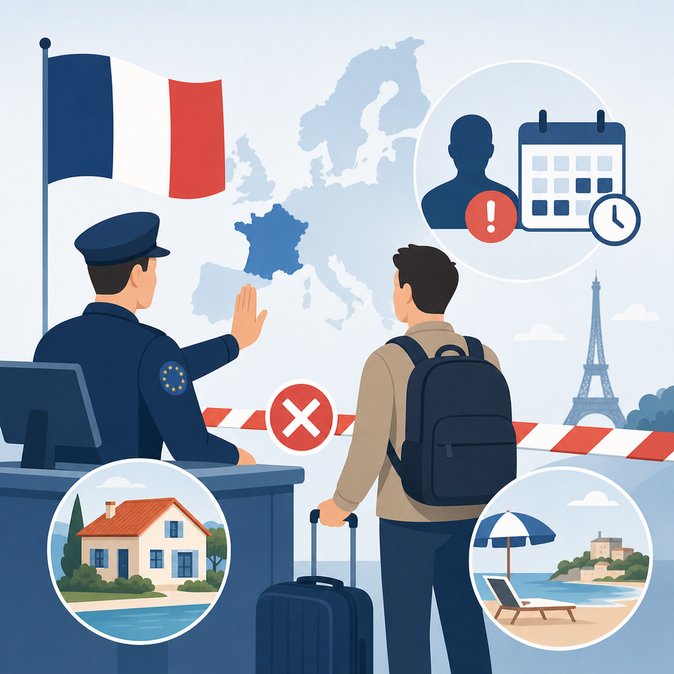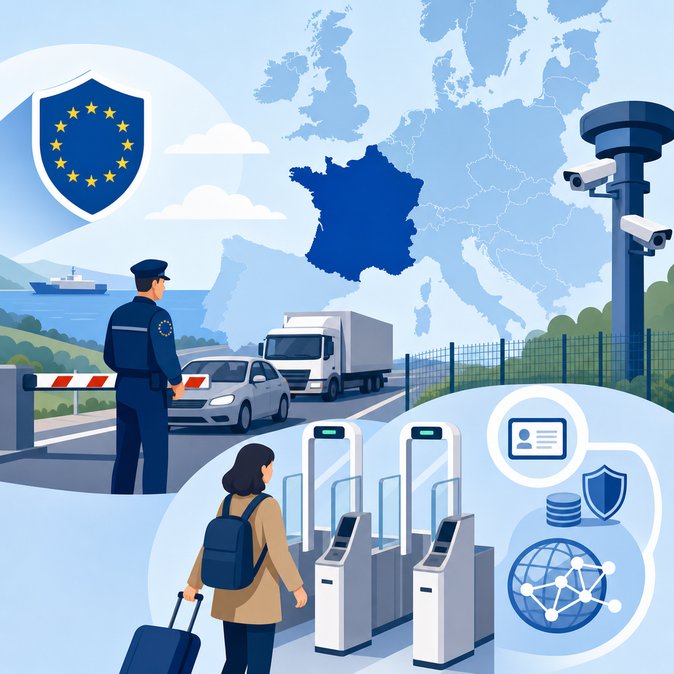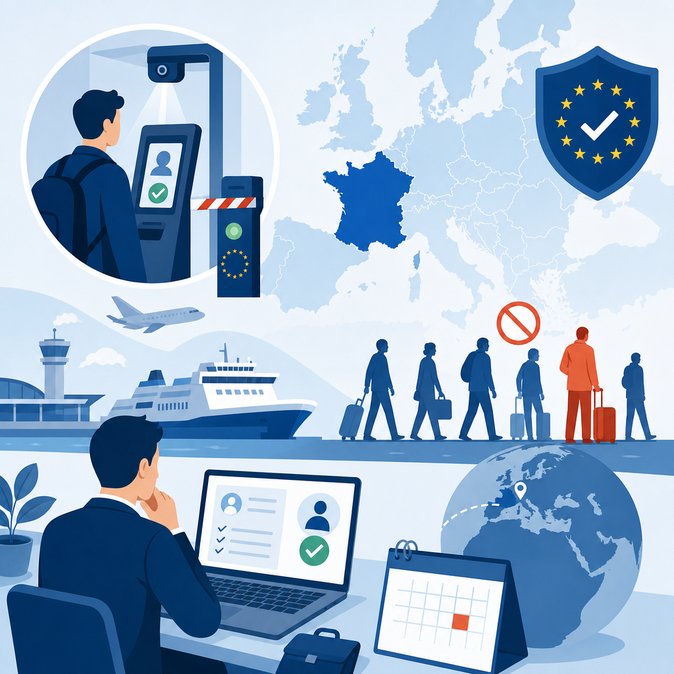
The European Commission on May 19 released its first set of hard numbers on the new Entry/Exit System (EES), the biometric border-control platform that replaced passport-stamping at Schengen external frontiers in April. According to the figures, border posts in the 29 Schengen members—including France’s airports, Channel ports and land frontiers—have already registered more than 66 million entries and exits by non-EU nationals. Roughly 32 000 people were refused entry because the system automatically detected overstays, invalid travel documents or public-security alerts. For French companies that rotate third-country staff in and out of short-stay assignments, the numbers are a wake-up call. EES clocks the exact length of every stay and shares the data instantly with all Member-State border posts, ending the « week-end buffer » that many mobility managers relied on to keep employees within the 90/180-day Schengen limit. A single extra night at a trade fair in Lyon or an unplanned client visit in Lille could now flag an overstay and trigger an automatic refusal of entry at Roissy or Eurotunnel, with knock-on effects for project timelines and client relations. Border-control unions at French airports say the digital gates have already speeded up flows for compliant travellers but concede that queuing times lengthen sharply when the system rejects a passport. Airlines have begun pre-departure messaging that reminds passengers to respect the 90-day rule and to travel with proof of onward accommodation and sufficient funds. Eurostar, which is still adapting its London-St Pancras terminal to the new biometric checks, warns of “sporadic peak-time bottlenecks” over the coming weeks.
For organisations and individual travellers that want an extra layer of certainty, VisaHQ’s France portal (https://www.visahq.com/france/) offers real-time visa and entry-rule updates, an automated 90/180-day calculator and document-preparation tools that mesh seamlessly with the new EES and upcoming ETIAS requirements, helping mobility teams track compliance in one dashboard.
![EU Entry/Exit System fully operational: over 66 million crossings logged, 32 000 travellers turned away]()
EES is also a dress rehearsal for ETIAS, the electronic travel authorisation that the Commission confirmed will launch in late 2026. Once ETIAS is live, non-EU visitors to France who do not hold a residence permit—business travellers and tourists alike—will have to apply online before boarding. Mobility managers should therefore start integrating ETIAS status into duty-of-care checklists, alongside passport validity and health-insurance cover.
Practical tips:
• Audit all short-stay travel plans for the rest of 2026 and re-sequence trips if necessary to stay within 90/180 limits.
• Instruct travellers to carry evidence of purpose of stay (invitation letters, hotel bookings, return tickets).
• Build an extra 30–45 minutes into airport reporting times until biometric processing stabilises.
• Update travel-policy templates to reference ETIAS pre-clearance once the formal launch window is announced.
For organisations and individual travellers that want an extra layer of certainty, VisaHQ’s France portal (https://www.visahq.com/france/) offers real-time visa and entry-rule updates, an automated 90/180-day calculator and document-preparation tools that mesh seamlessly with the new EES and upcoming ETIAS requirements, helping mobility teams track compliance in one dashboard.
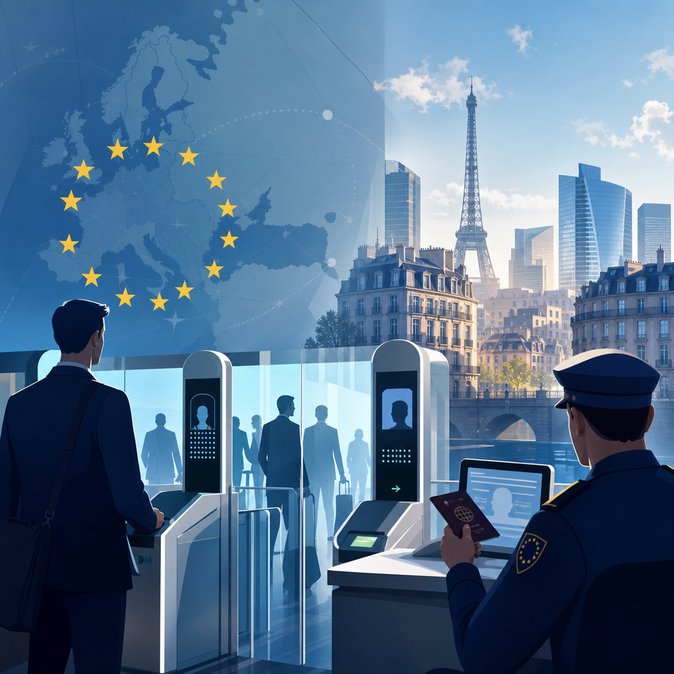
EES is also a dress rehearsal for ETIAS, the electronic travel authorisation that the Commission confirmed will launch in late 2026. Once ETIAS is live, non-EU visitors to France who do not hold a residence permit—business travellers and tourists alike—will have to apply online before boarding. Mobility managers should therefore start integrating ETIAS status into duty-of-care checklists, alongside passport validity and health-insurance cover.
Practical tips:
• Audit all short-stay travel plans for the rest of 2026 and re-sequence trips if necessary to stay within 90/180 limits.
• Instruct travellers to carry evidence of purpose of stay (invitation letters, hotel bookings, return tickets).
• Build an extra 30–45 minutes into airport reporting times until biometric processing stabilises.
• Update travel-policy templates to reference ETIAS pre-clearance once the formal launch window is announced.