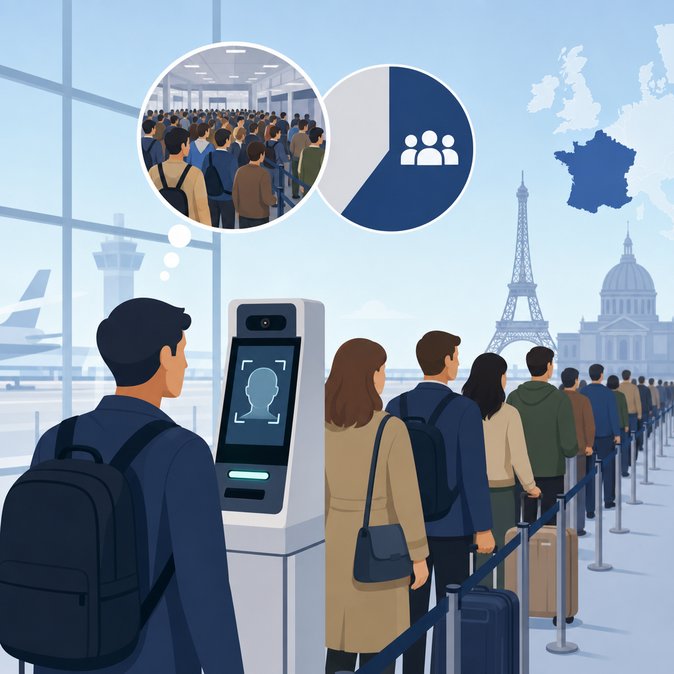
A survey released on 17 May by Booking.com suggests that nearly three in five British holiday-makers anticipate “significant delays” at European airports once the EU’s biometric Entry-Exit System (EES) goes live this autumn— with Paris-Charles-de-Gaulle and Orly topping the list of concern. The EES will replace manual passport stamping for non-EU visitors with a fingerprint and facial-image scan every time they enter or leave the Schengen Area. French border-police trials earlier this spring recorded average processing times of just under two minutes per traveller but spikes of more than three hours when equipment failed or large tour groups arrived simultaneously. While the poll focused on UK travellers, its findings matter to France because Britons are the country’s largest inbound market after Germans. Airports operator Groupe ADP has installed 450 self-service kiosks across CDG, Orly and Paris-Nord rail terminal, yet unions warn that staffing levels remain inadequate for the summer rush.
![Poll Finds 59 % of UK Travellers Expect Long Queues at French Airports under New EU Entry-Exit System]()
For travellers looking to stay ahead of the new rules, VisaHQ offers up-to-date guidance on French and Schengen entry requirements, including the forthcoming EES and ETIAS systems. Its online platform (https://www.visahq.com/france/) lets corporate travel managers and individual passengers check documentation needs, track application status and receive alerts, helping minimise surprises at the border.
Industry body BAR France fears missed connections could cost airlines millions in re-accommodation bills. Corporate-travel managers should brief staff to arrive earlier—especially for first post-implementation trips when biometric enrolment is required—and to factor extra time at the Eurostar Paris Gare du Nord terminal, where French border police share space with UK officials. Employers running short-term assignment programmes should also check that travellers do not inadvertently over-stay the 90/180-day limit; EES will automatically flag excess days. French authorities insist the system will ultimately cut forgery and over-stay rates and pave the way for the long-delayed ETIAS travel authorisation in 2027. In the meantime, they advise passengers to pre-complete enrolment where online portals are offered and to keep fingers free of sunscreen or oil so that scanners register first time.

For travellers looking to stay ahead of the new rules, VisaHQ offers up-to-date guidance on French and Schengen entry requirements, including the forthcoming EES and ETIAS systems. Its online platform (https://www.visahq.com/france/) lets corporate travel managers and individual passengers check documentation needs, track application status and receive alerts, helping minimise surprises at the border.
Industry body BAR France fears missed connections could cost airlines millions in re-accommodation bills. Corporate-travel managers should brief staff to arrive earlier—especially for first post-implementation trips when biometric enrolment is required—and to factor extra time at the Eurostar Paris Gare du Nord terminal, where French border police share space with UK officials. Employers running short-term assignment programmes should also check that travellers do not inadvertently over-stay the 90/180-day limit; EES will automatically flag excess days. French authorities insist the system will ultimately cut forgery and over-stay rates and pave the way for the long-delayed ETIAS travel authorisation in 2027. In the meantime, they advise passengers to pre-complete enrolment where online portals are offered and to keep fingers free of sunscreen or oil so that scanners register first time.