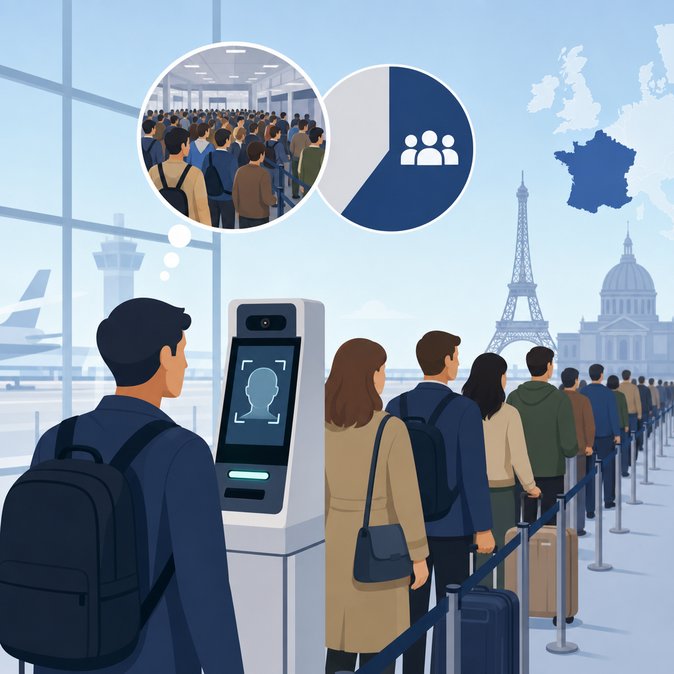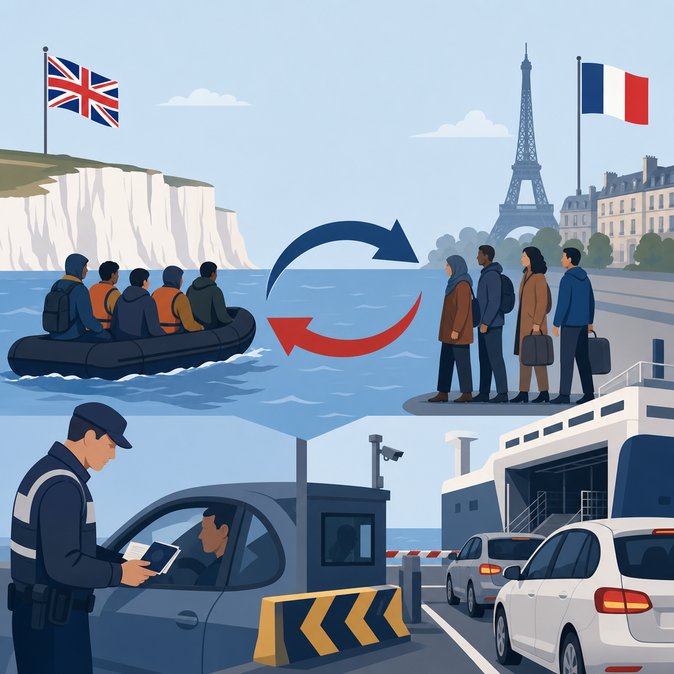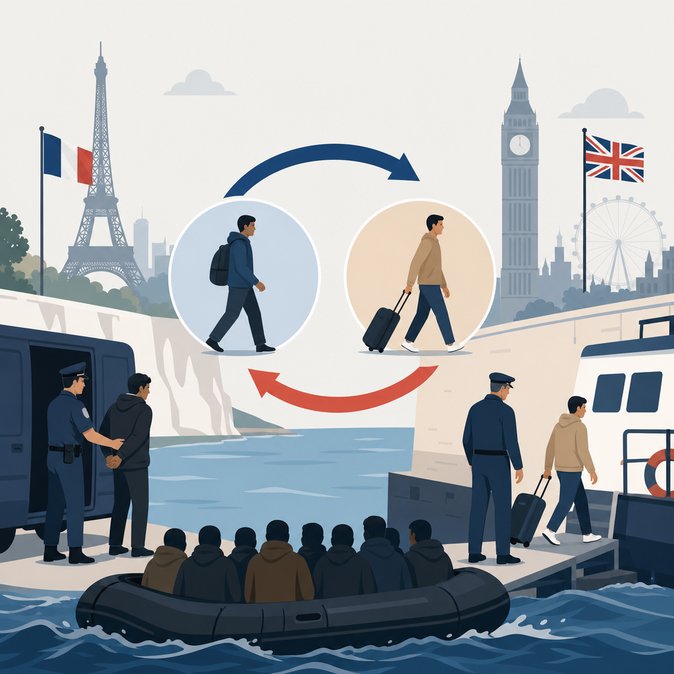
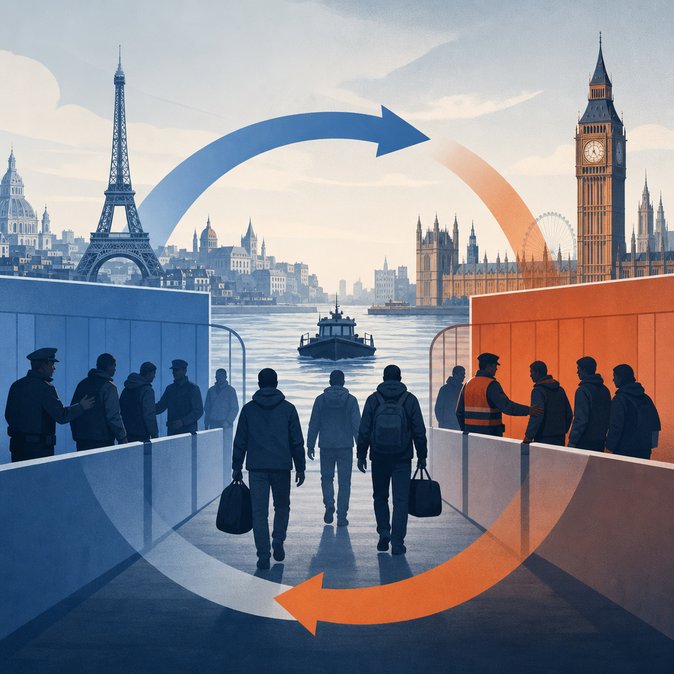
France and the United Kingdom have quietly agreed to prolong their controversial ‘one-in, one-out’ migrant-returns pilot until 1 October 2026, according to Home Office sources quoted at the weekend. Under the mechanism—signed by President Emmanuel Macron and Prime Minister Keir Starmer last July—one asylum-seeker who succeeds in crossing the English Channel in a small boat is removed to France, while the UK accepts one person who is still in France via regular resettlement channels. Originally due to expire on 11 June, the pilot has so far seen more than 600 people sent back to France and just over 580 admitted legally to Britain. Officials say the extension will allow a “full summer stress-test” when crossing attempts traditionally spike. French interior-ministry advisers insist the arrangement is compatible with both EU and French law because returns are processed as “voluntary readmissions”, but rights groups on both sides of the Channel argue that the scheme effectively externalises UK asylum processing and leaves returnees in bureaucratic limbo. Lawyers in Calais report cases of people being bussed hundreds of kilometres inland with no accommodation guarantee.
![UK-France ‘One-In, One-Out’ Channel Returns Scheme Extended to October]()
For companies or individuals needing to navigate the evolving Franco-British immigration environment, the online platform VisaHQ can streamline the paperwork by advising on the most up-to-date visa types and entry requirements for both countries. Its France portal (https://www.visahq.com/france/) offers step-by-step application guidance, document checklists, and real-time status tracking, helping mobility teams avoid last-minute surprises.
For global-mobility and corporate-relocation managers, the extension signals continued operational uncertainty on the Channel route. Clients moving personnel between the two countries should allow extra time for family-reunion visas, factor in potential legal appeals, and keep contingency budgets for temporary housing. Transport operators meanwhile predict modest falls in ferry and Eurotunnel bookings by irregular migrants, but warn that smugglers have already shifted departures to Belgian beaches and lorry routes. Policy analysts note that the bilateral deal is proceeding even as EU interior ministers struggle to finalise a bloc-wide returns framework. Paris views the pilot as leverage in those negotiations, whereas London portrays it domestically as evidence that “safe and legal routes” can replace dangerous boat journeys. Whether the numbers will bear that out over the busy summer season remains to be seen.
For companies or individuals needing to navigate the evolving Franco-British immigration environment, the online platform VisaHQ can streamline the paperwork by advising on the most up-to-date visa types and entry requirements for both countries. Its France portal (https://www.visahq.com/france/) offers step-by-step application guidance, document checklists, and real-time status tracking, helping mobility teams avoid last-minute surprises.
For global-mobility and corporate-relocation managers, the extension signals continued operational uncertainty on the Channel route. Clients moving personnel between the two countries should allow extra time for family-reunion visas, factor in potential legal appeals, and keep contingency budgets for temporary housing. Transport operators meanwhile predict modest falls in ferry and Eurotunnel bookings by irregular migrants, but warn that smugglers have already shifted departures to Belgian beaches and lorry routes. Policy analysts note that the bilateral deal is proceeding even as EU interior ministers struggle to finalise a bloc-wide returns framework. Paris views the pilot as leverage in those negotiations, whereas London portrays it domestically as evidence that “safe and legal routes” can replace dangerous boat journeys. Whether the numbers will bear that out over the busy summer season remains to be seen.