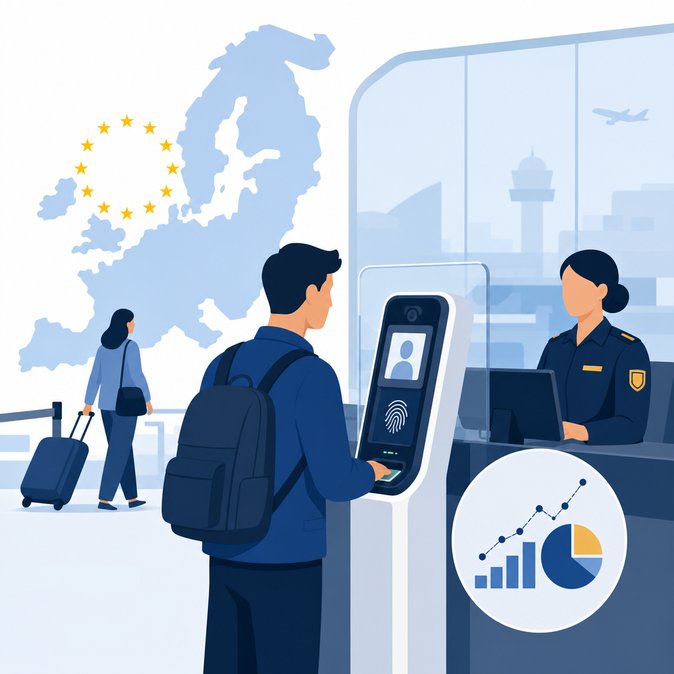
The EU agency eu-LISA on 18 May 2026 published the inaugural quarterly statistics for the new Entry/Exit System (EES), the biometric database that has been fully operational at all Schengen external borders—including Germany’s airports, seaports and land crossings—since 10 April. The report covers the soft-launch phase from 12 October to 31 December 2025, but it nonetheless offers the first data-driven clues about how the IT platform is bedding in.
![First EU Entry/Exit System statistics released: what they reveal for travellers to Germany]()
Travelers and mobility managers looking for hands-on support as these new rules take hold can tap VisaHQ’s Germany portal (https://www.visahq.com/germany/). The platform helps individuals and companies check Schengen stay balances, secure the correct visas, and receive alerts about documentation changes—services that dovetail neatly with the EES roll-out and the forthcoming ETIAS layer.
During the pilot period the EES logged 8,180 refusals of entry, 283 revoked authorisations, 479 extensions and more than 492,000 exemptions from fingerprint capture. Although Germany accounts for only a slice of the sample, federal police told the Bundestag’s interior committee last week that the system has already halved average processing time per third-country passenger at Frankfurt and Munich once travellers have completed their initial registration. Early snags remain: some automated gates still struggle with dark-ink passports, and coach operators on the A4 corridor from Poland report confusion over when passengers must disembark for biometric recording. For corporate mobility teams the bigger impact will be after 1 July 2026, when carriers become liable for fines if they board passengers whose short-stay allowance has expired according to the EES calculator. Travel managers are therefore advised to build a 36-hour buffer into itineraries that combine Schengen and non-Schengen legs, and to brief employees on using the EU’s official ‘How long can I stay?’ widget before booking. The German Business Travel Association (VDR) has asked the Interior Ministry to publish real-time gate-downtime alerts so that crews can redirect passengers to staffed counters during outages. Longer term, the EES data set will feed into risk-based screening for the forthcoming ETIAS travel authorisation, due in mid-2027, and could influence Germany’s visa statistics. If overstay rates from particular countries climb, Berlin could tighten national rules on long-term permits such as the ICT Card. Conversely, reliable compliance data may strengthen the case for expanding e-visa pilots now running in India and South Africa. HR departments should update assignment letters to remind non-EU assignees that every exit must be recorded to ‘reset the clock’; inadvertent overstays will show up instantly when travellers re-enter. For cross-border commuters on German residence permits the EES has no effect, but employers should still verify that staff carry their electronic residence card (eAT) or face delays if asked to leave biometric lanes. Eu-LISA will release the next report in August, which will finally include full German figures for the first months of nationwide operation.
Travelers and mobility managers looking for hands-on support as these new rules take hold can tap VisaHQ’s Germany portal (https://www.visahq.com/germany/). The platform helps individuals and companies check Schengen stay balances, secure the correct visas, and receive alerts about documentation changes—services that dovetail neatly with the EES roll-out and the forthcoming ETIAS layer.
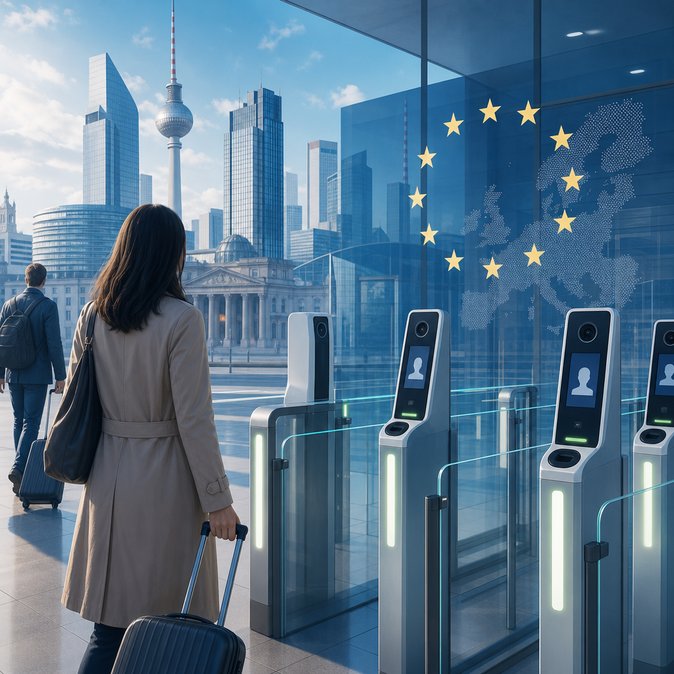
During the pilot period the EES logged 8,180 refusals of entry, 283 revoked authorisations, 479 extensions and more than 492,000 exemptions from fingerprint capture. Although Germany accounts for only a slice of the sample, federal police told the Bundestag’s interior committee last week that the system has already halved average processing time per third-country passenger at Frankfurt and Munich once travellers have completed their initial registration. Early snags remain: some automated gates still struggle with dark-ink passports, and coach operators on the A4 corridor from Poland report confusion over when passengers must disembark for biometric recording. For corporate mobility teams the bigger impact will be after 1 July 2026, when carriers become liable for fines if they board passengers whose short-stay allowance has expired according to the EES calculator. Travel managers are therefore advised to build a 36-hour buffer into itineraries that combine Schengen and non-Schengen legs, and to brief employees on using the EU’s official ‘How long can I stay?’ widget before booking. The German Business Travel Association (VDR) has asked the Interior Ministry to publish real-time gate-downtime alerts so that crews can redirect passengers to staffed counters during outages. Longer term, the EES data set will feed into risk-based screening for the forthcoming ETIAS travel authorisation, due in mid-2027, and could influence Germany’s visa statistics. If overstay rates from particular countries climb, Berlin could tighten national rules on long-term permits such as the ICT Card. Conversely, reliable compliance data may strengthen the case for expanding e-visa pilots now running in India and South Africa. HR departments should update assignment letters to remind non-EU assignees that every exit must be recorded to ‘reset the clock’; inadvertent overstays will show up instantly when travellers re-enter. For cross-border commuters on German residence permits the EES has no effect, but employers should still verify that staff carry their electronic residence card (eAT) or face delays if asked to leave biometric lanes. Eu-LISA will release the next report in August, which will finally include full German figures for the first months of nationwide operation.