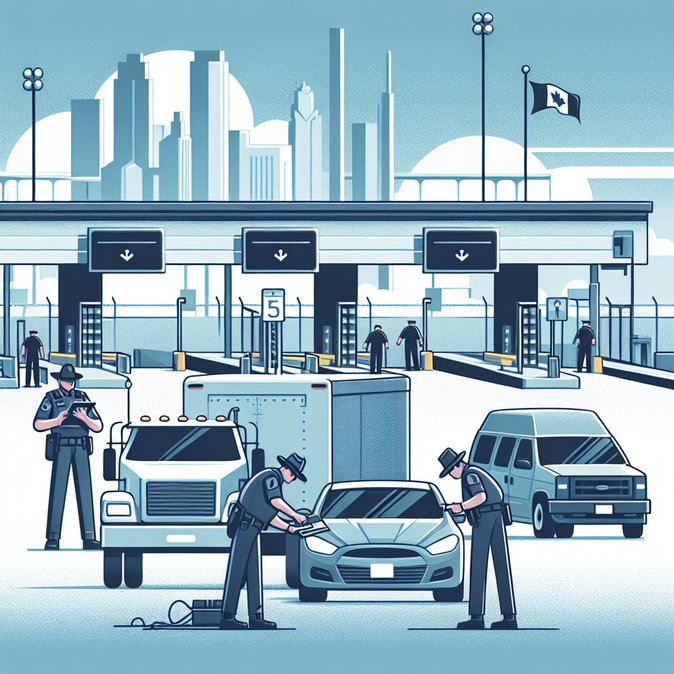
In a statistical snapshot sure to feed Germany’s migration debate, the Federal Interior Ministry disclosed on 12 May that border guards have refused entry to roughly 35,000 people since Friedrich Merz became Chancellor a year ago. The figures, first reported by DPA and carried by the Bulgarian News Agency BTA, cover the period 8 May 2025 to 8 May 2026 and reflect a tougher gate-keeping doctrine introduced by Interior Minister Alexander Dobrindt. Under the directive, officers at the land frontiers may turn back anyone lacking a filed asylum application or presenting security red-flags, with exemptions only for the sick, pregnant women or other vulnerable cases. During the same period the Bundespolizei recorded 47,659 illegal entry attempts, arrested 1,415 suspected smugglers and identified more than 8,800 persons wanted on warrants. The ministry argues the policy is a “visible signal of a new migration course”, crediting it for the first year-on-year fall in asylum applications since 2020. Critics counter that blanket refusals breach EU asylum law and merely shift migratory pressure to other routes.
![Interior ministry says 35,000 migrants refused entry in first year of Chancellor Merz]()
For anyone needing clarity on the fast-changing rules for entering or staying in Germany—whether employees shuttling across borders or families arranging longer-term residence—VisaHQ offers an easy online hub for visa and document support. Their dedicated Germany page (https://www.visahq.com/germany/) aggregates the latest requirements and lets users submit applications through a streamlined interface, reducing uncertainty amid tighter border checks.
For businesses the headline number matters less than the operational reality: heightened spot checks on trucks, trains and coaches cause delays on the supply chains that knit Germany to its neighbours. Mobility teams moving staff by road between German plants and Czech, Polish or Austrian sites report journey times that are 30–45 minutes longer than a year ago. The wider EU asylum overhaul (GEAS), due to enter force on 12 June, could either entrench or replace the current ad-hoc checks—making the next few weeks critical for contingency planning. Relocation advisers urge companies to keep cross-border travellers’ passports and residence cards valid and accessible, even on routine intra-Schengen hops, until the legal landscape stabilises.

For anyone needing clarity on the fast-changing rules for entering or staying in Germany—whether employees shuttling across borders or families arranging longer-term residence—VisaHQ offers an easy online hub for visa and document support. Their dedicated Germany page (https://www.visahq.com/germany/) aggregates the latest requirements and lets users submit applications through a streamlined interface, reducing uncertainty amid tighter border checks.
For businesses the headline number matters less than the operational reality: heightened spot checks on trucks, trains and coaches cause delays on the supply chains that knit Germany to its neighbours. Mobility teams moving staff by road between German plants and Czech, Polish or Austrian sites report journey times that are 30–45 minutes longer than a year ago. The wider EU asylum overhaul (GEAS), due to enter force on 12 June, could either entrench or replace the current ad-hoc checks—making the next few weeks critical for contingency planning. Relocation advisers urge companies to keep cross-border travellers’ passports and residence cards valid and accessible, even on routine intra-Schengen hops, until the legal landscape stabilises.