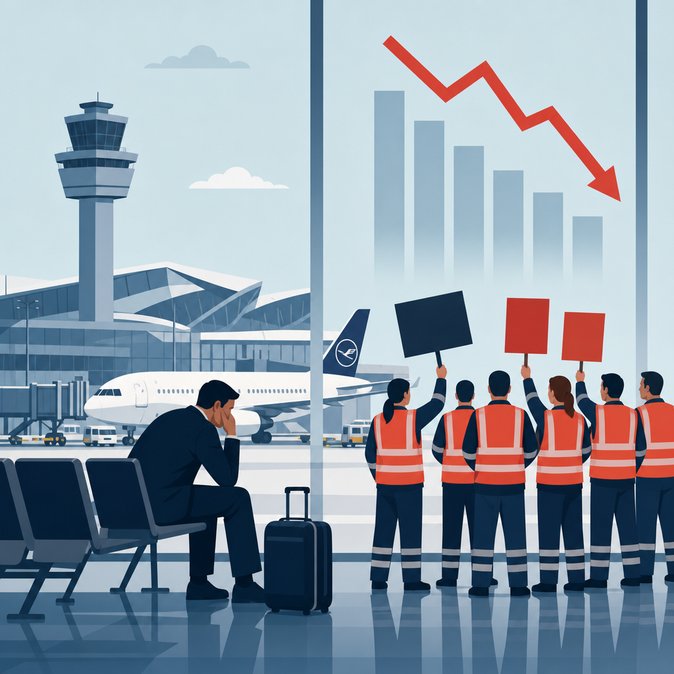
Fraport AG, operator of Frankfurt Airport (FRA), reported on 18 May 2026 that passenger volumes fell 11 percent year-on-year in April to 4.8 million travellers after a total of six strike days crippled Lufthansa and its subsidiaries. The industrial action—organised separately by the pilots’ union Vereinigung Cockpit and the cabin-crew union UFO—affected roughly half a million passengers and forced airlines to cancel or re-route hundreds of inter-continental services. Cargo tonnage slipped 0.6 percent as Lufthansa Cargo faced capacity gaps with belly freight largely grounded. Fraport’s management said the immediate operational disruption is over, but knock-on effects will spill into June. Corporate itineraries, especially for North-America-bound travellers, still face tighter seat availability, driving fares 18 percent higher than the same week last year according to data from the German Travel Association. Meanwhile, aircraft movements were down 11.6 percent, a figure CEO Stefan Schulte called “a reminder that recurring labour disputes can wipe out almost a year of incremental growth in a single month.” The slump matters to mobility planners because Frankfurt is Germany’s primary hub for long-haul assignments and rotational crew changes. With summer peak season approaching, Fraport is urging multinational employers to diversify routings via Munich or Amsterdam and to factor in longer minimum connection times.
![Strikes drag Frankfurt Airport traffic down 11 % in April, Fraport warns of summer knock-on]()
For organisations suddenly rebooking staff through alternative hubs, staying on top of visa and transit-permit requirements is just as critical as securing a seat. VisaHQ’s digital platform (https://www.visahq.com/germany/) provides real-time entry rules, rapid e-visa processing and expert support for Germany, the Netherlands and 200+ other destinations, helping mobility teams keep travellers moving smoothly despite strike-related disruptions.
The airport has reopened two seldom-used remote stands to handle repositioned charter flights, but warned that security-screening lanes remain short-staffed after the Easter wage round. On the positive side, the Greek, Brazilian and Slovenian airports in Fraport’s international portfolio all posted passenger gains in April, underscoring the operator’s geographic hedge strategy. Should strikes persist—Lufthansa ground staff contracts are still under negotiation—Fraport will accelerate installation of additional self-service bag-drop units to stabilise throughput. Companies sending technical teams should expect restricted airside-driver permits during any future walkout, a policy introduced after staff shortages in February caused ramp-safety concerns. For HR and travel managers the advice is clear: lock in summer tickets early, book fully flexible fares where possible, and brief employees on the continued risk of ad-hoc cancellations. The airport’s traffic figures signal that Germany’s labour unrest is now a top variable in mobility cost forecasts for 2026.

For organisations suddenly rebooking staff through alternative hubs, staying on top of visa and transit-permit requirements is just as critical as securing a seat. VisaHQ’s digital platform (https://www.visahq.com/germany/) provides real-time entry rules, rapid e-visa processing and expert support for Germany, the Netherlands and 200+ other destinations, helping mobility teams keep travellers moving smoothly despite strike-related disruptions.
The airport has reopened two seldom-used remote stands to handle repositioned charter flights, but warned that security-screening lanes remain short-staffed after the Easter wage round. On the positive side, the Greek, Brazilian and Slovenian airports in Fraport’s international portfolio all posted passenger gains in April, underscoring the operator’s geographic hedge strategy. Should strikes persist—Lufthansa ground staff contracts are still under negotiation—Fraport will accelerate installation of additional self-service bag-drop units to stabilise throughput. Companies sending technical teams should expect restricted airside-driver permits during any future walkout, a policy introduced after staff shortages in February caused ramp-safety concerns. For HR and travel managers the advice is clear: lock in summer tickets early, book fully flexible fares where possible, and brief employees on the continued risk of ad-hoc cancellations. The airport’s traffic figures signal that Germany’s labour unrest is now a top variable in mobility cost forecasts for 2026.