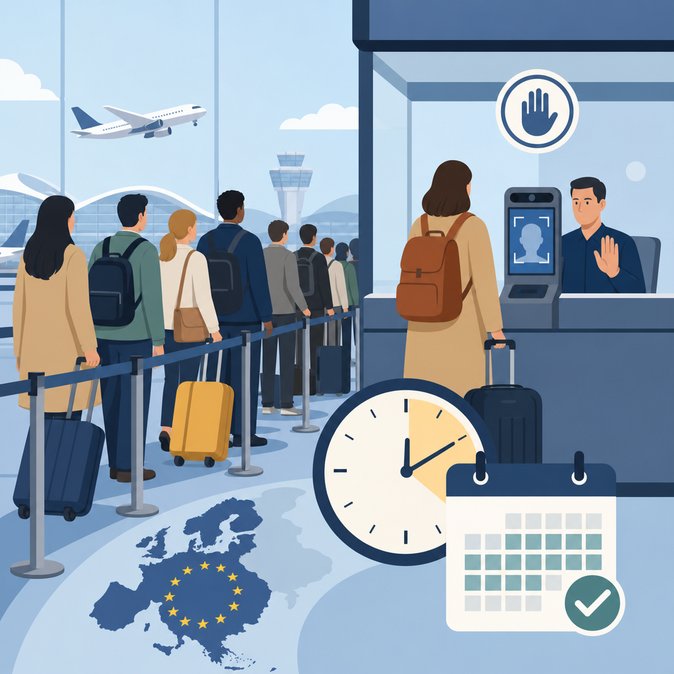
Travellers planning trips to Germany and the wider Schengen Area this summer face a new layer of red tape in the form of the EU Entry/Exit System (EES), a bloc-wide biometric border register that went live on 10 April 2026. A consumer-advice report published by UK watchdog Which? on 15 May 2026 warns that the roll-out is already producing hours-long queues at European hubs—and that German airports such as Frankfurt and Munich are not immune.
![EES Biometric Checks Cause Summer-Travel Uncertainty for Germany-Bound Visitors]()
Need help navigating Germany’s constantly evolving border formalities? VisaHQ’s online platform—complete with up-to-date guidance on EES, ETIAS and Schengen visa rules—lets travellers and corporate mobility teams generate personalised checklists, track application status and book courier services in minutes. Find details at https://www.visahq.com/germany/
EES replaces manual passport stamps with fingerprint and facial scans for every non-EU national entering or leaving the Schengen zone. Since Brexit, that includes British travellers, but the same rules apply to citizens of the U.S., Canada, Australia and most of Asia-Pacific. Although German border police have installed hundreds of new kiosks, staff shortages mean that, at peak periods, officials are exercising a clause that allows member states to "pause" the checks temporarily. For mobility managers the practical advice is two-fold. First, instruct assignees to arrive at least three hours before departure when flying out of Germany to a non-Schengen destination, as exit queues can be as long as entry lines. Second, remind travellers that the 90/180-day stay counter is now calculated automatically; overstays will trigger an alert and can lead to multi-year bans. Companies that rotate staff through Germany on short-term projects should therefore tighten time-tracking systems to avoid accidental infringements. Longer term, EES data will feed directly into ETIAS, the paid travel-authorisation system scheduled to become mandatory in early 2027. German business associations are lobbying the Interior Ministry to harmonise kiosk-design across airports so that frequent flyers can reuse biometric profiles instead of being rescanned at each trip, but no national waiver exists. Until the system beds in, travellers should expect sporadic suspensions—useful for catching flights but risky for accurate day-counting if passports are still stamped manually.
Need help navigating Germany’s constantly evolving border formalities? VisaHQ’s online platform—complete with up-to-date guidance on EES, ETIAS and Schengen visa rules—lets travellers and corporate mobility teams generate personalised checklists, track application status and book courier services in minutes. Find details at https://www.visahq.com/germany/
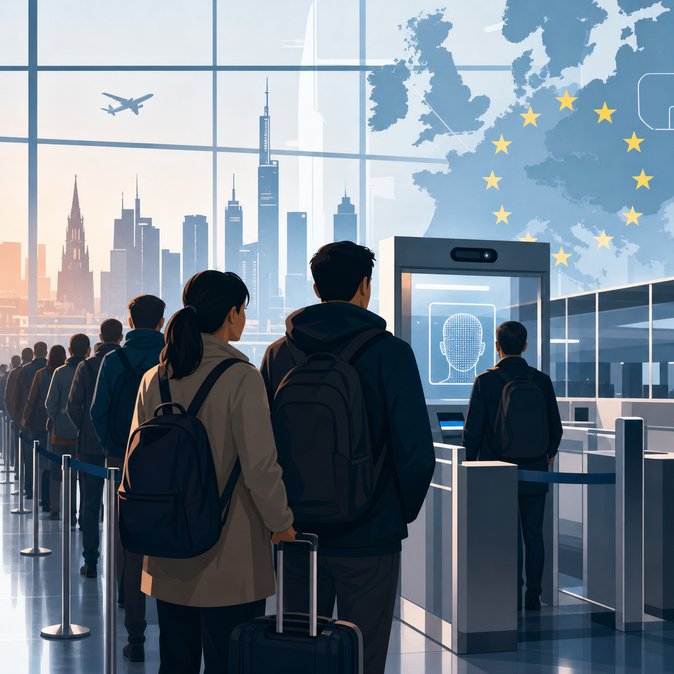
EES replaces manual passport stamps with fingerprint and facial scans for every non-EU national entering or leaving the Schengen zone. Since Brexit, that includes British travellers, but the same rules apply to citizens of the U.S., Canada, Australia and most of Asia-Pacific. Although German border police have installed hundreds of new kiosks, staff shortages mean that, at peak periods, officials are exercising a clause that allows member states to "pause" the checks temporarily. For mobility managers the practical advice is two-fold. First, instruct assignees to arrive at least three hours before departure when flying out of Germany to a non-Schengen destination, as exit queues can be as long as entry lines. Second, remind travellers that the 90/180-day stay counter is now calculated automatically; overstays will trigger an alert and can lead to multi-year bans. Companies that rotate staff through Germany on short-term projects should therefore tighten time-tracking systems to avoid accidental infringements. Longer term, EES data will feed directly into ETIAS, the paid travel-authorisation system scheduled to become mandatory in early 2027. German business associations are lobbying the Interior Ministry to harmonise kiosk-design across airports so that frequent flyers can reuse biometric profiles instead of being rescanned at each trip, but no national waiver exists. Until the system beds in, travellers should expect sporadic suspensions—useful for catching flights but risky for accurate day-counting if passports are still stamped manually.