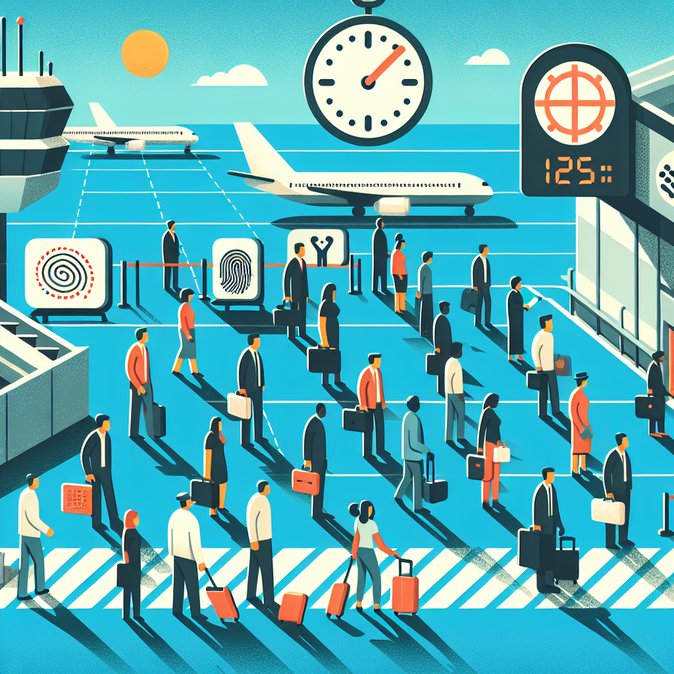
Major carriers serving Germany—including Ryanair, Jet2 and easyJet—have written to the European Commission and several member-state interior ministries asking for an immediate, short-term suspension of biometric checks under the new EU Entry/Exit System (EES). The carriers say that since EES went fully live on 10 April, non-EU passengers at Frankfurt, Munich and Berlin Brandenburg have waited up to four hours for passport control, causing dozens of missed flights and at least one EasyJet aircraft to depart Milan-Linate with 122 booked passengers still in the queue. Under EES, border police must capture four fingerprints and a facial image from every third-country traveller.
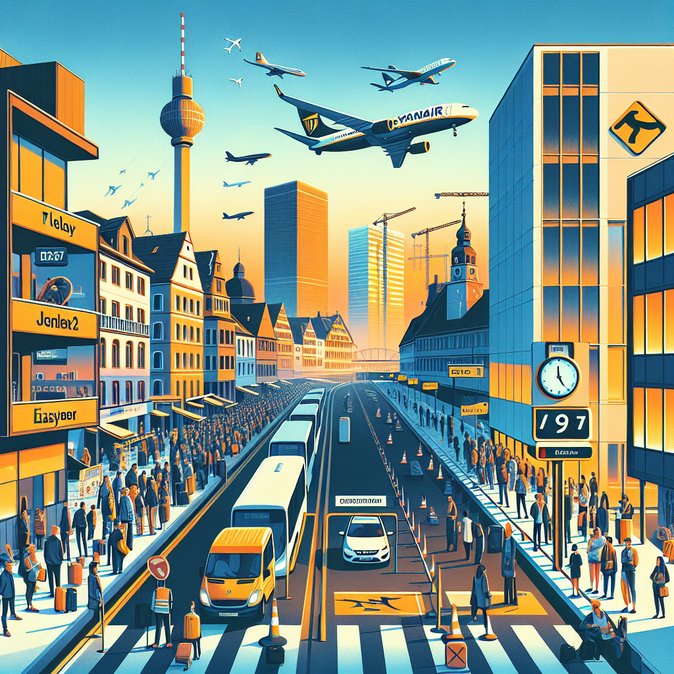
![Airlines Urge Temporary Suspension of EU Entry/Exit System as German Airports Face Four-Hour Queues]()
For individual travellers navigating these shifting requirements, VisaHQ can help smooth the journey. Its online platform (https://www.visahq.com/germany/) lets you verify up-to-date entry rules, pre-arrange visa processing or passport renewals and even upload documentation in advance—saving precious time at the desk when queues are longest.
Airlines claim that staffing levels at German airports were not increased to match the extra processing time—estimated at 30–45 seconds per passenger—so peak-season capacity is at risk. Ryanair argues that Article 9 of Regulation 2025/1534 allows member states to revert temporarily to manual checks where “unforeseen operational problems” threaten public order; Greece has already invoked that clause for British nationals, and the carriers want Germany to do the same at least until September. Industry groups note that Germany’s business community relies on predictable connection times for intra-EU day trips and long-haul connections. If queues persist, corporate travel managers may rout passengers via Amsterdam or Vienna, reducing hub traffic and airport retail revenue in Germany. The German Airports Association (ADV) warns that extended dwell times also strain terminal infrastructure, as holding areas were never designed for several hours of wait time. For now, airlines have told passengers to arrive “no later than three hours before departure,” but acknowledge even that may be insufficient on Monday-morning waves. Mobility managers are advised to build in longer layovers, pre-enrol frequent travellers in EasyPASS-RTP where eligible, and monitor further announcements from the Federal Police (Bundespolizei). If Berlin authorises a suspension, queues could ease within 24–48 hours; if it refuses, summer schedules may require large-scale retiming.
For individual travellers navigating these shifting requirements, VisaHQ can help smooth the journey. Its online platform (https://www.visahq.com/germany/) lets you verify up-to-date entry rules, pre-arrange visa processing or passport renewals and even upload documentation in advance—saving precious time at the desk when queues are longest.
Airlines claim that staffing levels at German airports were not increased to match the extra processing time—estimated at 30–45 seconds per passenger—so peak-season capacity is at risk. Ryanair argues that Article 9 of Regulation 2025/1534 allows member states to revert temporarily to manual checks where “unforeseen operational problems” threaten public order; Greece has already invoked that clause for British nationals, and the carriers want Germany to do the same at least until September. Industry groups note that Germany’s business community relies on predictable connection times for intra-EU day trips and long-haul connections. If queues persist, corporate travel managers may rout passengers via Amsterdam or Vienna, reducing hub traffic and airport retail revenue in Germany. The German Airports Association (ADV) warns that extended dwell times also strain terminal infrastructure, as holding areas were never designed for several hours of wait time. For now, airlines have told passengers to arrive “no later than three hours before departure,” but acknowledge even that may be insufficient on Monday-morning waves. Mobility managers are advised to build in longer layovers, pre-enrol frequent travellers in EasyPASS-RTP where eligible, and monitor further announcements from the Federal Police (Bundespolizei). If Berlin authorises a suspension, queues could ease within 24–48 hours; if it refuses, summer schedules may require large-scale retiming.