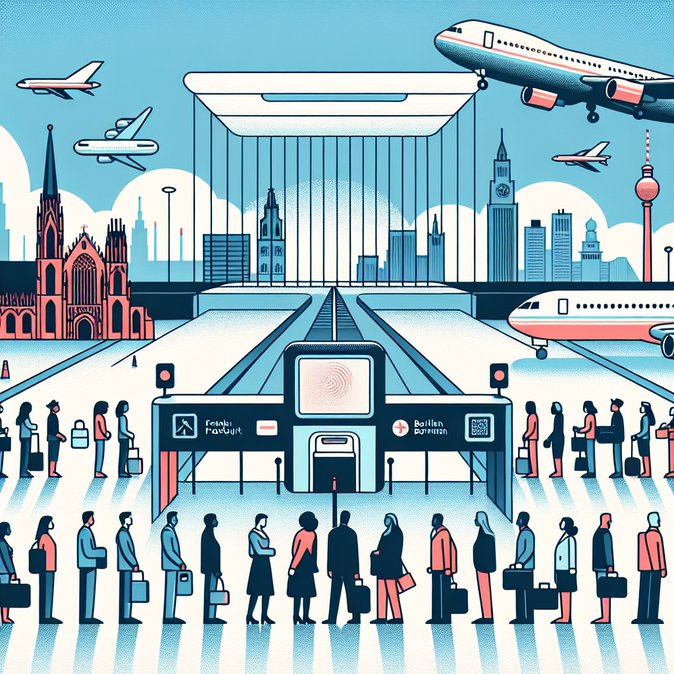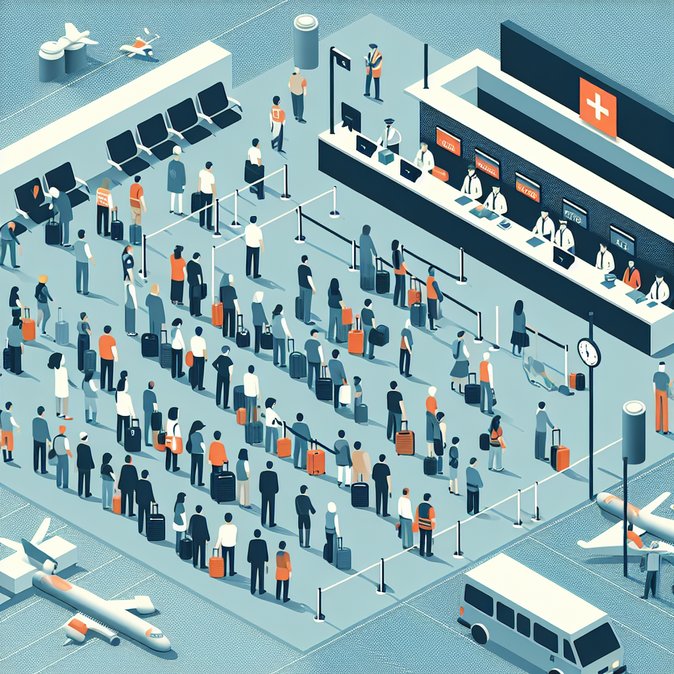
German airports are struggling with the first weeks of full Entry/Exit System (EES) operation: wait times for non-EU passengers have stretched to 60-120 minutes in Berlin, Cologne and Hahn, the dpa news agency reported via the Upday platform on 7 May 2026. The new EU system, live since April after a phased 2025 introduction, captures fingerprints and facial images for every third-country national, replacing passport stamps and enforcing the 90/180-day rule. Airlines blame kiosk outages, staff shortages and a lack of rehearsal time. Ryanair COO Neal McMahon called the roll-out “half-baked” and warned of missed flights.
![One-to-two-hour passport queues as EES fully rolls out at German airports]()
Travellers who want to double-check visa requirements or fast-track any remaining paperwork can turn to VisaHQ, which maintains an up-to-date Germany portal (https://www.visahq.com/germany/) that consolidates EES guidance, Schengen rules and expedited processing options. The service is a useful backstop for corporate mobility teams and individual passengers trying to stay ahead of the new formalities.
Federal Police sources acknowledge teething problems but say throughput should improve once travellers complete their first enrolment; repeat visits require only verification. Nevertheless, travel-management companies are advising clients to arrive at least three hours early for intercontinental departures from Germany until further notice. Industry analysts note that Germany’s issues mirror those in France and Belgium, where authorities are already invoking emergency “flex mode” waivers. Whether Berlin will follow remains unclear, but pressure is mounting as the Pentecost holiday rush approaches. For global-mobility teams relocating staff to Germany, the key takeaway is timing: first-entry family members arriving after 10 April must budget extra hours at immigration and keep onward rail or domestic flight connections flexible.

Travellers who want to double-check visa requirements or fast-track any remaining paperwork can turn to VisaHQ, which maintains an up-to-date Germany portal (https://www.visahq.com/germany/) that consolidates EES guidance, Schengen rules and expedited processing options. The service is a useful backstop for corporate mobility teams and individual passengers trying to stay ahead of the new formalities.
Federal Police sources acknowledge teething problems but say throughput should improve once travellers complete their first enrolment; repeat visits require only verification. Nevertheless, travel-management companies are advising clients to arrive at least three hours early for intercontinental departures from Germany until further notice. Industry analysts note that Germany’s issues mirror those in France and Belgium, where authorities are already invoking emergency “flex mode” waivers. Whether Berlin will follow remains unclear, but pressure is mounting as the Pentecost holiday rush approaches. For global-mobility teams relocating staff to Germany, the key takeaway is timing: first-entry family members arriving after 10 April must budget extra hours at immigration and keep onward rail or domestic flight connections flexible.