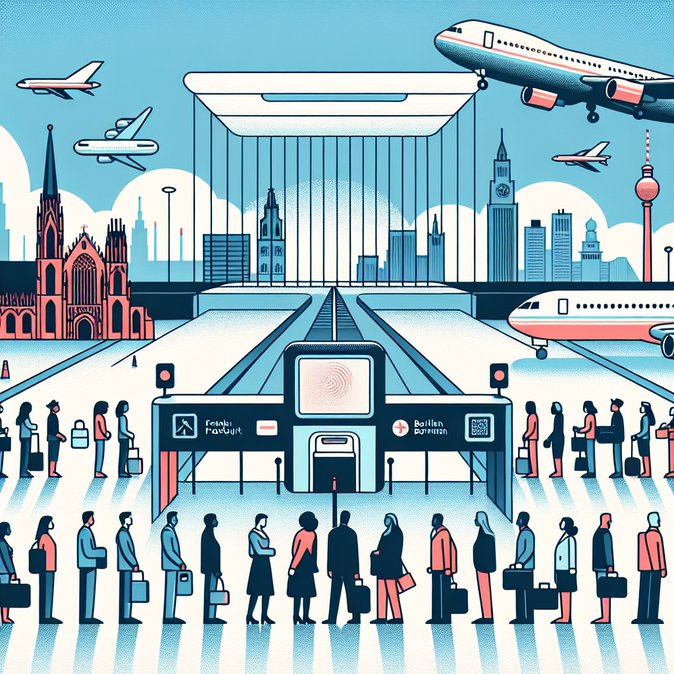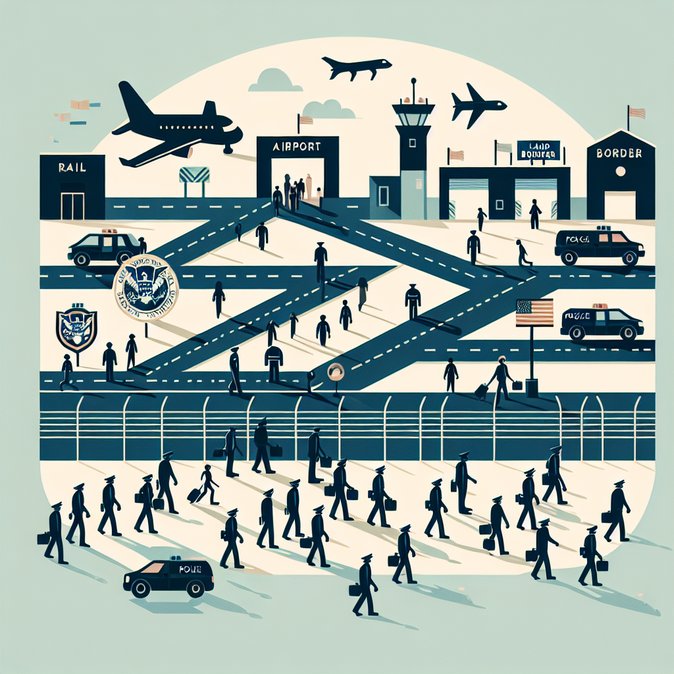
Germany’s Interior Ministry has confirmed that between 13 000 and 14 000 Federal Police officers are now stationed on the country’s land borders to enforce the temporary controls first re-introduced in May 2025. The figure appears in an official answer to a Green Party parliamentary question obtained by RedaktionsNetzwerk Deutschland and published by Newsworm on 6 May 2026. The deployment—roughly one-third of the Federal Police’s operational strength—underscores Interior Minister Alexander Dobrindt’s hard-line approach of on-the-spot asylum rejections. Police union chief Andreas Roßkopf warns that rail stations and airports are now understaffed by “5 000-6 000 officers”, heightening security and crowd-management risks.
![14 000 federal police redeployed as Germany prolongs internal Schengen border checks]()
For travellers who suddenly find themselves needing extra documentation or longer lead-times, VisaHQ can bridge the gap. The online platform monitors Germany’s evolving entry rules and lets individuals and corporate mobility teams order visas or transit permits in a few clicks (https://www.visahq.com/germany/), reducing the chance of being delayed at an improvised checkpoint.
Business groups add that freight flows through Bavaria and Saxony have slowed, raising logistics costs for just-in-time manufacturers. Legal pressure is mounting: several administrative courts, most recently in Koblenz, have ruled that blanket push-backs violate EU free-movement rules. The Greens have tabled a Bundestag motion demanding that the government replace internal checks with mobile, intelligence-led patrols. Although the Commission in Brussels has tolerated Germany’s derogations so far, diplomats say the sheer scale and duration of the controls could trigger infringement proceedings when the current six-month extension expires in September. For mobility managers, the practical impact is palpable. Cross-border commuters along the Austria and Czech frontiers report peak-hour queues of up to 45 minutes, while coach operators must now submit passenger manifests 48 hours in advance. Companies relocating staff via ground transport are advised to pad itineraries and keep proof of employment or work permits on hand. Policy-watchers note that Berlin’s stance complicates the EU’s push to digitise external borders under the new Entry/Exit System (EES): scarce officers are manning inland checkpoints instead of learning the biometric technology they will soon have to operate at airports.

For travellers who suddenly find themselves needing extra documentation or longer lead-times, VisaHQ can bridge the gap. The online platform monitors Germany’s evolving entry rules and lets individuals and corporate mobility teams order visas or transit permits in a few clicks (https://www.visahq.com/germany/), reducing the chance of being delayed at an improvised checkpoint.
Business groups add that freight flows through Bavaria and Saxony have slowed, raising logistics costs for just-in-time manufacturers. Legal pressure is mounting: several administrative courts, most recently in Koblenz, have ruled that blanket push-backs violate EU free-movement rules. The Greens have tabled a Bundestag motion demanding that the government replace internal checks with mobile, intelligence-led patrols. Although the Commission in Brussels has tolerated Germany’s derogations so far, diplomats say the sheer scale and duration of the controls could trigger infringement proceedings when the current six-month extension expires in September. For mobility managers, the practical impact is palpable. Cross-border commuters along the Austria and Czech frontiers report peak-hour queues of up to 45 minutes, while coach operators must now submit passenger manifests 48 hours in advance. Companies relocating staff via ground transport are advised to pad itineraries and keep proof of employment or work permits on hand. Policy-watchers note that Berlin’s stance complicates the EU’s push to digitise external borders under the new Entry/Exit System (EES): scarce officers are manning inland checkpoints instead of learning the biometric technology they will soon have to operate at airports.