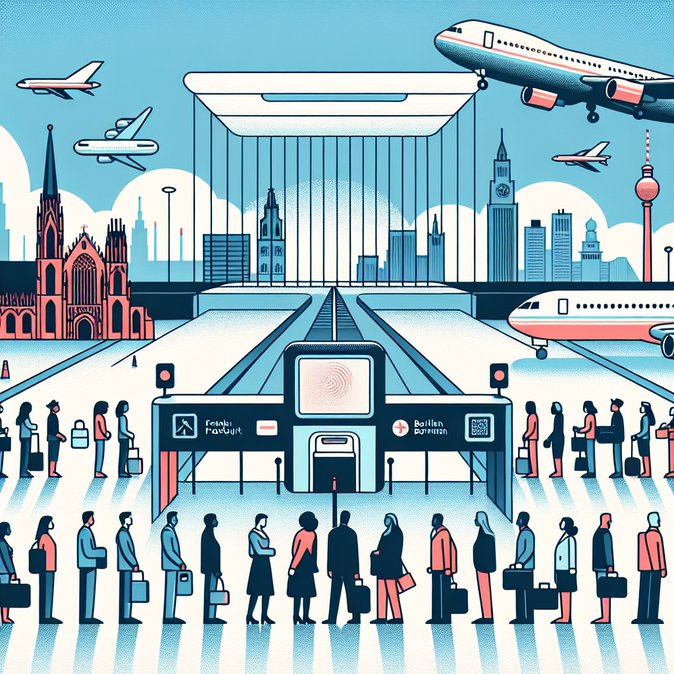
Low-cost giant Ryanair, along with Jet2 and EasyJet, has formally asked all 29 EES-participating states—including Germany—to invoke Article 14 of Regulation 2025/1534 and pause mandatory biometric enrolment until September. The request follows reports of four-hour queues at Milan-Linate and missed connections across Europe. Aviation.Direct broke the story on 7 May 2026. Ryanair’s letter to Interior Minister Alexander Dobrindt argues that introducing the complex IT system at the height of the summer rush is “a planning blunder that jeopardises operational stability”. Greek authorities have already granted British tourists a temporary waiver, and Italy has activated a nationwide derogation through 30 September. EU officials say the regulation allows member states to revert to manual stamping if “exceptional operational circumstances” arise.
![Airlines urge suspension of EU Entry/Exit System as queues hit four hours; call sent to German interior minister]()
Travellers who need practical help deciphering these shifting border requirements can turn to VisaHQ’s German portal (https://www.visahq.com/germany/), which offers real-time alerts, personalised document checklists and expedited courier services—valuable support for both HR mobility teams and individual flyers hoping to sidestep EES-related surprises.
German airports have so far kept EES fully active, but Frankfurt and Berlin report first-time enrolment processing times of 90 seconds per traveller, double original estimates. The German Federal Police union warns that manpower diverted to internal land-border checks is unavailable for troubleshooting EES kiosks. Travel buyers are watching closely: an EES pause would cut average non-EU arrival processing times by 20-30 minutes, easing missed-connection risk on tight itineraries. HR mobility teams should monitor airport notices and advise third-country assignees to carry printed proof of previous EES enrolment (if any) to use the shorter “repeat-traveller” lane. Brussels insists that a suspension would not delay the launch of the related ETIAS travel authorisation, slated for Q4 2026, but concedes that data quality gaps could emerge if too many manual stamps accumulate.

Travellers who need practical help deciphering these shifting border requirements can turn to VisaHQ’s German portal (https://www.visahq.com/germany/), which offers real-time alerts, personalised document checklists and expedited courier services—valuable support for both HR mobility teams and individual flyers hoping to sidestep EES-related surprises.
German airports have so far kept EES fully active, but Frankfurt and Berlin report first-time enrolment processing times of 90 seconds per traveller, double original estimates. The German Federal Police union warns that manpower diverted to internal land-border checks is unavailable for troubleshooting EES kiosks. Travel buyers are watching closely: an EES pause would cut average non-EU arrival processing times by 20-30 minutes, easing missed-connection risk on tight itineraries. HR mobility teams should monitor airport notices and advise third-country assignees to carry printed proof of previous EES enrolment (if any) to use the shorter “repeat-traveller” lane. Brussels insists that a suspension would not delay the launch of the related ETIAS travel authorisation, slated for Q4 2026, but concedes that data quality gaps could emerge if too many manual stamps accumulate.