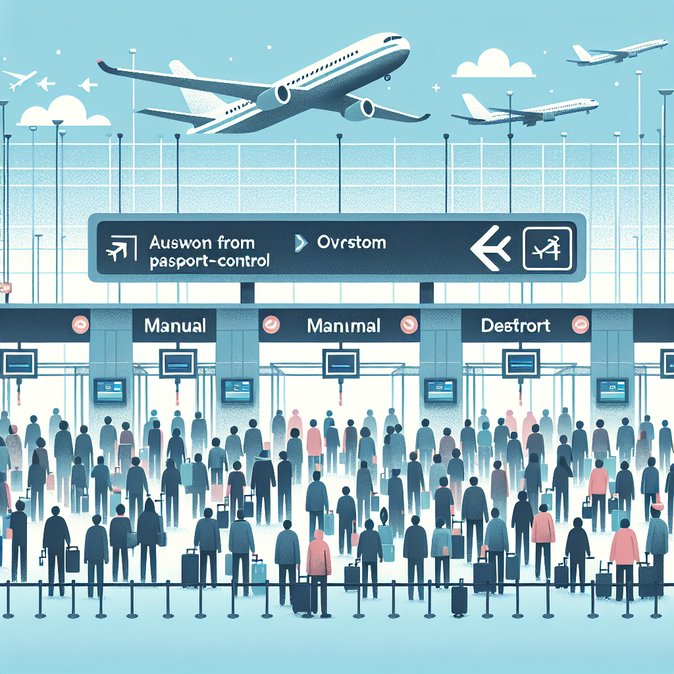
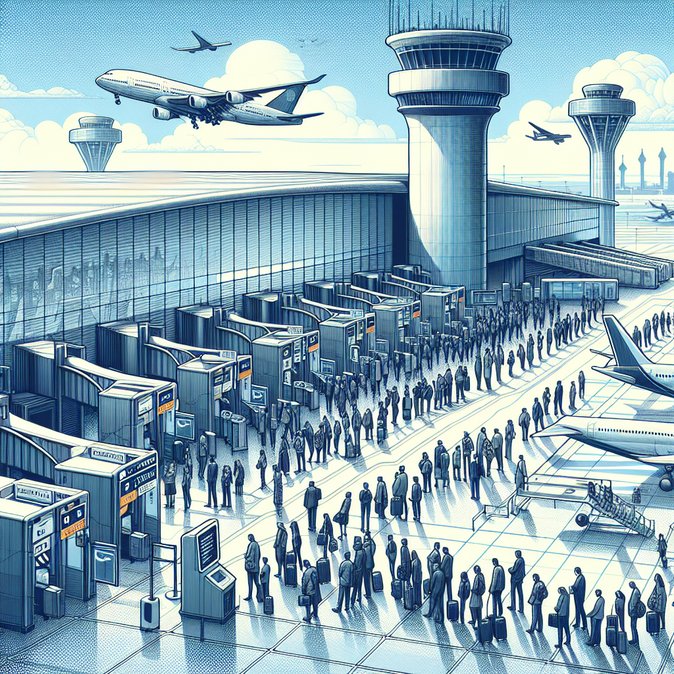
Business and leisure travellers arriving at Zurich Airport (ZRH) on Saturday, 25 April, endured lines of up to two-and-a-half hours after a complete failure of the automated passport-control system brought border processing almost to a standstill. According to the initial incident report, every e-gate on the arrivals level simultaneously went offline at approximately 16:00 local time, forcing the Federal Office for Customs and Border Security (FOCBS) and airport police to switch to manual checks. Technicians from the system supplier managed to restore normal operations shortly before 18:00, but not before dozens of inbound flights had disgorged some 7,000 passengers into bottlenecked corridors.
![Zurich Airport passport-control outage triggers two-hour queues]()
For those looking to avoid additional stress on arrival, VisaHQ offers an easy way to confirm Swiss entry requirements and secure the necessary travel documents in advance; their online platform at https://www.visahq.com/switzerland/ provides step-by-step guidance, rapid application processing, and live status updates—helpful safeguards when airport systems go down unexpectedly.
Airlines were obliged to hold additional arriving aircraft on remote stands to avoid overcrowding in the immigration hall, and several outbound evening departures were delayed as crews found themselves stuck in queues alongside regular passengers. For corporations that rely on tight connection windows in Zurich’s wave-pattern hub schedule, the disruption served as a reminder that automated border technology remains a single point of failure until full redundancy is built into the forthcoming EU Entry/Exit System (EES). Once EES goes live across Schengen this spring, all third-country nationals—including business travellers—will have their biometrics verified automatically; Swiss border officials say Saturday’s glitch underlines the need for parallel manual kiosks and contingency staffing. Companies with assignees transiting Zurich are advised to pad itineraries for the next few weeks while the airport runs root-cause analysis on the software crash and trains additional staff to manage manual fallback procedures. Travellers enrolled in the Swiss Pass biometric fast-track programme should carry physical passports until system stability is confirmed, while mobility managers may wish to alert travel-risk providers so that arrival-monitoring thresholds can be temporarily adjusted.
For those looking to avoid additional stress on arrival, VisaHQ offers an easy way to confirm Swiss entry requirements and secure the necessary travel documents in advance; their online platform at https://www.visahq.com/switzerland/ provides step-by-step guidance, rapid application processing, and live status updates—helpful safeguards when airport systems go down unexpectedly.
Airlines were obliged to hold additional arriving aircraft on remote stands to avoid overcrowding in the immigration hall, and several outbound evening departures were delayed as crews found themselves stuck in queues alongside regular passengers. For corporations that rely on tight connection windows in Zurich’s wave-pattern hub schedule, the disruption served as a reminder that automated border technology remains a single point of failure until full redundancy is built into the forthcoming EU Entry/Exit System (EES). Once EES goes live across Schengen this spring, all third-country nationals—including business travellers—will have their biometrics verified automatically; Swiss border officials say Saturday’s glitch underlines the need for parallel manual kiosks and contingency staffing. Companies with assignees transiting Zurich are advised to pad itineraries for the next few weeks while the airport runs root-cause analysis on the software crash and trains additional staff to manage manual fallback procedures. Travellers enrolled in the Swiss Pass biometric fast-track programme should carry physical passports until system stability is confirmed, while mobility managers may wish to alert travel-risk providers so that arrival-monitoring thresholds can be temporarily adjusted.