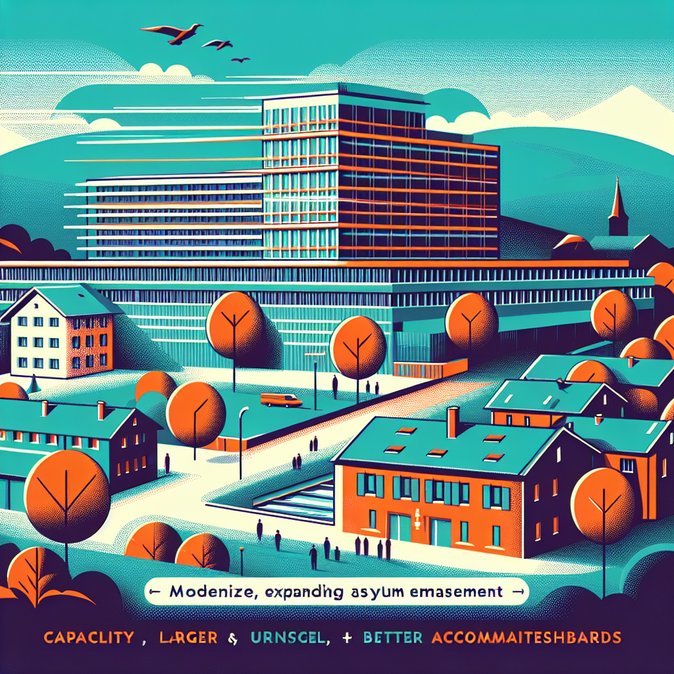
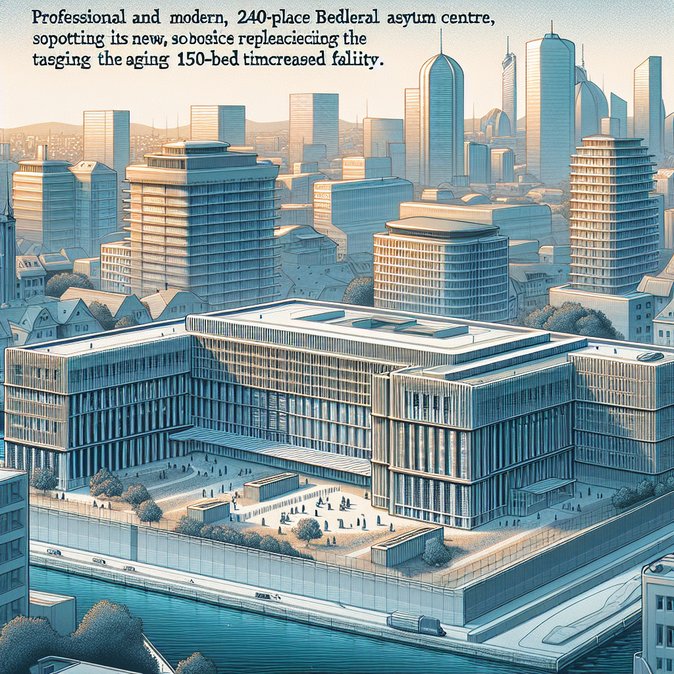
The State Secretariat for Migration (SEM) has taken the first formal step toward replacing its ageing temporary asylum facility in Allschwil, canton Basel-Landschaft. A press release issued on 23 April 2026 confirms that the Federal Office for Buildings and Logistics has commissioned a comprehensive feasibility study that will examine whether a permanent 240-bed Federal Asylum Centre (FAC) can be erected on, or adjacent to, the current Vogesenweg 9 site.
![Bern launches feasibility study for new 240-place federal asylum centre in Allschwil]()
For organisations and individuals who may need to arrange travel permits or other documentation while engaging with Swiss institutions, the online platform VisaHQ offers step-by-step visa support, real-time application tracking and tailored guidance for Switzerland; more details can be found at https://www.visahq.com/switzerland/
The existing wooden chalet-style building has housed up to 150 asylum applicants since 2012, but was actually constructed in 1992 as communal accommodation. Officials say it no longer meets modern energy-efficiency, safety and operational standards. SEM’s broader restructuring of the Swiss asylum system, completed in 2019, foresees 840 federal accommodation places for the North-Western Switzerland asylum region. Only 600 permanent places are currently available, forcing the authorities to rely on the temporary Allschwil facility as an interim solution. Local stakeholders have signalled conditional support. Hosting a federal centre reduces the number of asylum seekers that Allschwil must receive under the cantonal distribution key and brings financial compensation. However, co-location with the municipal works depot and the need to respect existing land-use plans pose logistic challenges that the feasibility study must address. If the study concludes positively, the project would deliver the missing capacity without processing facilities, thereby easing pressure on SEM’s other centres in Basel (350 places) and Flumenthal (250 places). For global-mobility managers and NGOs that assist asylum seekers, a modern Allschwil FAC would mean more predictable reception conditions and shorter onward-transfer times in one of Switzerland’s busiest border regions. Construction timelines have not yet been set; SEM says the study’s findings will be available "in the coming months", after which Bern, the canton and the commune will decide whether to proceed to detailed planning and parliamentary financing.
For organisations and individuals who may need to arrange travel permits or other documentation while engaging with Swiss institutions, the online platform VisaHQ offers step-by-step visa support, real-time application tracking and tailored guidance for Switzerland; more details can be found at https://www.visahq.com/switzerland/
The existing wooden chalet-style building has housed up to 150 asylum applicants since 2012, but was actually constructed in 1992 as communal accommodation. Officials say it no longer meets modern energy-efficiency, safety and operational standards. SEM’s broader restructuring of the Swiss asylum system, completed in 2019, foresees 840 federal accommodation places for the North-Western Switzerland asylum region. Only 600 permanent places are currently available, forcing the authorities to rely on the temporary Allschwil facility as an interim solution. Local stakeholders have signalled conditional support. Hosting a federal centre reduces the number of asylum seekers that Allschwil must receive under the cantonal distribution key and brings financial compensation. However, co-location with the municipal works depot and the need to respect existing land-use plans pose logistic challenges that the feasibility study must address. If the study concludes positively, the project would deliver the missing capacity without processing facilities, thereby easing pressure on SEM’s other centres in Basel (350 places) and Flumenthal (250 places). For global-mobility managers and NGOs that assist asylum seekers, a modern Allschwil FAC would mean more predictable reception conditions and shorter onward-transfer times in one of Switzerland’s busiest border regions. Construction timelines have not yet been set; SEM says the study’s findings will be available "in the coming months", after which Bern, the canton and the commune will decide whether to proceed to detailed planning and parliamentary financing.