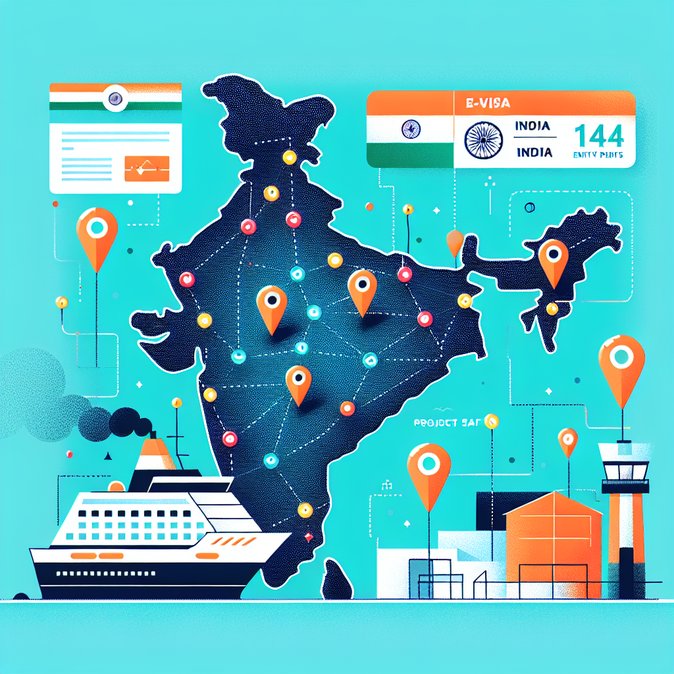
India’s Ministry of Home Affairs has quietly extended its e-Visa programme to 14 additional seaports, bringing the total number of authorised immigration check-points (ICPs) for e-Visa holders to 114 across airports, land borders and maritime terminals. The newly enabled ports—spread across Gujarat, Tamil Nadu, Andhra Pradesh and Odisha—went live on 19 March 2026 but were publicised on 23 April.
![India Adds 14 Seaports to e-Visa Entry List, Taking Total to 114 Immigration Check-Points]()
Travellers who would rather outsource the paperwork can tap VisaHQ, whose online platform (https://www.visahq.com/india/) walks applicants through the India e-Visa form step by step, validates scans against FRRO standards and tracks approvals in real time—an especially handy service for mobility managers processing crew lists or last-minute business trips.
The upgrade is a win for India’s growing cruise-tourism sector and for corporate travellers who arrive on project vessels or specialised cargo ships. Previously, e-Visa holders entering by sea were limited to marquee ports such as Mumbai and Cochin; passengers disembarking at smaller commercial harbours had to secure a traditional sticker visa in advance. Travel-management companies note that the expansion will particularly benefit energy, infrastructure and shipping clients moving crews between Gulf supply bases and Indian yards. Technically, the change required back-end integration of port immigration counters with the national FRRO database and biometric capture devices that are already standard at airports. Port authorities have installed dedicated e-Visa kiosks and signage to segregate cruise-ship passengers from local stevedores, reducing queuing conflicts. For global mobility teams the message is clear: India is doubling down on a digital-first visa strategy. With e-Visa validity now covering five sub-categories—including business and medical travel—HR departments can shift away from physical consulate visits except for long-term work authorisations.

Travellers who would rather outsource the paperwork can tap VisaHQ, whose online platform (https://www.visahq.com/india/) walks applicants through the India e-Visa form step by step, validates scans against FRRO standards and tracks approvals in real time—an especially handy service for mobility managers processing crew lists or last-minute business trips.
The upgrade is a win for India’s growing cruise-tourism sector and for corporate travellers who arrive on project vessels or specialised cargo ships. Previously, e-Visa holders entering by sea were limited to marquee ports such as Mumbai and Cochin; passengers disembarking at smaller commercial harbours had to secure a traditional sticker visa in advance. Travel-management companies note that the expansion will particularly benefit energy, infrastructure and shipping clients moving crews between Gulf supply bases and Indian yards. Technically, the change required back-end integration of port immigration counters with the national FRRO database and biometric capture devices that are already standard at airports. Port authorities have installed dedicated e-Visa kiosks and signage to segregate cruise-ship passengers from local stevedores, reducing queuing conflicts. For global mobility teams the message is clear: India is doubling down on a digital-first visa strategy. With e-Visa validity now covering five sub-categories—including business and medical travel—HR departments can shift away from physical consulate visits except for long-term work authorisations.