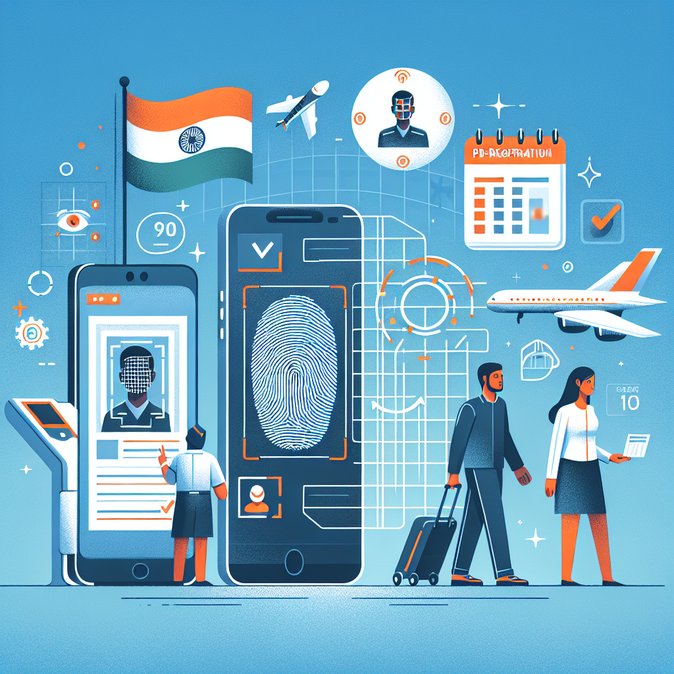
Emirates has updated its travel-advisory portal to reflect the European Union’s Entry/Exit System (EES), which officially replaced manual passport stamping at all Schengen borders this week. The carrier’s bulletin—time-stamped 22 April 2026—urges non-EU passengers, including Indian nationals, to download the ‘Travel to Europe’ app and pre-register biometric data before departure. Under EES, first-time short-stay visitors will have their fingerprints, facial image and passport details captured at the border; subsequent trips will simply record entry and exit digitally. The system enforces the “90/180-day” stay rule automatically, flagging overstays in real time and sharing alerts with other Schengen members—eliminating the buffer previously exploited by business travellers who moved between member states to reset stamps. For corporates this is more than a procedural tweak. Frequent-flyer employees rotating between European offices on intra-company projects will see each day in the zone deducted from their allowance, irrespective of country. HR teams should therefore track cumulative Schengen days accurately to avoid inadvertent overstays that can trigger fines or multi-year entry bans.
![Airlines warn Indian travellers to Schengen of new biometric Entry/Exit System now live]()
To make that tracking and preparation easier, VisaHQ (https://www.visahq.com/india/) equips both individual travellers and corporate mobility managers with up-to-date Schengen compliance tools, automated day-count calculators, and end-to-end application support for visas, residence permits and the upcoming ETIAS. By centralising these services, VisaHQ helps Indian passengers navigate EES requirements smoothly while reducing administrative hassle.
Airports have warned of longer queues during the bedding-in period; Indian passengers transiting via Dubai or Doha into Europe should schedule wider layovers and factor in extra time at first point of entry—especially if connecting onward within the Schengen Area. Holders of long-stay national visas or residence permits are exempt from EES registration but must still carry supporting cards, as airline check-in systems have been updated to verify exemption codes. EES is a precursor to the EU’s ETIAS electronic travel authorisation, now slated for mid-2027. Once ETIAS is operational, Indian tourists who qualify for visa-free entry (e.g., those holding US or UK residence) will need to secure digital clearance before boarding. Mobility managers should begin mapping these layered compliance requirements into travel-approval workflows and traveller training modules.

To make that tracking and preparation easier, VisaHQ (https://www.visahq.com/india/) equips both individual travellers and corporate mobility managers with up-to-date Schengen compliance tools, automated day-count calculators, and end-to-end application support for visas, residence permits and the upcoming ETIAS. By centralising these services, VisaHQ helps Indian passengers navigate EES requirements smoothly while reducing administrative hassle.
Airports have warned of longer queues during the bedding-in period; Indian passengers transiting via Dubai or Doha into Europe should schedule wider layovers and factor in extra time at first point of entry—especially if connecting onward within the Schengen Area. Holders of long-stay national visas or residence permits are exempt from EES registration but must still carry supporting cards, as airline check-in systems have been updated to verify exemption codes. EES is a precursor to the EU’s ETIAS electronic travel authorisation, now slated for mid-2027. Once ETIAS is operational, Indian tourists who qualify for visa-free entry (e.g., those holding US or UK residence) will need to secure digital clearance before boarding. Mobility managers should begin mapping these layered compliance requirements into travel-approval workflows and traveller training modules.