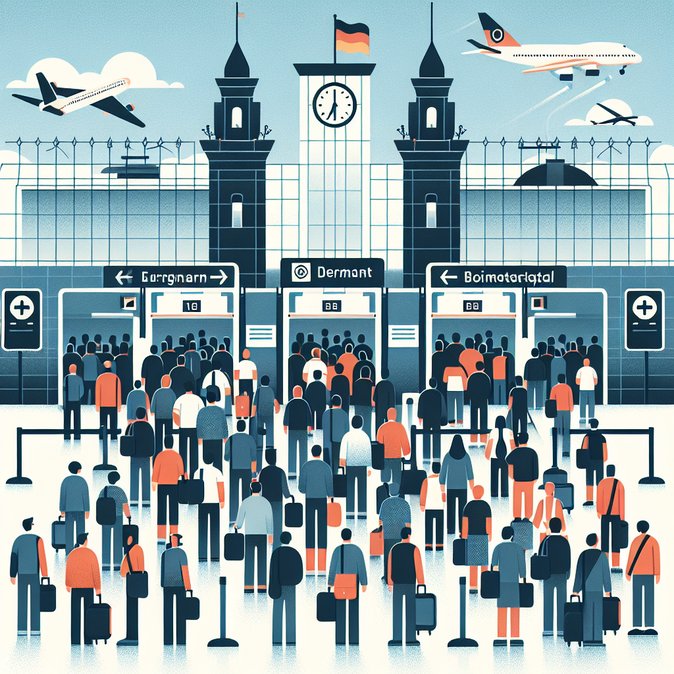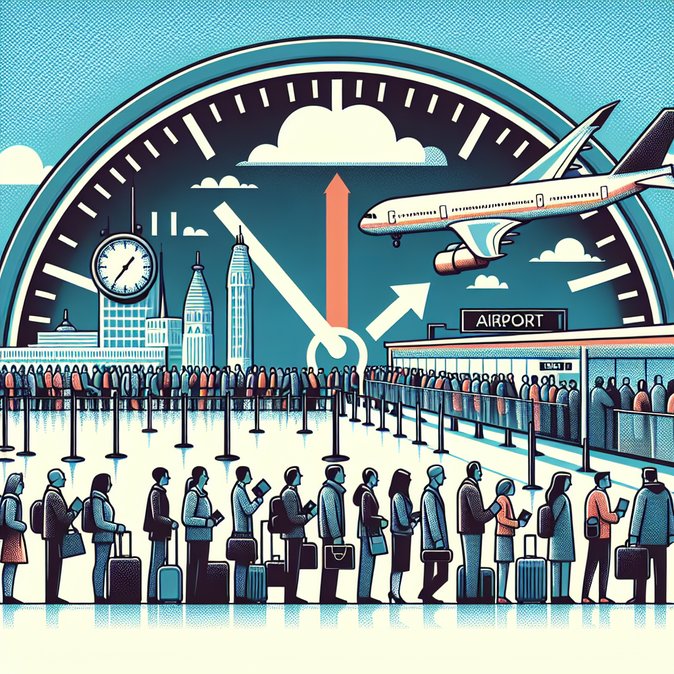
Just ten days after Europe’s biometric Entry/Exit System (EES) became mandatory, Germany’s largest hubs are struggling to keep passengers moving. Frankfurt, Munich and Düsseldorf all reported peak-time waits of well over two hours on Monday and Tuesday (20–21 April) as Federal Police officers struggled with fingerprint scanners that need nearly a minute per traveller. The situation was mirrored across the Schengen area, but German airports are among the hardest-hit because they process more non-EU transfer passengers than any other country except France.
EES replaces the traditional passport stamp with a digital record of every entry and exit, together with four fingerprints and a facial image. The objective is to spot overstays and document fraud automatically, yet the additional biometric steps create a bottleneck at busy hours. According to the airport association ADV, passenger throughput at Frankfurt has dropped from 220 to about 130 people per lane per hour since full rollout on 10 April. Airport operator Fraport said it has doubled the number of self-service kiosks but still depends on the Federal Police to supervise every first-time enrolment.
![Biometric Entry/Exit System Triggers Three-Hour Queues at German Airports]()
At moments like this, a specialist visa concierge can remove at least one source of friction. VisaHQ’s Germany desk provides real-time guidance on entry rules, processes Schengen visa applications online and tracks passport validity, helping travelers arrive documentation-ready before confronting EES queues. Full details are available at https://www.visahq.com/germany/
Airlines complain that missed connections are already costing them hundreds of thousands of euros in re-accommodation. Lufthansa confirmed that more than 1,800 passengers missed onward flights at Frankfurt alone last weekend—an unwelcome complication as the carrier wrestles with its own strike disruptions (see separate story).
For mobility managers the message is clear: build far longer buffers into itineraries to and through Germany, warn travellers that they will have fingerprints taken, and pre-position staff in arrivals halls to shepherd VIPs through a system that remains in flux. Corporate relocation programmes may need to reimburse same-day change fees until wait-times stabilise. Employers bringing in non-EU assignees should also remember that EES data will automatically flag any 90/180-day overstay—even inadvertent ones—so maintaining accurate travel logs is now mission-critical.
EES replaces the traditional passport stamp with a digital record of every entry and exit, together with four fingerprints and a facial image. The objective is to spot overstays and document fraud automatically, yet the additional biometric steps create a bottleneck at busy hours. According to the airport association ADV, passenger throughput at Frankfurt has dropped from 220 to about 130 people per lane per hour since full rollout on 10 April. Airport operator Fraport said it has doubled the number of self-service kiosks but still depends on the Federal Police to supervise every first-time enrolment.

At moments like this, a specialist visa concierge can remove at least one source of friction. VisaHQ’s Germany desk provides real-time guidance on entry rules, processes Schengen visa applications online and tracks passport validity, helping travelers arrive documentation-ready before confronting EES queues. Full details are available at https://www.visahq.com/germany/
Airlines complain that missed connections are already costing them hundreds of thousands of euros in re-accommodation. Lufthansa confirmed that more than 1,800 passengers missed onward flights at Frankfurt alone last weekend—an unwelcome complication as the carrier wrestles with its own strike disruptions (see separate story).
For mobility managers the message is clear: build far longer buffers into itineraries to and through Germany, warn travellers that they will have fingerprints taken, and pre-position staff in arrivals halls to shepherd VIPs through a system that remains in flux. Corporate relocation programmes may need to reimburse same-day change fees until wait-times stabilise. Employers bringing in non-EU assignees should also remember that EES data will automatically flag any 90/180-day overstay—even inadvertent ones—so maintaining accurate travel logs is now mission-critical.