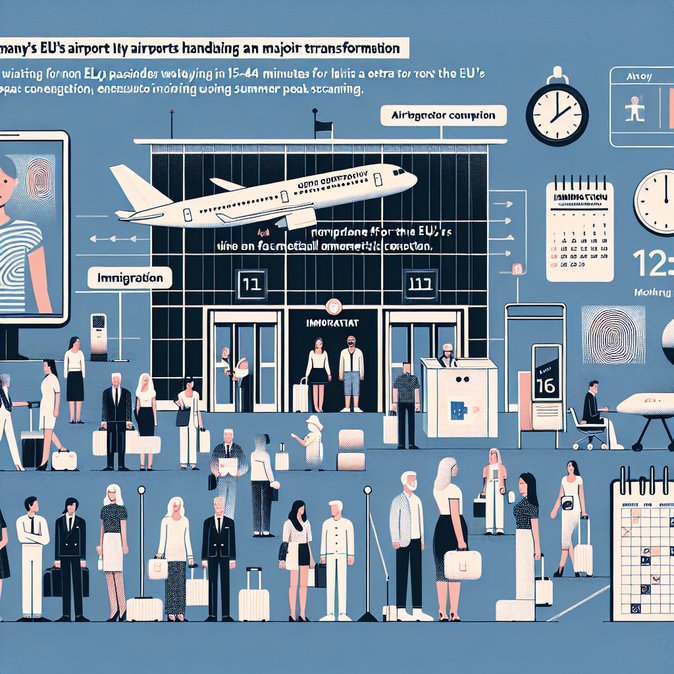
Germany’s participation in the European Union’s new Entry/Exit System (EES) moved from pilot phase to full mandatory use on 10 April 2026, but the first real-world stress-test came this weekend as the country headed into the busy Pentecost travel period. According to accounts compiled by the research desk of IndraStra Global on Saturday, 18 April, Frankfurt, Munich and Berlin-Brandenburg airports all experienced noticeably longer immigration queues, with first-time biometric enrolment adding 15-40 minutes to processing times for many non-EU passengers. The EES replaces the familiar manual passport stamp with a digital record that combines the traveller’s biographical data with fingerprints and a facial image. In Germany the system is operated by the Federal Police (Bundespolizei) and links directly to the Schengen Information System and the Visa Information System. Airports have installed hundreds of self-service kiosks and upgraded EasyPASS e-gates, but officials acknowledge that capacity is still tight during peak inbound banks from the UK, the Gulf and North America. Airlines have begun emailing pre-departure reminders that advise customers to head straight to immigration and to allow at least one extra hour for connections within the Schengen Area.
![Germany feels first full-day impact of EU Entry/Exit System as airports report longer queues]()
Amid these changes, travellers who want to stay ahead of shifting entry rules can lean on VisaHQ’s dedicated Germany page (https://www.visahq.com/germany/) to check real-time visa requirements, pre-arrange ETIAS or Schengen visas, and receive personalised alerts about EES enrolment procedures. The platform streamlines paperwork for both leisure visitors and corporate mobility teams, cutting down on guesswork before you arrive at the German border.
Several carriers are trialling API links that would let passengers pre-load passport data and a selfie into the German border police system, but these tools remain voluntary and airport-specific. Travel-industry bodies fear that, without further optimisation, queues could hit four hours at the height of the summer season. For corporate travel managers the immediate priorities are schedule padding and traveller education. Companies running high-frequency shuttle trips between London and Frankfurt are already switching some day-return meetings to video to avoid missed connections. Mobility teams are also updating duty-of-care briefings to reflect the new requirement that overstays will now be flagged automatically across the whole Schengen zone, making “visa-run” loopholes impossible. In the medium term, immigration advisers expect the EES to dovetail with the delayed ETIAS travel-authorisation scheme, due to go live late in 2026. Once both systems are stable, German airports hope to redeploy staff from manual stamping to secondary screening, potentially cutting overall wait times. Until then, travellers should expect teething pains and build generous buffers into any itinerary that involves a German external border.

Amid these changes, travellers who want to stay ahead of shifting entry rules can lean on VisaHQ’s dedicated Germany page (https://www.visahq.com/germany/) to check real-time visa requirements, pre-arrange ETIAS or Schengen visas, and receive personalised alerts about EES enrolment procedures. The platform streamlines paperwork for both leisure visitors and corporate mobility teams, cutting down on guesswork before you arrive at the German border.
Several carriers are trialling API links that would let passengers pre-load passport data and a selfie into the German border police system, but these tools remain voluntary and airport-specific. Travel-industry bodies fear that, without further optimisation, queues could hit four hours at the height of the summer season. For corporate travel managers the immediate priorities are schedule padding and traveller education. Companies running high-frequency shuttle trips between London and Frankfurt are already switching some day-return meetings to video to avoid missed connections. Mobility teams are also updating duty-of-care briefings to reflect the new requirement that overstays will now be flagged automatically across the whole Schengen zone, making “visa-run” loopholes impossible. In the medium term, immigration advisers expect the EES to dovetail with the delayed ETIAS travel-authorisation scheme, due to go live late in 2026. Once both systems are stable, German airports hope to redeploy staff from manual stamping to secondary screening, potentially cutting overall wait times. Until then, travellers should expect teething pains and build generous buffers into any itinerary that involves a German external border.