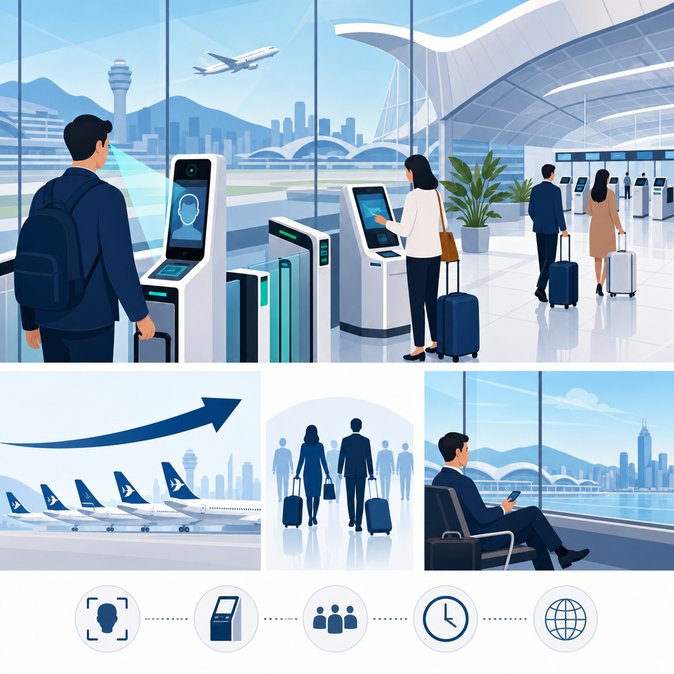
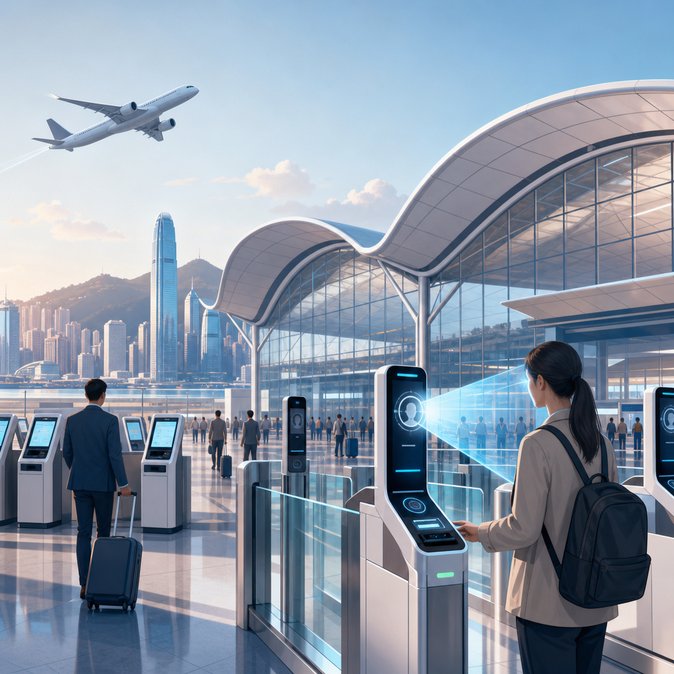
After six years of construction and a HK$13.3 billion (US $1.7 billion) price tag, Hong Kong International Airport (HKIA) switched on the departures facilities in its expanded Terminal 2 (T2) on 27 May 2026. The first flight—Hong Kong Airlines HX236 to Shanghai Pudong—pushed back just after 08:00, inaugurating a building that will ultimately boost the airport’s annual passenger capacity from 75 million to 100 million. The reconfigured T2 is far more than a new check-in hall. Travellers now clear immigration and security inside the terminal before riding an underground people-mover to the main concourses. Thirty automated e-gates equipped with next-generation facial-recognition technology—an upgrade from the “Smart Departure” system introduced in 2017—can handle both Hong Kong residents and enrolled frequent visitors, cutting average clearance time to under 20 seconds.
![Hong Kong International Airport’s New Terminal 2 Opens for Departures, Adding Biometric Lanes and Extra Capacity]()
Before passengers ever encounter those gleaming e-gates, they still need the right travel documents. VisaHQ’s Hong Kong portal (https://www.visahq.com/hong-kong/) makes it easy for both business travelers and holiday-makers to verify visa requirements, complete applications online, and track approvals in real time—so the only surprise at T2 is how quickly you breeze through security.
Self-service bag-drops, remote-controlled CT scanners and an enormous 360-degree LED ceiling display round out a tech-forward passenger journey designed to match or out-shine Changi and Incheon. The Airport Authority expects about eight million departing passengers to use T2 in its first full year, ramping up to 30 million once the dedicated departure pier and 28 new contact gates open in late 2027. AirAsia, Hainan Airlines, Thai Lion Air and nine other carriers have already confirmed their move from Terminal 1, while home-based low-cost operator HK Express will complete its relocation by 10 June. Airlines are being offered 50 per cent rental rebates on check-in counters for the first six months to encourage a smooth transition. For corporate mobility managers, the most immediate benefit is predictability. Peak-morning passengers have complained for years about T1 check-in queues snaking into the public concourse; those flights now process in T2, freeing up room in the original terminal. Airport Authority Chief Executive Vivian Cheung said that preliminary data from the first two days of operation show average kerb-to-gate times down by 14 minutes compared with the same flights last week. That is good news for tight connections and for companies moving staff and equipment through Asia’s financial hub. Beyond speed, the expansion future-proofs Hong Kong’s role as a gateway to the Greater Bay Area. The third runway entered service in November 2024 and the new SkyPier Terminal for cross-boundary ferries comes online next year. With outbound travel from mainland China projected to exceed pre-pandemic levels by 2027, HKIA’s bigger footprint—and its emphasis on contact-less processing—positions the city to recapture transfer traffic that drifted to Singapore and Doha during the COVID-19 lull.
Before passengers ever encounter those gleaming e-gates, they still need the right travel documents. VisaHQ’s Hong Kong portal (https://www.visahq.com/hong-kong/) makes it easy for both business travelers and holiday-makers to verify visa requirements, complete applications online, and track approvals in real time—so the only surprise at T2 is how quickly you breeze through security.
Self-service bag-drops, remote-controlled CT scanners and an enormous 360-degree LED ceiling display round out a tech-forward passenger journey designed to match or out-shine Changi and Incheon. The Airport Authority expects about eight million departing passengers to use T2 in its first full year, ramping up to 30 million once the dedicated departure pier and 28 new contact gates open in late 2027. AirAsia, Hainan Airlines, Thai Lion Air and nine other carriers have already confirmed their move from Terminal 1, while home-based low-cost operator HK Express will complete its relocation by 10 June. Airlines are being offered 50 per cent rental rebates on check-in counters for the first six months to encourage a smooth transition. For corporate mobility managers, the most immediate benefit is predictability. Peak-morning passengers have complained for years about T1 check-in queues snaking into the public concourse; those flights now process in T2, freeing up room in the original terminal. Airport Authority Chief Executive Vivian Cheung said that preliminary data from the first two days of operation show average kerb-to-gate times down by 14 minutes compared with the same flights last week. That is good news for tight connections and for companies moving staff and equipment through Asia’s financial hub. Beyond speed, the expansion future-proofs Hong Kong’s role as a gateway to the Greater Bay Area. The third runway entered service in November 2024 and the new SkyPier Terminal for cross-boundary ferries comes online next year. With outbound travel from mainland China projected to exceed pre-pandemic levels by 2027, HKIA’s bigger footprint—and its emphasis on contact-less processing—positions the city to recapture transfer traffic that drifted to Singapore and Doha during the COVID-19 lull.
More From Hong Kong
View all
Hong Kong and Shenzhen Agree on Next Phase of New Boundary Control Points to Ease Cross-Border Congestion
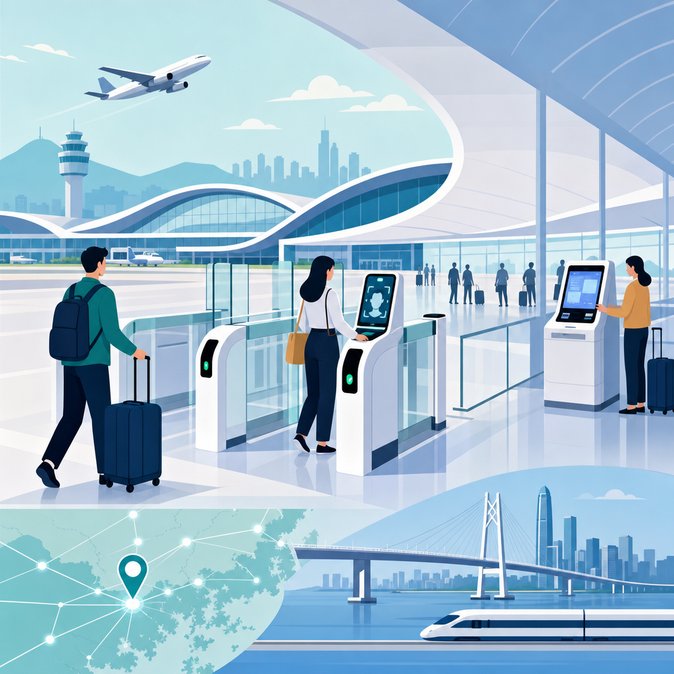
Hong Kong International Airport unveils fully-automated Terminal 2, lifting hub capacity to 100 million passengers a year