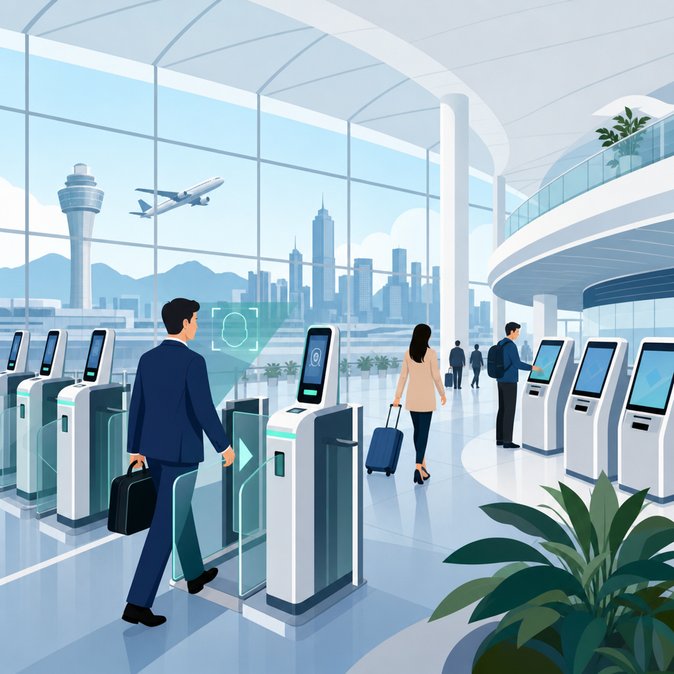
Meeting in Guangzhou on 28 May, the Hong Kong/Guangdong Expert Group on Co-developing a Smart City Cluster laid out its most ambitious cross-border agenda yet. Co-chaired by Acting Commissioner for Digital Policy Daniel Cheung and Guangdong data chief Wang Tianguang, the group agreed on six priorities for 2026-27, including expanding cross-boundary public-service kiosks, mutually recognising digital infrastructure standards and accelerating lawful data flows between the two economies. For mobility stakeholders the headline item is transport transparency.
![Hong Kong and Guangdong advance cross-boundary digital services, promise real-time border traffic data]()
Travellers planning to take advantage of these smoother crossings still need to navigate existing entry requirements, and that’s where VisaHQ can help. The company’s Hong Kong portal (https://www.visahq.com/hong-kong/) offers up-to-date visa and travel authorisation guidance, online applications and expedited processing, ensuring that paperwork doesn’t become the bottleneck even as technology reduces queue times.
From September 2025, travellers have already been able to check live passenger and vehicle queues at all eight land checkpoints via Hong Kong’s HKeMobility app. Officials now plan to integrate Guangdong’s feeds so that wait-time predictions cover both sides of the boundary and can push alerts in multiple languages—an upgrade expected before next year’s Lunar New Year peak. The expert group also endorsed wider deployment of Hong Kong’s “iAM Smart” digital ID across the Greater Bay Area. Since July 2025, iAM Smart users have been able to log into Guangdong’s “iShenzhen” platform to pay bills and book medical appointments; the next phase will see reciprocal acceptance for hotel registration and car-hire, cutting paperwork for visiting executives. Behind the scenes, technical teams showcased privacy-computing sandboxes and blockchain audit trails designed to meet both Hong Kong’s Personal Data (Privacy) Ordinance and Mainland cybersecurity rules. If successful, the architecture could serve as a template for other travel corridors where data-sovereignty concerns have slowed seamless mobility solutions. By knitting together identity, transport and government-service platforms, Hong Kong and Guangdong aim to make cross-border commuting as frictionless as travel within a single metropolitan area. For companies running shuttle buses, relocating staff or rotating project teams between Shenzhen, Guangzhou and Hong Kong, the promised real-time data and harmonised credentials could translate into lower compliance costs and shorter journey times.

Travellers planning to take advantage of these smoother crossings still need to navigate existing entry requirements, and that’s where VisaHQ can help. The company’s Hong Kong portal (https://www.visahq.com/hong-kong/) offers up-to-date visa and travel authorisation guidance, online applications and expedited processing, ensuring that paperwork doesn’t become the bottleneck even as technology reduces queue times.
From September 2025, travellers have already been able to check live passenger and vehicle queues at all eight land checkpoints via Hong Kong’s HKeMobility app. Officials now plan to integrate Guangdong’s feeds so that wait-time predictions cover both sides of the boundary and can push alerts in multiple languages—an upgrade expected before next year’s Lunar New Year peak. The expert group also endorsed wider deployment of Hong Kong’s “iAM Smart” digital ID across the Greater Bay Area. Since July 2025, iAM Smart users have been able to log into Guangdong’s “iShenzhen” platform to pay bills and book medical appointments; the next phase will see reciprocal acceptance for hotel registration and car-hire, cutting paperwork for visiting executives. Behind the scenes, technical teams showcased privacy-computing sandboxes and blockchain audit trails designed to meet both Hong Kong’s Personal Data (Privacy) Ordinance and Mainland cybersecurity rules. If successful, the architecture could serve as a template for other travel corridors where data-sovereignty concerns have slowed seamless mobility solutions. By knitting together identity, transport and government-service platforms, Hong Kong and Guangdong aim to make cross-border commuting as frictionless as travel within a single metropolitan area. For companies running shuttle buses, relocating staff or rotating project teams between Shenzhen, Guangzhou and Hong Kong, the promised real-time data and harmonised credentials could translate into lower compliance costs and shorter journey times.
More From Hong Kong
View all
Hong Kong International Airport unveils fully-automated Terminal 2, lifting hub capacity to 100 million passengers a year

Judiciary to create Hong Kong International Commercial Court, boosting confidence for cross-border assignments