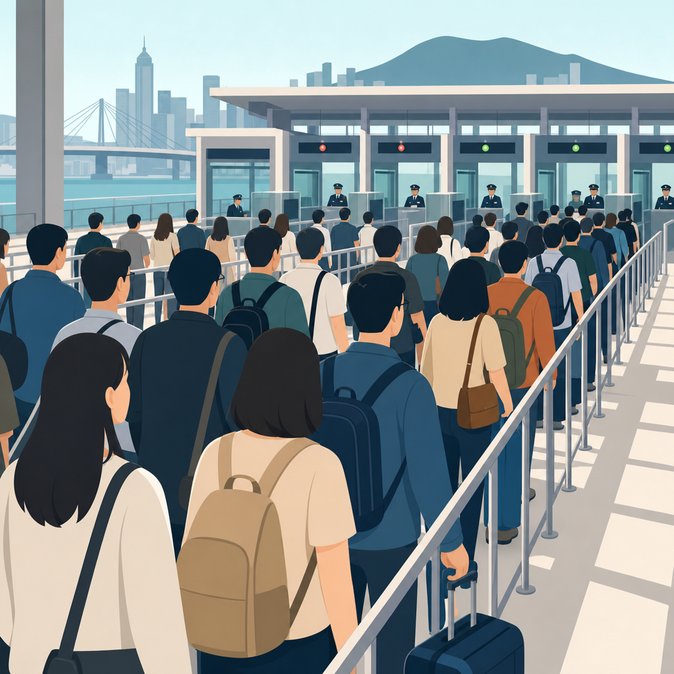
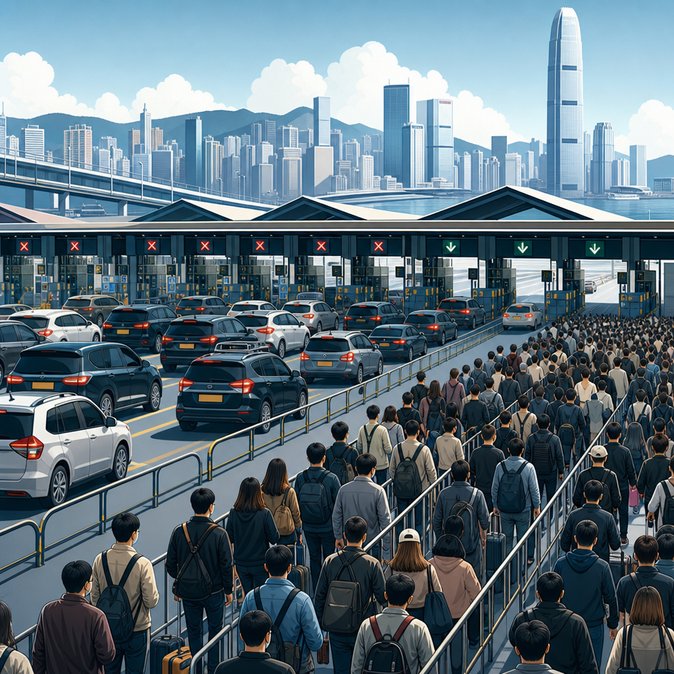
Hongkongers returning from the three-day Buddha’s Birthday long weekend were greeted by snaking queues that stretched outside several Shenzhen border facilities late on 25 May and spilled into the early hours of Tuesday. Immigration Department figures released on 26 May show 673,000 residents entered the city via land checkpoints in a single day—more than 90 % of all arrivals. The Lo Wu terminus alone handled 165,000 entries.
![Holiday travel chaos: 673,000 residents jam land checkpoints after Buddha’s Birthday break]()
For travellers who want to make sure their documentation is in perfect order before facing such crowds, VisaHQ’s Hong Kong team can arrange or renew visas, passports and other travel papers online, helping to minimise unexpected snags at the checkpoint. Their streamlined service (https://www.visahq.com/hong-kong/) allows commuters and business travellers alike to manage cross-border requirements well in advance, leaving them freer to focus on timing and route selection amid holiday surges.
Travellers reported waits of up to three hours at Shenzhen Bay before staff closed the gates for the night. The surge was fuelled by pent-up leisure demand and aggressive discounting by mainland duty-free malls. While Hong Kong restored normal cross-boundary travel with the mainland last year, staffing levels and e-Channel capacity have not kept pace with explosive weekend flows. Authorities said crowd-management protocols—such as metered release of passengers from shuttle buses—were implemented but proved insufficient. From a global-mobility perspective the gridlock highlights a structural risk for employees who commute from Shenzhen or schedule same-day mainland meetings. Delays can cascade into missed flights at Hong Kong International Airport or derail time-critical cargo drop-offs. Employers should warn travellers that public holidays on either side of the border now trigger record traffic and should build wider time buffers into itineraries. Officials pledged to review staffing rosters and accelerate the roll-out of automated “speed gates”. Until then, corporations may need to consider alternative crossings such as the Hong Kong-Zhuhai-Macau Bridge, or even virtual meetings, when holidays collide with business-critical travel plans.
For travellers who want to make sure their documentation is in perfect order before facing such crowds, VisaHQ’s Hong Kong team can arrange or renew visas, passports and other travel papers online, helping to minimise unexpected snags at the checkpoint. Their streamlined service (https://www.visahq.com/hong-kong/) allows commuters and business travellers alike to manage cross-border requirements well in advance, leaving them freer to focus on timing and route selection amid holiday surges.
Travellers reported waits of up to three hours at Shenzhen Bay before staff closed the gates for the night. The surge was fuelled by pent-up leisure demand and aggressive discounting by mainland duty-free malls. While Hong Kong restored normal cross-boundary travel with the mainland last year, staffing levels and e-Channel capacity have not kept pace with explosive weekend flows. Authorities said crowd-management protocols—such as metered release of passengers from shuttle buses—were implemented but proved insufficient. From a global-mobility perspective the gridlock highlights a structural risk for employees who commute from Shenzhen or schedule same-day mainland meetings. Delays can cascade into missed flights at Hong Kong International Airport or derail time-critical cargo drop-offs. Employers should warn travellers that public holidays on either side of the border now trigger record traffic and should build wider time buffers into itineraries. Officials pledged to review staffing rosters and accelerate the roll-out of automated “speed gates”. Until then, corporations may need to consider alternative crossings such as the Hong Kong-Zhuhai-Macau Bridge, or even virtual meetings, when holidays collide with business-critical travel plans.