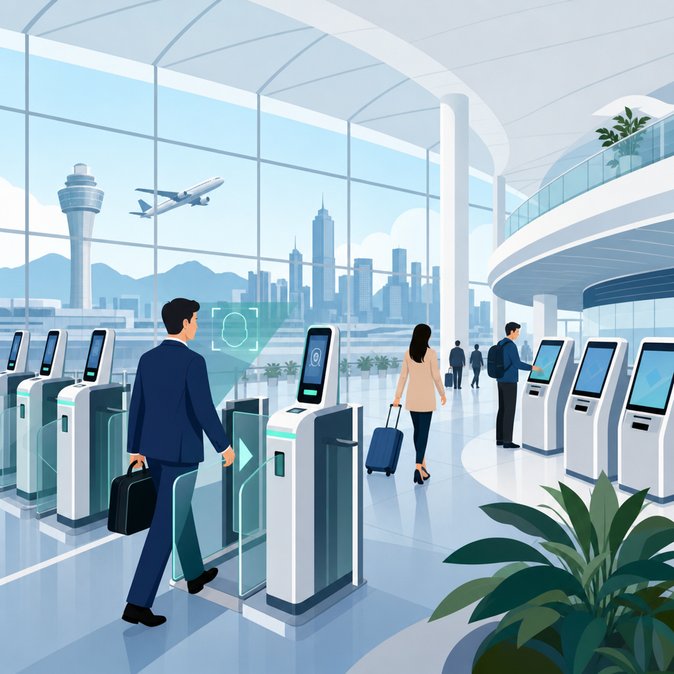
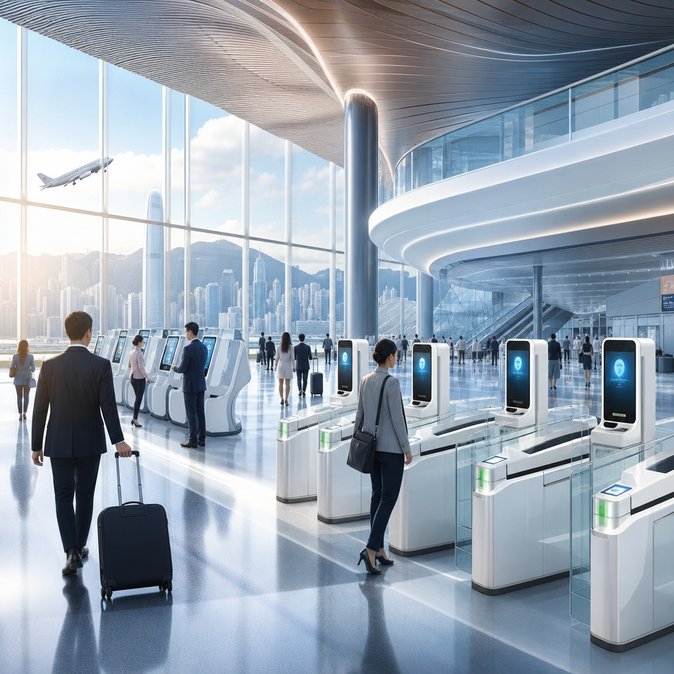
Hong Kong took another decisive step toward reclaiming its status as Asia’s pre-eminent aviation hub on 27 May 2026 with the commissioning of the brand-new departure facilities at Hong Kong International Airport’s Terminal 2 (T2). The gleaming 300,000-square-metre building is the first passenger-facing element of the airport’s HK$141 billion (US$18 billion) Three-Runway System (3RS) expansion and has been designed to handle up to 50 million origin-and-destination travellers a year. Airport Authority Hong Kong (AAHK) deliberately timed the opening for the summer peak, and 15 airlines—including Hong Kong Airlines and several low-cost regional carriers—will shift check-in operations from Terminal 1 in phases through mid-June. For business travellers the headline attraction is speed. T2 houses 68 self-bag-drop machines, 58 smart check-in kiosks and 108 hybrid counters, while the Immigration Department has installed 35 next-generation e-Channel gates that combine Flight Token facial recognition, Smart Departure and fully contact-less clearance.
![Hong Kong International Airport Opens HK$12.9 Billion Terminal 2, Promising Faster Immigration and 120 Million-Passenger Capacity]()
For travellers navigating the upgraded hub, VisaHQ’s Hong Kong platform (https://www.visahq.com/hong-kong/) offers a one-stop solution for checking visa requirements, submitting online applications and arranging document courier services—helping both corporate road-warriors and holidaymakers ensure their paperwork is in order well before they reach those new self-service counters.
AAHK projects that the average departure processing time will fall by 25 percent once all airlines move in. After security and immigration, passengers board an upgraded automated people-mover back to the Midfield Concourse for boarding, keeping minimum-connection times unchanged. The redevelopment transforms what was once a check-in-only annex into a full terminal that rivals peers in Seoul and Singapore. It also underscores the strategic stakes: HKIA handled 61 million passengers in 2025—well below its pre-pandemic peak of 75 million—and faces aggressive capacity projects at Singapore Changi (Terminal 5) and Dubai’s Al Maktoum International. By pushing theoretical capacity to 120 million passengers and 10 million tonnes of cargo, Hong Kong aims to future-proof its role as a logistics and finance gateway between mainland China and the world. From a global-mobility standpoint, multinationals are already recalibrating regional travel policies. Companies with Greater Bay Area operations can now book Shenzhen-Hong Kong day trips with more predictable departure windows, and relocation providers foresee smoother family arrivals once the T2 arrivals hall opens in 2027. The expanded e-Channel footprint also dovetails with February’s relaxation of frequent-visitor enrolment rules, allowing more expatriates to clear immigration in under 30 seconds. AAHK has promised further digital upgrades, including biometric-only boarding by 2027 and real-time baggage tracking integrated into the HKG My Flight app. For now, the message to corporate travel managers is simple: start updating traveller briefings, as most regional carriers will publish new terminal assignment codes (HKG-T2) within the next fortnight.
For travellers navigating the upgraded hub, VisaHQ’s Hong Kong platform (https://www.visahq.com/hong-kong/) offers a one-stop solution for checking visa requirements, submitting online applications and arranging document courier services—helping both corporate road-warriors and holidaymakers ensure their paperwork is in order well before they reach those new self-service counters.
AAHK projects that the average departure processing time will fall by 25 percent once all airlines move in. After security and immigration, passengers board an upgraded automated people-mover back to the Midfield Concourse for boarding, keeping minimum-connection times unchanged. The redevelopment transforms what was once a check-in-only annex into a full terminal that rivals peers in Seoul and Singapore. It also underscores the strategic stakes: HKIA handled 61 million passengers in 2025—well below its pre-pandemic peak of 75 million—and faces aggressive capacity projects at Singapore Changi (Terminal 5) and Dubai’s Al Maktoum International. By pushing theoretical capacity to 120 million passengers and 10 million tonnes of cargo, Hong Kong aims to future-proof its role as a logistics and finance gateway between mainland China and the world. From a global-mobility standpoint, multinationals are already recalibrating regional travel policies. Companies with Greater Bay Area operations can now book Shenzhen-Hong Kong day trips with more predictable departure windows, and relocation providers foresee smoother family arrivals once the T2 arrivals hall opens in 2027. The expanded e-Channel footprint also dovetails with February’s relaxation of frequent-visitor enrolment rules, allowing more expatriates to clear immigration in under 30 seconds. AAHK has promised further digital upgrades, including biometric-only boarding by 2027 and real-time baggage tracking integrated into the HKG My Flight app. For now, the message to corporate travel managers is simple: start updating traveller briefings, as most regional carriers will publish new terminal assignment codes (HKG-T2) within the next fortnight.