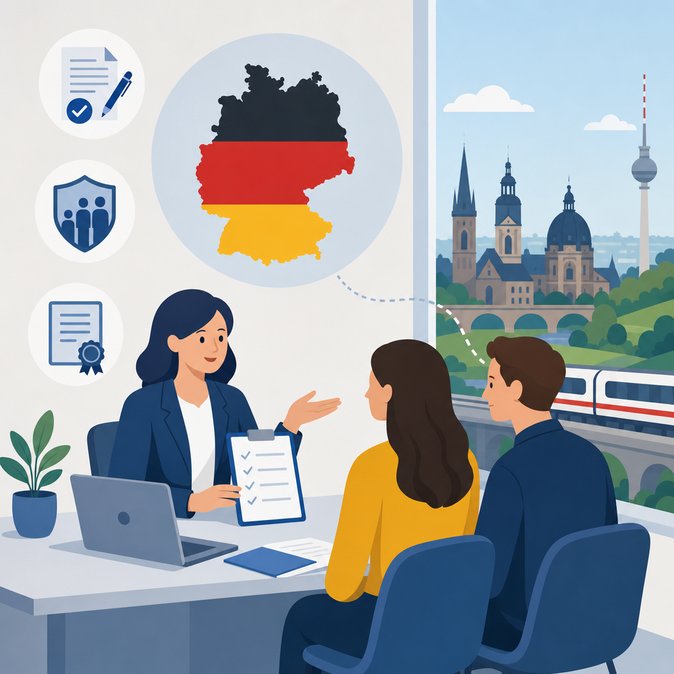
On 27 May 2026 the Czech Labour Office’s EURES section ran a dedicated “Poradenský den pro práci v Německu” (Advisory Day on Working in Germany) in Chomutov, northwest Bohemia. The day combined a group briefing by Isabelle Meyer of the German Federal Employment Agency in Annaberg-Buchholz with one-to-one consultations for Czech nationals considering daily or weekly commuting across the nearby border.
![Czech Labour Office Hosts Cross-Border Work Clinic for Germany-Bound Job-Seekers]()
While EU citizens usually do not need a visa to cross into Germany for work, many accompanying family members or third-country residents based in the Czech Republic still face administrative hurdles. VisaHQ’s Prague-focused portal (https://www.visahq.com/czech-republic/) offers an easy, step-by-step concierge service for securing German work permits, Schengen visas, and other travel documents, making it a handy complement to the advice dispensed at EURES events.
Topics ranged from recognition of vocational qualifications and CV standards in German to the practicalities of health insurance, pension contributions and cross-border taxation. Participants also received check-lists on registering residence in Saxony, claiming German child-benefit and accessing language up-skilling grants funded by the EU’s Just Transition mechanism. The event illustrates the growing fluidity of the Czech–German labour corridor. Since the lifting of pandemic restrictions, Czech commuter numbers to Bavaria and Saxony have risen by an estimated 18 percent, fuelled by higher German wage levels and vacancies in manufacturing and eldercare. For border towns like Chomutov, structured advice days help prevent informal or undeclared employment and ensure workers sign the correct A1 social-security forms before departure. For employers on both sides of the frontier, the clinic is a reminder that seamless administrative coordination—in everything from residence registration to driver-hours rules—is essential if Central Europe is to function as an integrated labour zone. Mobility professionals placing staff in Chemnitz or Dresden should build the Labour Office’s EURES advisory calendar into assignment timelines.

While EU citizens usually do not need a visa to cross into Germany for work, many accompanying family members or third-country residents based in the Czech Republic still face administrative hurdles. VisaHQ’s Prague-focused portal (https://www.visahq.com/czech-republic/) offers an easy, step-by-step concierge service for securing German work permits, Schengen visas, and other travel documents, making it a handy complement to the advice dispensed at EURES events.
Topics ranged from recognition of vocational qualifications and CV standards in German to the practicalities of health insurance, pension contributions and cross-border taxation. Participants also received check-lists on registering residence in Saxony, claiming German child-benefit and accessing language up-skilling grants funded by the EU’s Just Transition mechanism. The event illustrates the growing fluidity of the Czech–German labour corridor. Since the lifting of pandemic restrictions, Czech commuter numbers to Bavaria and Saxony have risen by an estimated 18 percent, fuelled by higher German wage levels and vacancies in manufacturing and eldercare. For border towns like Chomutov, structured advice days help prevent informal or undeclared employment and ensure workers sign the correct A1 social-security forms before departure. For employers on both sides of the frontier, the clinic is a reminder that seamless administrative coordination—in everything from residence registration to driver-hours rules—is essential if Central Europe is to function as an integrated labour zone. Mobility professionals placing staff in Chemnitz or Dresden should build the Labour Office’s EURES advisory calendar into assignment timelines.