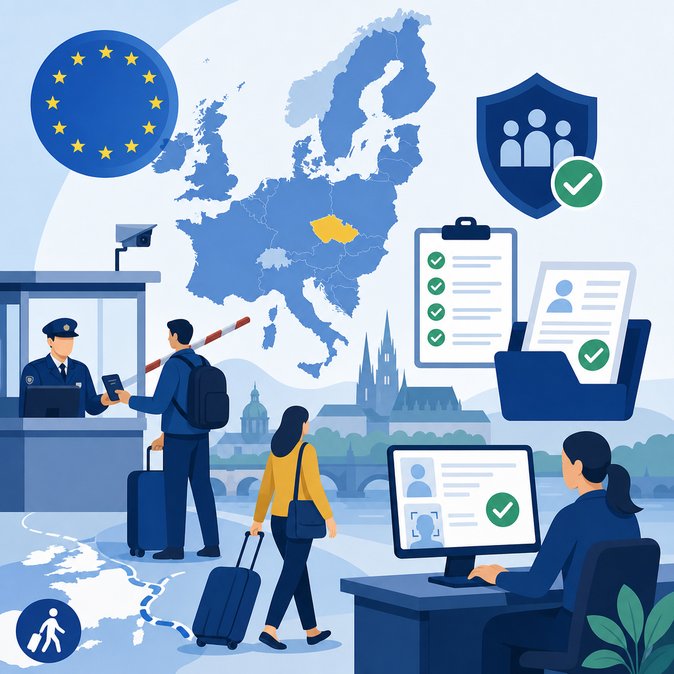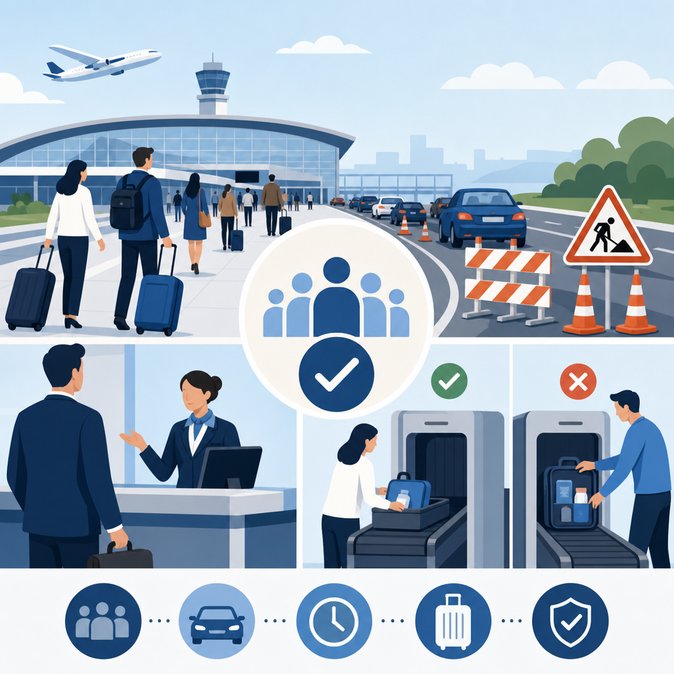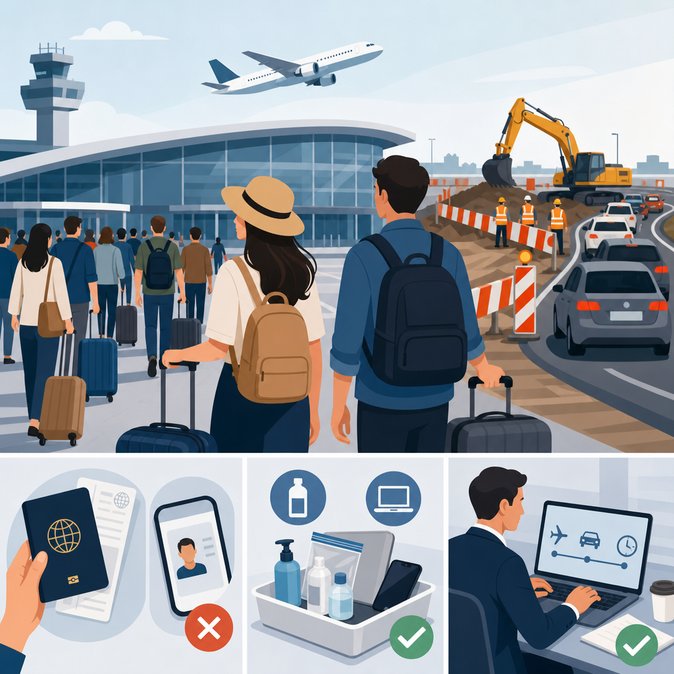
Václav Havel Airport Prague has launched its annual “Check-In” awareness campaign after forecasting a record 11.9 million passengers between June and September—up 3.6 % on last year. In a briefing published on 23 May the airport warns that road works around the Aviatická–Lipská interchange could lengthen driving times, urging departing travellers to arrive at least 2½ hours before take-off and to consider public transport, including the newly extended trolley-bus line 21 from Prague Main Station. Documentation remains a pain-point. Border police reiterate that the new Czech digital ID card (eDoklady) is not accepted at passport control; travellers must carry a physical passport valid for at least three months beyond their intended stay.
![Prague Airport Issues Peak-Summer Travel Advisory and Security Guidance]()
For travellers who still need visas or additional travel documents, services like VisaHQ can streamline the application, track deadlines, and deliver ready-to-use paperwork directly to your door. The Czech Republic portal (https://www.visahq.com/czech-republic/) lists the latest entry requirements for more than 200 nationalities and offers live support to help you avoid last-minute surprises at Prague Airport.
Airlines will refuse boarding to passengers who fail to comply, and the airport has already seen a spike in denied departures since Easter. Security rules now vary by terminal. Terminal 2, which serves most intra-Schengen flights, features state-of-the-art CT scanners that allow liquids and electronics to remain inside cabin bags and permit one container of up to two litres. Terminal 1 (long-haul and non-Schengen) still applies the classic 100 ml liquid limit and requires laptops to be removed. Travellers with tight connections should confirm their departure hall in advance to avoid repacking at security. For corporate mobility managers the advisory is a timely reminder to update pre-trip checklists, add buffer time for airport transfers and brief assignees on divergent screening procedures. Meeting planners hosting events in Prague this summer should arrange group transport that bypasses construction choke-points and secure early bag-drop slots to minimise the risk of missed flights. The airport’s passenger-forecasting tool, available via its API, can be integrated with travel-risk dashboards to trigger automatic alerts when predicted throughput exceeds threshold levels.

For travellers who still need visas or additional travel documents, services like VisaHQ can streamline the application, track deadlines, and deliver ready-to-use paperwork directly to your door. The Czech Republic portal (https://www.visahq.com/czech-republic/) lists the latest entry requirements for more than 200 nationalities and offers live support to help you avoid last-minute surprises at Prague Airport.
Airlines will refuse boarding to passengers who fail to comply, and the airport has already seen a spike in denied departures since Easter. Security rules now vary by terminal. Terminal 2, which serves most intra-Schengen flights, features state-of-the-art CT scanners that allow liquids and electronics to remain inside cabin bags and permit one container of up to two litres. Terminal 1 (long-haul and non-Schengen) still applies the classic 100 ml liquid limit and requires laptops to be removed. Travellers with tight connections should confirm their departure hall in advance to avoid repacking at security. For corporate mobility managers the advisory is a timely reminder to update pre-trip checklists, add buffer time for airport transfers and brief assignees on divergent screening procedures. Meeting planners hosting events in Prague this summer should arrange group transport that bypasses construction choke-points and secure early bag-drop slots to minimise the risk of missed flights. The airport’s passenger-forecasting tool, available via its API, can be integrated with travel-risk dashboards to trigger automatic alerts when predicted throughput exceeds threshold levels.