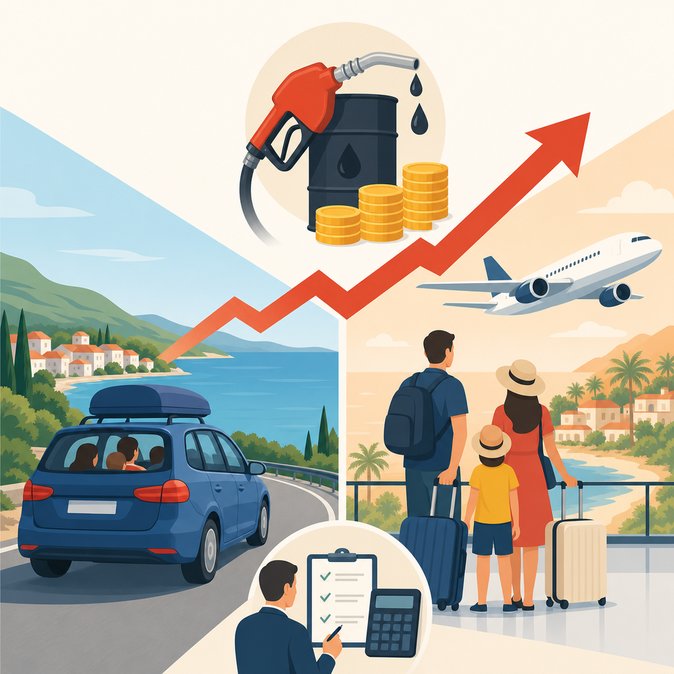
An XTB market report published on 26 May—and widely picked up by Czech media—calculates that this year’s spike in crude prices will raise the cost of a classic Czech family road-trip to Croatia by roughly CZK 900–1,200 in petrol alone.
![Fuel-Price Shock Adds CZK 900–5,000 to Typical Czech Summer Holidays]()
Before finalizing any changes to those summer plans, travelers may also need to revisit visa or entry-permit requirements. VisaHQ’s Czech portal (https://www.visahq.com/czech-republic/) provides an up-to-date overview of the documents needed for Croatia, Greece, Egypt, Turkey and dozens of other destinations, and can manage the entire application process—saving families and corporate travel managers valuable time and hassle when budgets are already under pressure.
For the four-person family flying to Greece, Egypt or Turkey, average airfares are projected to be CZK 3,000–5,000 higher than in summer 2025. The war-driven energy squeeze is hitting just as Václav Havel Airport prepares for a record 12 million summer passengers, meaning many holiday-makers are being forced to re-budget or shorten trips. Travel agencies report a noticeable pivot from long-haul destinations toward self-drive breaks in neighbouring Slovakia, Austria and Germany, while corporate-travel managers say that per-diem allowances for client visits in Southern Europe will need revising. For mobility professionals the message is clear: factor higher transport costs into assignment cost projections, consider rail or coach alternatives for regional meetings, and update travel-policy caps before staff start booking peak-season tickets. Companies that reimburse mileage will likewise see a jump in expense claims, unless they switch to prepaid fuel cards with volume discounts. Insurance brokers are also warning that higher pump prices raise the financial exposure of cross-border commuters—in the event of an accident, total-loss vehicle claims will be based on inflated replacement values and towing fees. Expat families planning to drive to the Adriatic should therefore review roadside-assistance coverage and toll-box compatibility (not all Czech devices work on new Croatian e-toll lanes).

Before finalizing any changes to those summer plans, travelers may also need to revisit visa or entry-permit requirements. VisaHQ’s Czech portal (https://www.visahq.com/czech-republic/) provides an up-to-date overview of the documents needed for Croatia, Greece, Egypt, Turkey and dozens of other destinations, and can manage the entire application process—saving families and corporate travel managers valuable time and hassle when budgets are already under pressure.
For the four-person family flying to Greece, Egypt or Turkey, average airfares are projected to be CZK 3,000–5,000 higher than in summer 2025. The war-driven energy squeeze is hitting just as Václav Havel Airport prepares for a record 12 million summer passengers, meaning many holiday-makers are being forced to re-budget or shorten trips. Travel agencies report a noticeable pivot from long-haul destinations toward self-drive breaks in neighbouring Slovakia, Austria and Germany, while corporate-travel managers say that per-diem allowances for client visits in Southern Europe will need revising. For mobility professionals the message is clear: factor higher transport costs into assignment cost projections, consider rail or coach alternatives for regional meetings, and update travel-policy caps before staff start booking peak-season tickets. Companies that reimburse mileage will likewise see a jump in expense claims, unless they switch to prepaid fuel cards with volume discounts. Insurance brokers are also warning that higher pump prices raise the financial exposure of cross-border commuters—in the event of an accident, total-loss vehicle claims will be based on inflated replacement values and towing fees. Expat families planning to drive to the Adriatic should therefore review roadside-assistance coverage and toll-box compatibility (not all Czech devices work on new Croatian e-toll lanes).