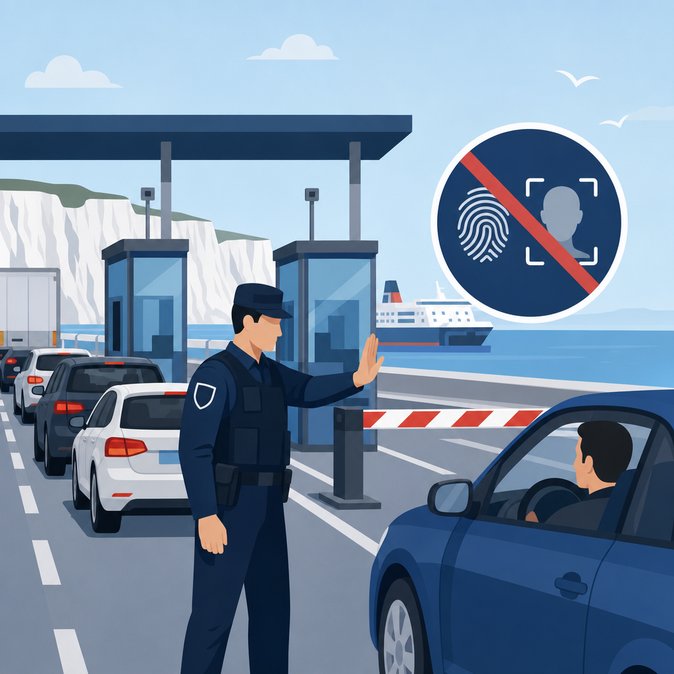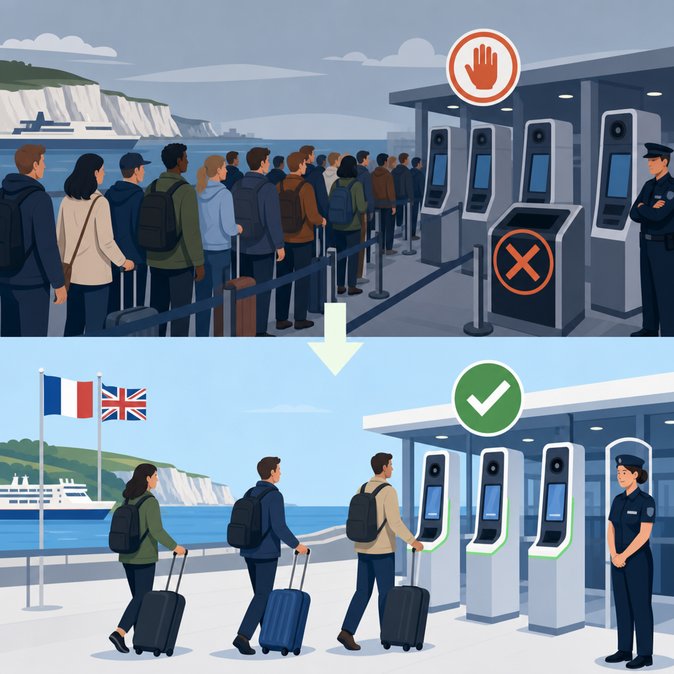
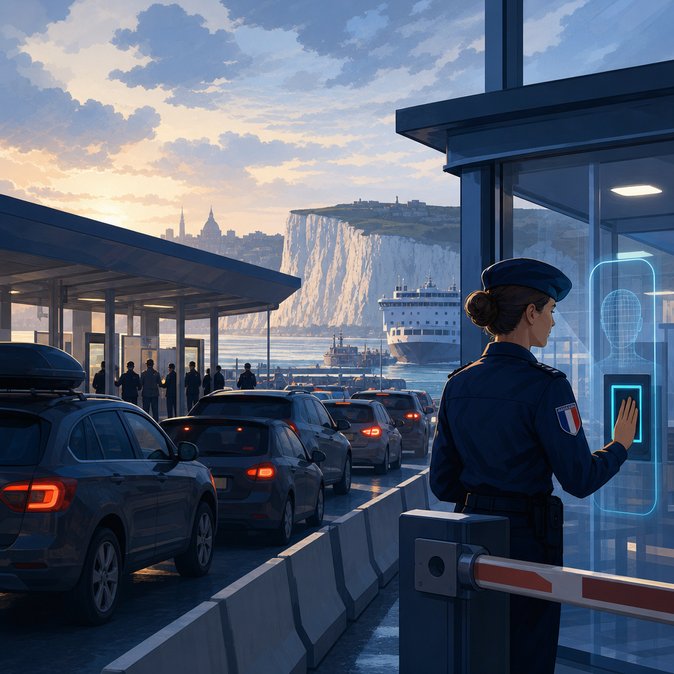
Holidaymakers heading to France for the UK’s three-day weekend endured gridlock at the Port of Dover on May 23, with car passengers queueing up to six hours as French police struggled to process the EU’s new Entry/Exit System (EES). By the early hours of Sunday, May 24, French border authorities invoked the so-called “Article 9” emergency clause and suspended some of the biometric capture requirements, allowing traffic to become “free-flowing,” port officials said.
![France Temporarily Relaxes New EU Biometric Checks at Dover After Hours-Long Queues]()
Need a hand navigating the new border formalities? VisaHQ’s France portal (https://www.visahq.com/france/) provides up-to-date guidance on EES registration, the forthcoming ETIAS travel authorisation and any visa options that may apply. Travellers and corporate mobility teams can upload documents for pre-screening, receive real-time status alerts and reduce surprises at the border.
The EES, launched in April, replaces passport stamps with a digital record that stores travellers’ fingerprints and facial images. Dover’s car terminals have yet to install all self-service kiosks, forcing Police aux Frontières officers to create records manually—an acceptable process on normal days but a choke-point when 8,000 cars and 18,000 passengers converge on a single Saturday. Under EU rules, border officers may waive parts of the procedure for up to six hours if congestion threatens public order or safety. While the relaxation applies only to Dover, the episode offers an early glimpse of the operational headaches that the still-infant system could cause for France during peak season. Channel ports and Eurotunnel sites where French controls are performed on UK soil—known as “juxtaposed controls”—will face similar holiday surges between now and the late-summer ETIAS launch. Port of Calais officials told The Connexion that additional kiosks and lane re-configurations are being accelerated, but warned that staffing remains “the single biggest variable.” For mobility managers, the incident is a reminder to build extra buffer time into travel policies for non-EU staff shuttling between UK and French offices. Companies should circulate advisory notes on pre-registration options, ensure employees carry proof of residence if applicable, and consider flexible tickets that can be re-routed via Eurostar or regional airports in Lille and Beauvais if Dover bottlenecks recur. The French Interior Ministry said it is reviewing feedback from the weekend to refine contingency protocols. Stakeholders, including ferry operators and haulage associations, have asked Paris to publish clear criteria for triggering Article 9 so businesses can anticipate when partial suspensions are likely.
Need a hand navigating the new border formalities? VisaHQ’s France portal (https://www.visahq.com/france/) provides up-to-date guidance on EES registration, the forthcoming ETIAS travel authorisation and any visa options that may apply. Travellers and corporate mobility teams can upload documents for pre-screening, receive real-time status alerts and reduce surprises at the border.
The EES, launched in April, replaces passport stamps with a digital record that stores travellers’ fingerprints and facial images. Dover’s car terminals have yet to install all self-service kiosks, forcing Police aux Frontières officers to create records manually—an acceptable process on normal days but a choke-point when 8,000 cars and 18,000 passengers converge on a single Saturday. Under EU rules, border officers may waive parts of the procedure for up to six hours if congestion threatens public order or safety. While the relaxation applies only to Dover, the episode offers an early glimpse of the operational headaches that the still-infant system could cause for France during peak season. Channel ports and Eurotunnel sites where French controls are performed on UK soil—known as “juxtaposed controls”—will face similar holiday surges between now and the late-summer ETIAS launch. Port of Calais officials told The Connexion that additional kiosks and lane re-configurations are being accelerated, but warned that staffing remains “the single biggest variable.” For mobility managers, the incident is a reminder to build extra buffer time into travel policies for non-EU staff shuttling between UK and French offices. Companies should circulate advisory notes on pre-registration options, ensure employees carry proof of residence if applicable, and consider flexible tickets that can be re-routed via Eurostar or regional airports in Lille and Beauvais if Dover bottlenecks recur. The French Interior Ministry said it is reviewing feedback from the weekend to refine contingency protocols. Stakeholders, including ferry operators and haulage associations, have asked Paris to publish clear criteria for triggering Article 9 so businesses can anticipate when partial suspensions are likely.