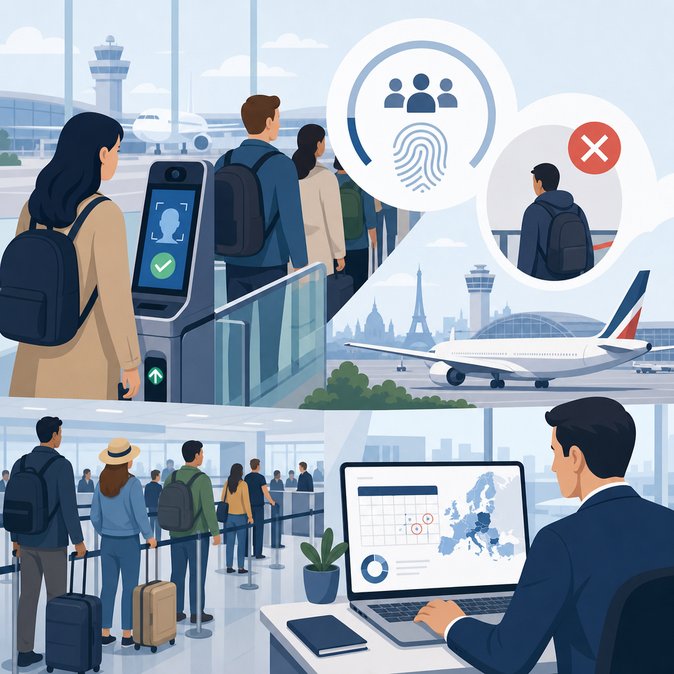
Fresh statistics released on May 20 2026 in the European Commission’s annual State of Schengen report show that the Entry/Exit System (EES) – the biometric database that replaced passport stamping on April 10 – has already registered more than 66 million crossings by non-EU nationals and blocked 32,000 travellers who failed to meet admission rules. Around 7,000 refusals were linked to previous over-stays, many of them detected when passengers attempted to fly into Paris-Charles-de-Gaulle, Orly or Marseille. Airports Council International France warns that the figures confirm a “hard stop” approach that could lengthen primary-control processing times during July-August peaks by up to 25 %. Airlines such as Air France and easyJet are adjusting rosters and urging business passengers to arrive at least three hours before departure until the system stabilises. The French interior ministry says additional PARAFE e-gates compatible with EES biometrics will be installed at CDG Terminals 2E and 2F by late June.
![New EU Border Database Flags 7,000 Over-Stayers; French Airports Brace for Summer Queues]()
Corporate travellers looking for an extra layer of assurance can streamline visa and travel-authorisation planning through VisaHQ’s dedicated France portal (https://www.visahq.com/france/), which offers live Schengen day-count calculators, ETIAS alerts and on-demand support for transit or work permits. The platform’s dashboard helps HR teams flag overstays before they happen and collate digital entry records in one secure place.
For corporate mobility managers, the data underscore the importance of meticulous day-count tracking under the Schengen 90/180-day rule. Assignees who rely on frequent short trips – including UK-based project teams and U.S. sales staff – should keep digital copies of previous entry stamps, as discrepancies between legacy stamps and EES records are still being reconciled. Looking ahead, the Commission confirmed that the travel-authorisation programme ETIAS is still scheduled for launch “by the end of 2026”, meaning France will need to integrate airline carrier-connectivity tests this autumn. Companies may therefore face a double compliance burden: ensuring non-visa nationals secure ETIAS approvals while monitoring EES stay-balances in real time.

Corporate travellers looking for an extra layer of assurance can streamline visa and travel-authorisation planning through VisaHQ’s dedicated France portal (https://www.visahq.com/france/), which offers live Schengen day-count calculators, ETIAS alerts and on-demand support for transit or work permits. The platform’s dashboard helps HR teams flag overstays before they happen and collate digital entry records in one secure place.
For corporate mobility managers, the data underscore the importance of meticulous day-count tracking under the Schengen 90/180-day rule. Assignees who rely on frequent short trips – including UK-based project teams and U.S. sales staff – should keep digital copies of previous entry stamps, as discrepancies between legacy stamps and EES records are still being reconciled. Looking ahead, the Commission confirmed that the travel-authorisation programme ETIAS is still scheduled for launch “by the end of 2026”, meaning France will need to integrate airline carrier-connectivity tests this autumn. Companies may therefore face a double compliance burden: ensuring non-visa nationals secure ETIAS approvals while monitoring EES stay-balances in real time.
More From France
View all
France’s Highest Court Orders Government to Fix Malfunctioning Online Residence-Permit Portal

Pentecost Getaway: Bison Futé Issues ‘Red’ Alert; Mont-Blanc Tunnel and Key Motorways to Face Gridlock