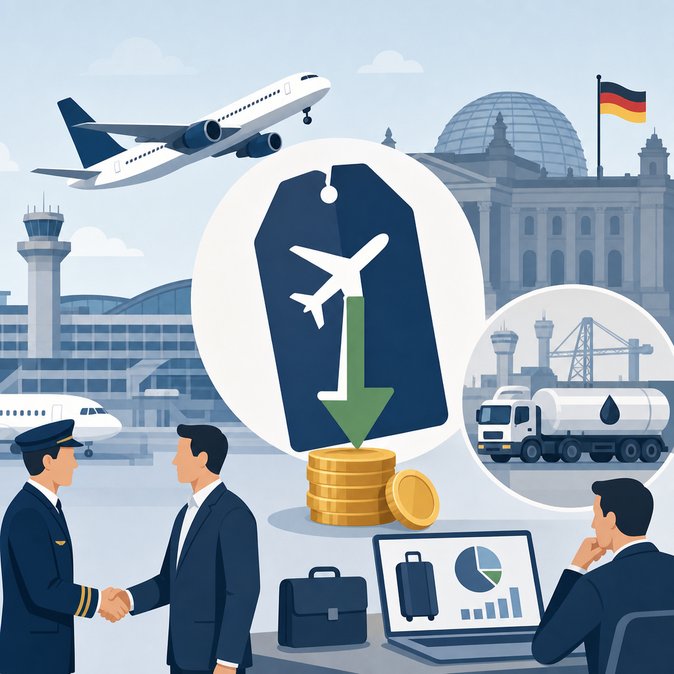
In a late-night voting session on 23 May the Bundestag approved an amendment to the Air Traffic Tax Act that will reverse last year’s surcharge on departure levies. From 1 July 2026 the charge on short-haul tickets will fall from €15.53 to €13.03, on medium-haul from €39.34 to €33.01 and on long-haul from €70.83 to €59.43. The coalition argues the cut is needed to shore up the competitiveness of German hubs after several carriers—most visibly Ryanair and easyJet—trimmed capacity or closed bases, blaming high operating costs. Industry reaction has been polite rather than euphoric. Lufthansa’s Vice-President for Government Affairs Kay Lindemann told DW that the move “sends the right signal”, but warned it is only one of many taxes and fees that have doubled since 2019. Aviation economist Prof. Frank Fichert notes that fuel costs—driven up by Middle-East tensions—now dwarf ticket taxes, while a chronic shortage of new aircraft is constraining supply. Consultancy Airborne predicts the tax cut will trim an average of €2–€6 from German tickets, “hardly enough to change demand curves in a record-high fare environment.”
![Germany votes to roll back aviation tax from July, but will airfares really fall?]()
Travellers considering booking in or out of Germany can streamline another cost-sensitive part of their journey—visa processing—by using VisaHQ. Through its Germany portal (https://www.visahq.com/germany/) the service lets both leisure and corporate customers check entry requirements, submit applications and track approvals for hundreds of destinations, helping ensure compliance and avoiding last-minute surprises.
For multinational companies the change offers limited but welcome relief on travel budgets. A corporate traveller booking 200 long-haul tickets a year could save roughly €2,300, but travel managers are being advised not to expect across-the-board fare drops, as carriers may simply absorb the difference. Procurement teams should instead focus on negotiating dynamic discounts and monitoring surcharge pass-through clauses in their global distribution contracts. The measure will cost the federal budget an estimated €350 million annually. Environmental NGOs are critical, accusing Berlin of rolling back a tool that nudges travellers toward rail. The government counters that aviation already participates in the EU Emissions Trading System and will be subject to escalating sustainable-aviation-fuel blend mandates from 2027. Whether the tax cut sparks new routes—or merely props up existing ones—will become clear when the winter 2026/27 schedules are filed in August. In the meantime, travel administrators should brief travellers that ticket prices are unlikely to change overnight and that ancillary fees—seat selection, baggage, SAF surcharges—continue to rise. The real win, analysts say, may lie in the political message: Germany wants to remain a premium aviation hub rather than cede traffic to Amsterdam, Vienna or Zürich.
Travellers considering booking in or out of Germany can streamline another cost-sensitive part of their journey—visa processing—by using VisaHQ. Through its Germany portal (https://www.visahq.com/germany/) the service lets both leisure and corporate customers check entry requirements, submit applications and track approvals for hundreds of destinations, helping ensure compliance and avoiding last-minute surprises.
For multinational companies the change offers limited but welcome relief on travel budgets. A corporate traveller booking 200 long-haul tickets a year could save roughly €2,300, but travel managers are being advised not to expect across-the-board fare drops, as carriers may simply absorb the difference. Procurement teams should instead focus on negotiating dynamic discounts and monitoring surcharge pass-through clauses in their global distribution contracts. The measure will cost the federal budget an estimated €350 million annually. Environmental NGOs are critical, accusing Berlin of rolling back a tool that nudges travellers toward rail. The government counters that aviation already participates in the EU Emissions Trading System and will be subject to escalating sustainable-aviation-fuel blend mandates from 2027. Whether the tax cut sparks new routes—or merely props up existing ones—will become clear when the winter 2026/27 schedules are filed in August. In the meantime, travel administrators should brief travellers that ticket prices are unlikely to change overnight and that ancillary fees—seat selection, baggage, SAF surcharges—continue to rise. The real win, analysts say, may lie in the political message: Germany wants to remain a premium aviation hub rather than cede traffic to Amsterdam, Vienna or Zürich.