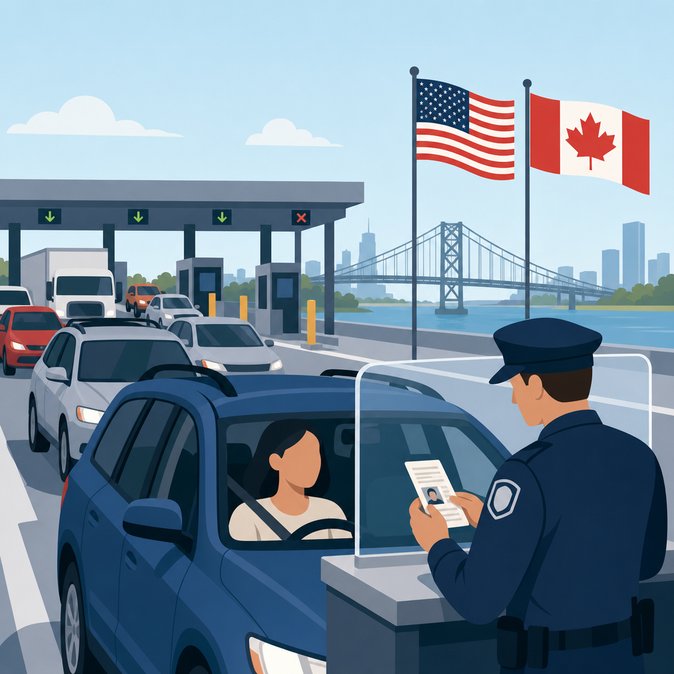
Immigration, Refugees and Citizenship Canada (IRCC) has published a temporary public policy that shields unaccompanied minors already in Canada from two new in-eligibility rules introduced under Bill C-12 earlier this spring. The legislation, which received Royal Assent on March 26 2026, bars most refugee claims that are filed more than a year after a claimant’s first entry to Canada and also blocks claims made 14 days or more after an irregular crossing from the United States. Ottawa argued the provisions were needed to deter fraudulent or opportunistic claims and to free up resources for faster processing. Child-protection advocates, however, warned that the strict deadlines would put vulnerable children at risk, as minors without parents or legal guardians often struggle to understand legal time limits or to gather the documentation needed to file a claim.
![Canada creates humanitarian exemption so unaccompanied minors can still seek asylum]()
For those navigating Canada’s broader immigration landscape—whether for humanitarian entry, family reunification or temporary work—VisaHQ can be an efficient ally. The firm’s Canada hub (https://www.visahq.com/canada/) offers real-time checklists, document-preparation tools and concierge services that simplify everything from visitor visas to complex status extensions, giving employers and applicants alike a clear, compliant path forward.
IRCC’s new policy, signed by Immigration Minister Lena Metlege Diab on May 19 but released on the department’s website on May 20, instructs delegated officers to waive the new section 101(1)(b.1) and 101(1)(b.2) bars when the claimant is under 18 and has neither a parent nor an adult legally responsible for them in Canada. The exemption takes effect immediately and will remain in place until it is revoked or replaced by a permanent regulatory solution. All other eligibility criteria—such as security and serious-crime screenings—continue to apply. Practically, the change means that border officers, inland enforcement staff and Refugee Protection Division registry officials must check whether a claimant appears to be an unaccompanied minor before issuing an in-eligibility decision. If the individual meets the definition in the policy, their claim will proceed to a full hearing before the Immigration and Refugee Board (IRB) despite having missed either of the new statutory filing windows. The text also clarifies that the measure applies country-wide, including at unofficial crossings along the Quebec-New York and Manitoba-North Dakota borders that have seen a recent uptick in irregular entries. For employers and relocation managers, the exemption removes a layer of uncertainty when a worker’s dependent child—or the child of a foreign national employee who has absconded—makes an asylum claim. Without the policy, those claims might have been summarily rejected, leaving minors in limbo and employers unsure of their duty of care. Human-rights groups welcomed the announcement but called on IRCC to create a permanent regulatory carve-out so the protection cannot be undone by a future minister. The change illustrates how Ottawa is fine-tuning Bill C-12 while it is still fresh. Mobility practitioners should expect further technical amendments, particularly around humanitarian work permits (sub-category codes H81 and H82) and new documentary checklists, over the coming weeks.

For those navigating Canada’s broader immigration landscape—whether for humanitarian entry, family reunification or temporary work—VisaHQ can be an efficient ally. The firm’s Canada hub (https://www.visahq.com/canada/) offers real-time checklists, document-preparation tools and concierge services that simplify everything from visitor visas to complex status extensions, giving employers and applicants alike a clear, compliant path forward.
IRCC’s new policy, signed by Immigration Minister Lena Metlege Diab on May 19 but released on the department’s website on May 20, instructs delegated officers to waive the new section 101(1)(b.1) and 101(1)(b.2) bars when the claimant is under 18 and has neither a parent nor an adult legally responsible for them in Canada. The exemption takes effect immediately and will remain in place until it is revoked or replaced by a permanent regulatory solution. All other eligibility criteria—such as security and serious-crime screenings—continue to apply. Practically, the change means that border officers, inland enforcement staff and Refugee Protection Division registry officials must check whether a claimant appears to be an unaccompanied minor before issuing an in-eligibility decision. If the individual meets the definition in the policy, their claim will proceed to a full hearing before the Immigration and Refugee Board (IRB) despite having missed either of the new statutory filing windows. The text also clarifies that the measure applies country-wide, including at unofficial crossings along the Quebec-New York and Manitoba-North Dakota borders that have seen a recent uptick in irregular entries. For employers and relocation managers, the exemption removes a layer of uncertainty when a worker’s dependent child—or the child of a foreign national employee who has absconded—makes an asylum claim. Without the policy, those claims might have been summarily rejected, leaving minors in limbo and employers unsure of their duty of care. Human-rights groups welcomed the announcement but called on IRCC to create a permanent regulatory carve-out so the protection cannot be undone by a future minister. The change illustrates how Ottawa is fine-tuning Bill C-12 while it is still fresh. Mobility practitioners should expect further technical amendments, particularly around humanitarian work permits (sub-category codes H81 and H82) and new documentary checklists, over the coming weeks.