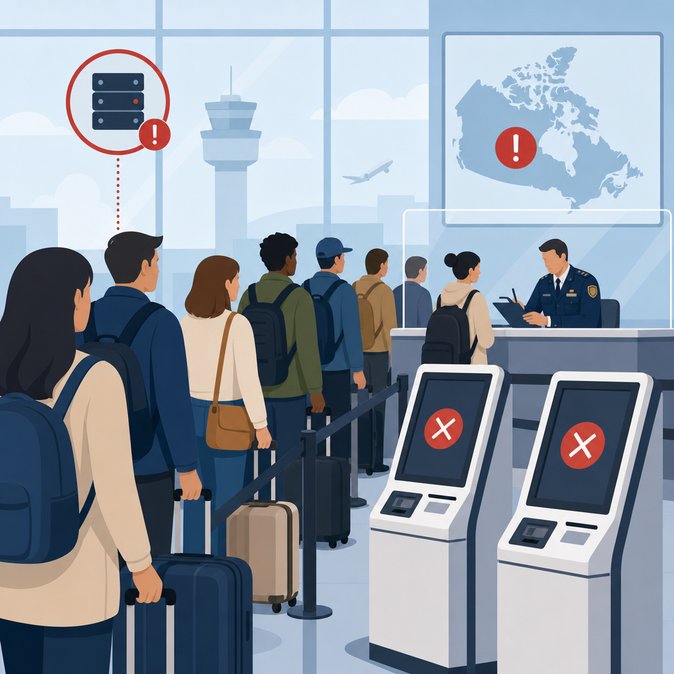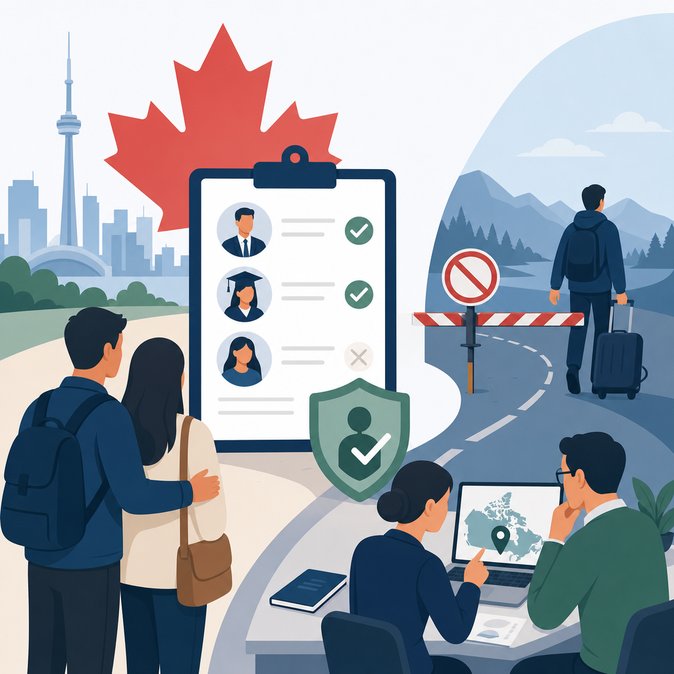
For foreign professionals and their employers alike, the open work permit (OWP) has long been the Swiss-army knife of Canada’s temporary migration system—allowing holders to work for virtually any employer without first securing a Labour Market Impact Assessment (LMIA). But successive rule changes in 2024 and 2025 dramatically narrowed eligibility.
![After last year’s cuts, these are the only Open Work Permit streams still available in Canada]()
At this stage, many employers and assignees need reliable help to decipher the shrinking menu of open-permit options. VisaHQ’s Canadian desk can quickly pre-assess eligibility, curate the correct document set and submit complete applications for OWPs, employer-specific permits or accompanying-spouse visas—flagging pitfalls like the new language thresholds and online-only filing rules before they derail a move. Their digital portal keeps HR teams updated in real time; learn more at https://www.visahq.com/canada/
On May 18, 2026, immigration consultancy Go Far Global published the first comprehensive audit of what remains—essential reading for human-resources teams managing Canadian assignments. The briefing confirms that spouses of temporary foreign workers now qualify only if the principal worker is in a National Occupational Classification (NOC) TEER 0 or 1 role, or in a short list of priority TEER 2/3 occupations in health care, construction, natural resources and STEM. Spouses of lower-skilled workers and most college-level international students were excluded in January 2025. For corporate mobility managers, that means relocating an employee at the skilled-trades or supervisor level no longer guarantees employment authorisation for their partner. Post-Graduation Work Permits (PGWPs) remain the largest OWP category, but since November 2024 applicants must meet minimum language scores (CLB 7 for university grads, CLB 5 for college grads) and field-of-study criteria if coming from non-degree programs. Crucially, graduates can no longer file at a land border; all applications must be lodged online before study permits expire—ending the “flag-poling” workaround popular with fast-growing tech firms. Bridging open work permits (BOWPs) continue to offer a safety net for employees awaiting permanent residence decisions, but consultants warn of four- to six-month processing times in 2026. Vulnerable-worker OWPs, humanitarian permits and International Experience Canada working-holiday visas round out the list, each with tight eligibility windows and quota caps. The Go Far Global report urges employers to conduct early eligibility checks, budget for delayed spousal hiring and, where possible, prioritise permanent residence pathways such as Express Entry category-based draws for STEM talent. With Ottawa signalling further program “right-sizing” later this year, mobility teams should assume that open work permits will be the exception rather than the rule going forward.

At this stage, many employers and assignees need reliable help to decipher the shrinking menu of open-permit options. VisaHQ’s Canadian desk can quickly pre-assess eligibility, curate the correct document set and submit complete applications for OWPs, employer-specific permits or accompanying-spouse visas—flagging pitfalls like the new language thresholds and online-only filing rules before they derail a move. Their digital portal keeps HR teams updated in real time; learn more at https://www.visahq.com/canada/
On May 18, 2026, immigration consultancy Go Far Global published the first comprehensive audit of what remains—essential reading for human-resources teams managing Canadian assignments. The briefing confirms that spouses of temporary foreign workers now qualify only if the principal worker is in a National Occupational Classification (NOC) TEER 0 or 1 role, or in a short list of priority TEER 2/3 occupations in health care, construction, natural resources and STEM. Spouses of lower-skilled workers and most college-level international students were excluded in January 2025. For corporate mobility managers, that means relocating an employee at the skilled-trades or supervisor level no longer guarantees employment authorisation for their partner. Post-Graduation Work Permits (PGWPs) remain the largest OWP category, but since November 2024 applicants must meet minimum language scores (CLB 7 for university grads, CLB 5 for college grads) and field-of-study criteria if coming from non-degree programs. Crucially, graduates can no longer file at a land border; all applications must be lodged online before study permits expire—ending the “flag-poling” workaround popular with fast-growing tech firms. Bridging open work permits (BOWPs) continue to offer a safety net for employees awaiting permanent residence decisions, but consultants warn of four- to six-month processing times in 2026. Vulnerable-worker OWPs, humanitarian permits and International Experience Canada working-holiday visas round out the list, each with tight eligibility windows and quota caps. The Go Far Global report urges employers to conduct early eligibility checks, budget for delayed spousal hiring and, where possible, prioritise permanent residence pathways such as Express Entry category-based draws for STEM talent. With Ottawa signalling further program “right-sizing” later this year, mobility teams should assume that open work permits will be the exception rather than the rule going forward.