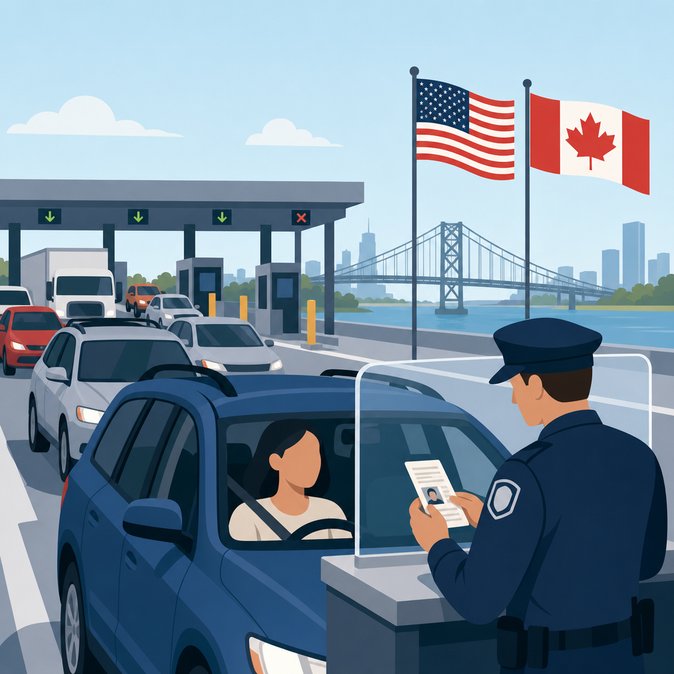
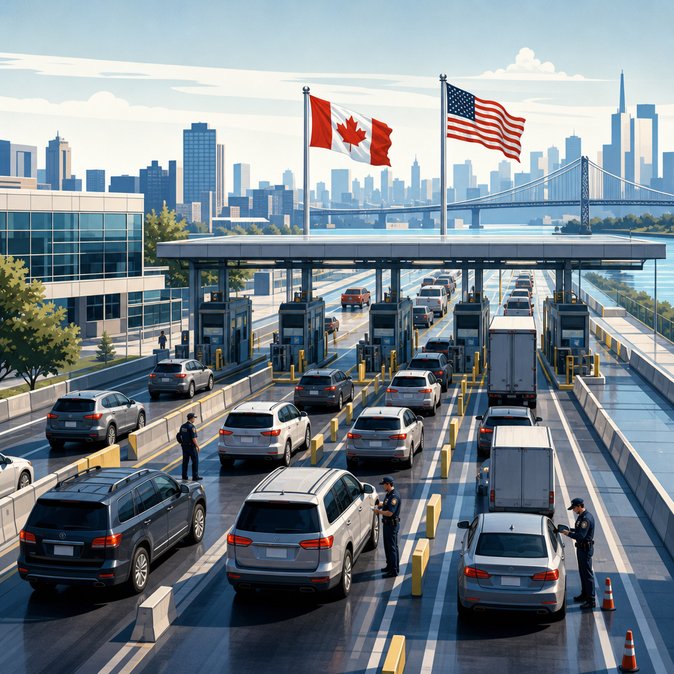
With a record 45 million Americans expected to travel between May 21 and 25, U.S. Customs and Border Protection has issued an advisory warning motorists, tour operators and commercial drivers to brace for heavy congestion at land ports along the northern border. The notice—released on May 20—singles out the Detroit–Windsor Tunnel, Ambassador Bridge, Blue Water Bridge (Port Huron–Sarnia) and the Sault Ste. Marie crossing as potential choke points. CBP says officers will increase document checks, secondary inspections and agricultural screenings throughout the holiday period. Travellers are urged to carry valid passports or NEXUS cards, declare all goods—including fresh food and cannabis products—and complete I-94 forms online where applicable. The agency also reminded Canadians that marijuana remains illegal under U.S. federal law despite its domestic legality north of the border. For business-travel coordinators and relocation teams, the alert is a timely heads-up: shipments of household goods, service technicians driving company vehicles and cross-border commuters could face wait times exceeding two hours at peak periods. Mobility managers may wish to shift moves to off-peak windows, pre-position inventory or reroute through lesser-used crossings such as the Thousand Islands Bridge or North Portal. Trade associations welcomed the early notice but pressed CBP and the Canada Border Services Agency to deploy surge staffing on both sides of the border. Analysts note that Memorial Day has increasingly become a stress test for the Trusted Traveller ecosystem; any sustained backlog could erode confidence in NEXUS and FAST lanes already strained by earlier staffing shortages.
![CBP warns of multi-hour delays at key U.S.–Canada crossings over Memorial Day weekend]()
For travellers who discover they need more than a standard passport—say, a work permit for an onward assignment or a visa for a connecting leg—VisaHQ offers a quick, web-based solution. Its Canada portal (https://www.visahq.com/canada/) lets users check entry rules, generate application checklists and obtain express processing, saving valuable hours during high-volume travel periods.
Looking ahead, companies with frequent cross-border traffic should incorporate the advisory into traveller-briefing materials and ensure that mobile workers know how to access real-time wait-time dashboards provided by both CBP and CBSA. Failure to do so could translate into missed client meetings, demurrage charges for delayed trucks and overtime costs for time-sensitive crews.
For travellers who discover they need more than a standard passport—say, a work permit for an onward assignment or a visa for a connecting leg—VisaHQ offers a quick, web-based solution. Its Canada portal (https://www.visahq.com/canada/) lets users check entry rules, generate application checklists and obtain express processing, saving valuable hours during high-volume travel periods.
Looking ahead, companies with frequent cross-border traffic should incorporate the advisory into traveller-briefing materials and ensure that mobile workers know how to access real-time wait-time dashboards provided by both CBP and CBSA. Failure to do so could translate into missed client meetings, demurrage charges for delayed trucks and overtime costs for time-sensitive crews.