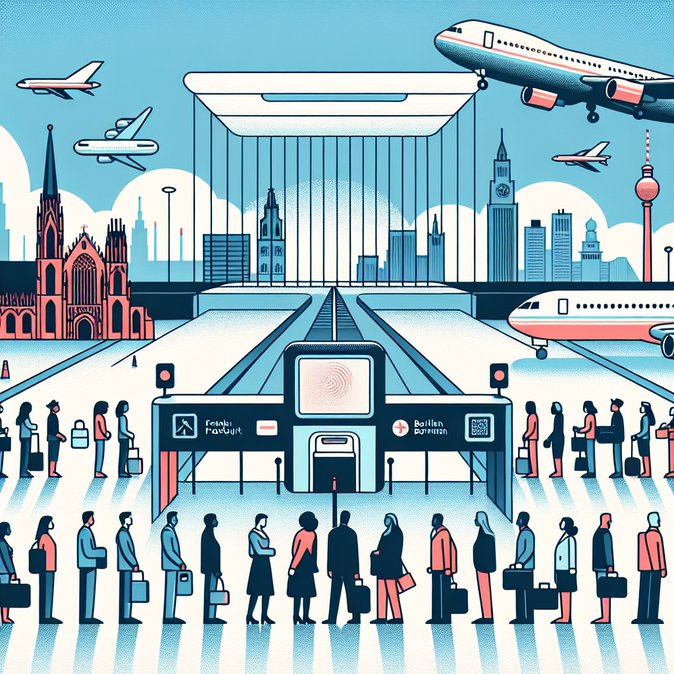
Germany’s parliament began first-reading deliberations on the government’s Second Act to Amend the Air Transport Tax on 7 May 2026. The bill would reverse a 2024 surcharge and restore lower rates from 1 July 2026—€13.03 for intra-European flights, €33.01 for medium-haul and €59.43 for long-haul passengers. Finance-state-secretary Britta Reinhold told MPs the measure is part of the CDU-SPD coalition’s pledge to “re-balance aviation competitiveness” after Germany’s traffic recovery lagged peers. The government projects €330 million in forgone revenue in 2027, to be offset by higher payroll taxes on kerosene traders introduced last month. Industry groups such as the BDL airline association argue that the cut is vital: passenger volumes at German airports remain 12 % below 2019, while neighbouring hubs have surpassed pre-pandemic levels. Low-cost carrier Ryanair has already shuttered its Berlin base, citing operating costs.
![Bundestag opens debate on cutting Germany’s air ticket tax from 1 July 2026]()
For corporate travellers needing to verify visa requirements before booking revamped itineraries, VisaHQ’s Germany portal (https://www.visahq.com/germany/) offers a quick, self-service tool to check entry rules and secure documents online. The platform can streamline compliance as companies recalibrate travel flows in response to the new tax levels.
Travel-management companies (TMCs) predict the lower levy will trim average Germany-origin business-trip budgets by 1.5-2 % and could sway routing decisions back toward Frankfurt and Munich. Opposition comes from the Greens, who label the tax break “climate-irresponsible” and propose channelling savings into rail. Their amendment, expected in committee, would keep the higher tax for flights under 600 km where high-speed rail exists. A final vote is slated for June; airlines need at least four weeks’ notice to adjust fare filings, meaning corporate booking tools should reflect new rates by mid-June if the bill passes. Practical impact: multinational firms with German cost centres should update travel-policy calculators and communicate that the tax component will drop for tickets issued on or after 1 July 2026, irrespective of travel date.

For corporate travellers needing to verify visa requirements before booking revamped itineraries, VisaHQ’s Germany portal (https://www.visahq.com/germany/) offers a quick, self-service tool to check entry rules and secure documents online. The platform can streamline compliance as companies recalibrate travel flows in response to the new tax levels.
Travel-management companies (TMCs) predict the lower levy will trim average Germany-origin business-trip budgets by 1.5-2 % and could sway routing decisions back toward Frankfurt and Munich. Opposition comes from the Greens, who label the tax break “climate-irresponsible” and propose channelling savings into rail. Their amendment, expected in committee, would keep the higher tax for flights under 600 km where high-speed rail exists. A final vote is slated for June; airlines need at least four weeks’ notice to adjust fare filings, meaning corporate booking tools should reflect new rates by mid-June if the bill passes. Practical impact: multinational firms with German cost centres should update travel-policy calculators and communicate that the tax component will drop for tickets issued on or after 1 July 2026, irrespective of travel date.