After a marathon overnight ‘vote-a-rama,’ the U.S. Senate approved a budget-reconciliation resolution at 3:35 a.m. on 24 April 2026 that would allocate roughly $70 billion to U.S. Immigration and Customs Enforcement (ICE) and U.S. Customs and Border Protection (CBP). The 50-48 party-line vote allows Republicans to bypass the 60-vote filibuster threshold, marking the first concrete step toward ending a 69-day partial shutdown of the Department of Homeland Security (DHS).
![Senate passes $70 billion reconciliation bill to fund ICE and Border Patrol, aims to end DHS shutdown]()
For companies and travelers seeking clarity amid the shifting U.S. immigration environment, VisaHQ can streamline visa and travel-document processing, provide status alerts, and offer expert support through its dedicated U.S. portal at https://www.visahq.com/united-states/ Leveraging these services can help mitigate disruption while government agencies work through backlogs.
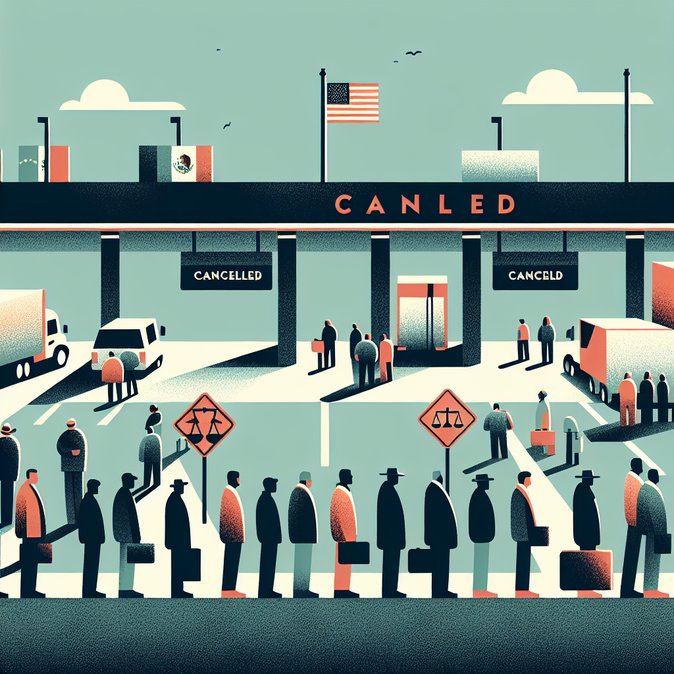
The shutdown has already slowed Global Entry enrollments, postponed non-essential CBP travel-facilitation projects, and left TSA warning of a payroll ‘cliff’ in mid-May. If the House concurs, the bill would fund ICE and CBP for three-and-a-half years, giving border agencies multi-year fiscal certainty unprecedented in recent cycles. For multinationals, restored funding would stabilise processing of waivers, A-number look-ups, and I-212 permissions essential to business travel. It would also avert imminent furloughs of agriculture specialists that threatened to snarl perishable supply chains at land ports. Nevertheless, because the measure funds only enforcement arms, employers should expect continued delays in visa-stamp security clearances and Trusted Traveler adjudications handled by other DHS components until a broader appropriations deal is reached. Mobility teams should track the House calendar closely; any amendments would require another Senate vote, prolonging uncertainty. In the meantime, companies moving goods or personnel across U.S. borders should keep contingency budgets for overtime brokerage fees and consider rerouting shipments away from pressure points such as Laredo and Nogales.

For companies and travelers seeking clarity amid the shifting U.S. immigration environment, VisaHQ can streamline visa and travel-document processing, provide status alerts, and offer expert support through its dedicated U.S. portal at https://www.visahq.com/united-states/ Leveraging these services can help mitigate disruption while government agencies work through backlogs.
The shutdown has already slowed Global Entry enrollments, postponed non-essential CBP travel-facilitation projects, and left TSA warning of a payroll ‘cliff’ in mid-May. If the House concurs, the bill would fund ICE and CBP for three-and-a-half years, giving border agencies multi-year fiscal certainty unprecedented in recent cycles. For multinationals, restored funding would stabilise processing of waivers, A-number look-ups, and I-212 permissions essential to business travel. It would also avert imminent furloughs of agriculture specialists that threatened to snarl perishable supply chains at land ports. Nevertheless, because the measure funds only enforcement arms, employers should expect continued delays in visa-stamp security clearances and Trusted Traveler adjudications handled by other DHS components until a broader appropriations deal is reached. Mobility teams should track the House calendar closely; any amendments would require another Senate vote, prolonging uncertainty. In the meantime, companies moving goods or personnel across U.S. borders should keep contingency budgets for overtime brokerage fees and consider rerouting shipments away from pressure points such as Laredo and Nogales.