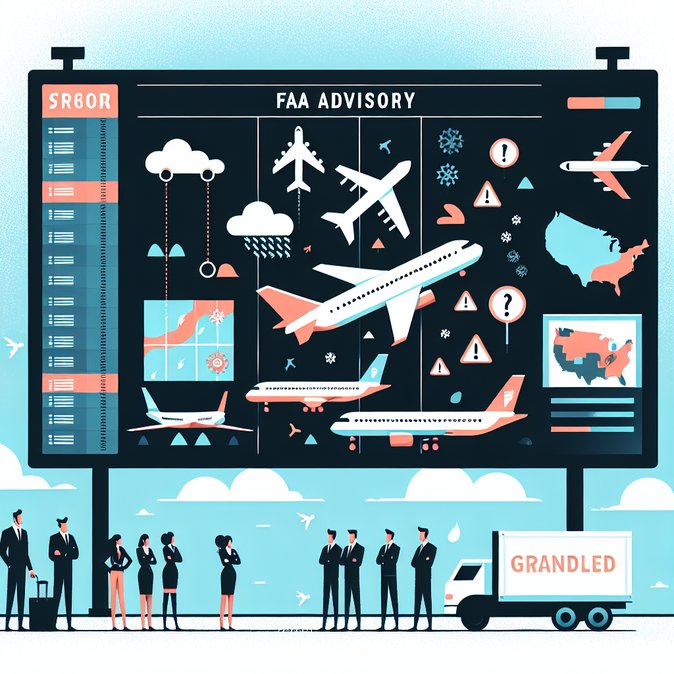
The Federal Aviation Administration’s Air Traffic Control System Command Center issued Operations Plan Advisory 035 on the morning of 25 April 2026, initiating a ground-delay program (GDP) at San Francisco International Airport for low ceilings and warning of possible ground stops later in the day at Washington’s DCA and IAD, Atlanta, and New York JFK. Thunderstorms are also forecast to disrupt routes across ZNY, ZDC and southeastern en-route centers, while high winds threaten Dallas – Fort Worth and Las Vegas. The advisory follows a 24 April FAA outlook that flagged similar weather-driven risks across Miami, Chicago, Detroit and Memphis. Travel-intel service Adept Traveler noted that the geographically scattered nature of the storms turns 24-25 April into a ‘connection-risk window,’ especially for travellers transiting multiple hubs in one itinerary.
![FAA imposes ground-delay programs at major U.S. hubs as spring storms sweep coasts]()
During disruption windows like this, travelers may find themselves unexpectedly rerouted through countries that require transit or short-stay visas. VisaHQ’s online platform (https://www.visahq.com/united-states/) makes it simple to check up-to-the-minute entry rules and secure rush visas, giving corporate travel teams the flexibility to adjust itineraries without running into immigration-related roadblocks.
For corporate mobility managers the GDP means potential missed meetings, delayed project kick-offs and crew scheduling headaches. Companies should prompt travellers to build longer layovers, monitor airline apps for rolling rebooks, and, where possible, authorise same-day remote participation instead of in-person attendance. Air-cargo stakeholders must account for downstream effects: delayed passenger aircraft translate into belly-cargo bottlenecks, while slot-controlled airports such as SFO and JFK could see ripple effects that last into the workweek. Logistics teams should proactively shift time-sensitive shipments to integrator networks with freighter capacity or reroute via less-affected gateways like Phoenix or Denver.

During disruption windows like this, travelers may find themselves unexpectedly rerouted through countries that require transit or short-stay visas. VisaHQ’s online platform (https://www.visahq.com/united-states/) makes it simple to check up-to-the-minute entry rules and secure rush visas, giving corporate travel teams the flexibility to adjust itineraries without running into immigration-related roadblocks.
For corporate mobility managers the GDP means potential missed meetings, delayed project kick-offs and crew scheduling headaches. Companies should prompt travellers to build longer layovers, monitor airline apps for rolling rebooks, and, where possible, authorise same-day remote participation instead of in-person attendance. Air-cargo stakeholders must account for downstream effects: delayed passenger aircraft translate into belly-cargo bottlenecks, while slot-controlled airports such as SFO and JFK could see ripple effects that last into the workweek. Logistics teams should proactively shift time-sensitive shipments to integrator networks with freighter capacity or reroute via less-affected gateways like Phoenix or Denver.