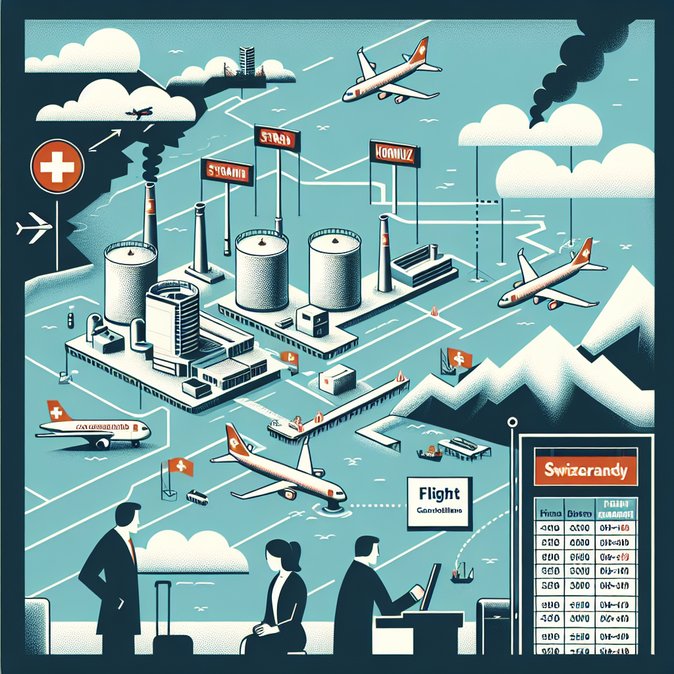
Switzerland’s famously reliable aviation system is running up against the hard limits of energy security. The Federal Office for National Economic Supply (FONES) confirmed on 22 April that compulsory jet-fuel reserves have slipped to the equivalent of 72 days of normal operations—18 days below the 90-day legal minimum. The shortfall is a direct consequence of the blockade of the Strait of Hormuz, which has pinched supplies from the Middle East and driven kerosene prices up by as much as 22 percent in a month. Importers are scrambling to buy replacement cargoes from the United States, but refinery slots and shipping capacity are scarce and expensive. For airlines, the maths is brutal. Every 10 percent rise in fuel costs knocks roughly one percentage point off operating margins, and SWISS, Edelweiss and the dozens of foreign carriers that serve Zurich and Geneva are already paying spot rates last seen in the immediate aftermath of the pandemic. If stocks are not replenished swiftly, FONES warns that rationing rules—last triggered during the 1970s oil crisis—could be re-activated. These would prioritise long-haul belly-cargo flights and critical medical logistics over discretionary leisure routes, forcing schedule culls at the height of Europe’s school-holiday rush.
![Swiss Aviation Braces for Jet-Fuel Shortage Ahead of Summer Peak]()
Before making any last-minute changes, passengers—especially those who need entry clearance for Switzerland or onward Schengen destinations—may find it useful to tap VisaHQ’s online platform, which offers real-time visa guidance and application processing for Switzerland and 200+ other countries. The service (https://www.visahq.com/switzerland/) can cut paperwork lead-times and provide alerts on documentation updates, an advantage when flight disruptions force rapid itinerary pivots.
Airports are preparing contingency plans. Zurich Airport has asked handling agents to finalise “tanker-in, tanker-out” procedures that allow arriving wide-bodies to carry enough fuel for a round trip, while Geneva Airport is reopening dormant rail sidings so that kerosene can be railed in from refineries at Marseille and Fos-sur-Mer. Basel-Mulhouse is considering a temporary surcharge to deter general-aviation tank-ups by private jets. Corporate travel managers should brace for higher ticket prices and the risk of last-minute cancellations on intra-European services, where thin profit margins leave little room to absorb fuel shocks. Mobility teams are advised to build extra lead-time into itineraries and to keep travellers on fully refundable fares until the supply picture stabilises. Travellers holding non-EU passports should also remember that re-booking may trigger fresh EES fingerprint scans each time they cross an external Schengen border. Longer term, the Swiss aviation sector’s vulnerability underscores the urgency of energy diversification. Both the Federal Council and parliament are weighing incentives for sustainable aviation fuel (SAF) production inside Switzerland, but volumes will not come on-stream before 2028. Until then, airlines and their globally mobile customers will have to navigate a more volatile, and potentially more expensive, flight landscape.
Before making any last-minute changes, passengers—especially those who need entry clearance for Switzerland or onward Schengen destinations—may find it useful to tap VisaHQ’s online platform, which offers real-time visa guidance and application processing for Switzerland and 200+ other countries. The service (https://www.visahq.com/switzerland/) can cut paperwork lead-times and provide alerts on documentation updates, an advantage when flight disruptions force rapid itinerary pivots.
Airports are preparing contingency plans. Zurich Airport has asked handling agents to finalise “tanker-in, tanker-out” procedures that allow arriving wide-bodies to carry enough fuel for a round trip, while Geneva Airport is reopening dormant rail sidings so that kerosene can be railed in from refineries at Marseille and Fos-sur-Mer. Basel-Mulhouse is considering a temporary surcharge to deter general-aviation tank-ups by private jets. Corporate travel managers should brace for higher ticket prices and the risk of last-minute cancellations on intra-European services, where thin profit margins leave little room to absorb fuel shocks. Mobility teams are advised to build extra lead-time into itineraries and to keep travellers on fully refundable fares until the supply picture stabilises. Travellers holding non-EU passports should also remember that re-booking may trigger fresh EES fingerprint scans each time they cross an external Schengen border. Longer term, the Swiss aviation sector’s vulnerability underscores the urgency of energy diversification. Both the Federal Council and parliament are weighing incentives for sustainable aviation fuel (SAF) production inside Switzerland, but volumes will not come on-stream before 2028. Until then, airlines and their globally mobile customers will have to navigate a more volatile, and potentially more expensive, flight landscape.